La Cène
Pierre Paul Rubens · 1631
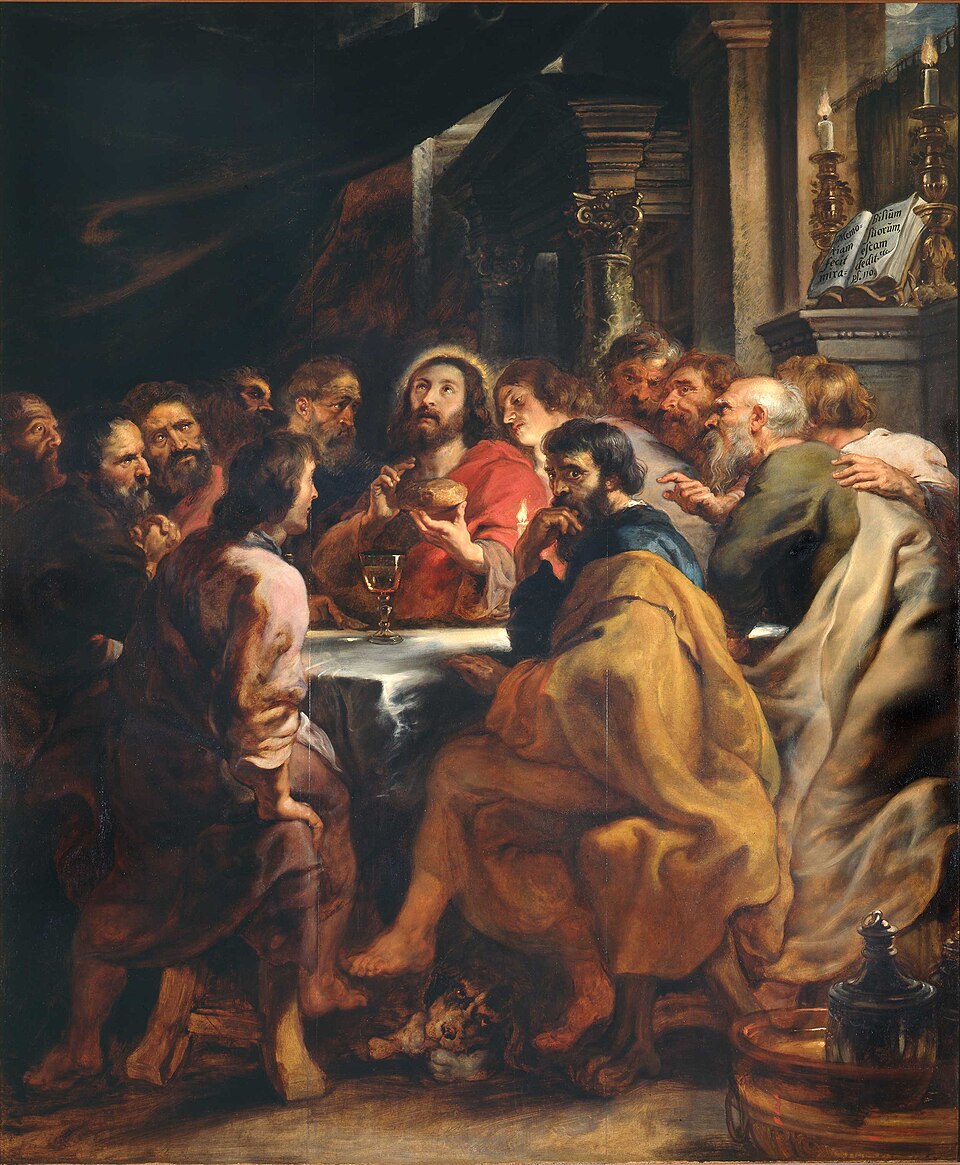
Christ looks upward with the bread in his hands, and every apostle looks at him, except Judas, who turns toward us with his hand at his mouth. Rubens painted this Last Supper in 1630 to 1631.
The story behind the painting
Catherine Lescuyer commissioned the painting in memory of her father, and Rubens made it as part of an altarpiece in the Church of St. Rumbold in Mechelen, in 1630 to 1631. It came after a first failed attempt at a Last Supper in 1611, when his patrons backed out at the last minute. This time the work was completed: a large canvas, about 304 by 250 cm, made to stand above an altar as a memorial.
What to look for
Christ sits at the centre in red, a yellow halo around his tilted face, holding a loaf with a cup of wine before him, six disciples on each side. He is the most brightly lit figure, while those at the far left sink into shadow. After Christ, the most prominent figure is Judas, dressed in blue, turning away from the table toward the viewer, his right hand at his mouth and his eyes avoiding everyone. Look for the dog with a bone near him, a common detail in Northern European paintings.
Meaning and intent
Rubens closely followed the Last Supper composition of his former teacher Otto van Veen, but shifted the focus further toward the Eucharist: no apostle searches for the traitor any longer, all look at Jesus. The scene joins the blessing of bread and wine with the revelation of betrayal. The dog may be just a pet or a symbol of faith, though J. Richard Judson suggested that, beside Judas, it stands for greed or evil.
Legacy
Leonardo da Vinci's Last Supper fresco was a strong influence; Rubens made an etching after it, printed by Pieter Soutman, one of his first attempts to express the full range of human emotion. Rubens often had engravings made after his paintings, which other artists copied and collectors sought, spreading his fame in his lifetime. Wikidata lists the painting at the Pinacoteca di Brera in Milan. Wikidata also links it to the Royal Museums of Fine Arts of Belgium.
Le saviez-vous ?
- Painted 1630 to 1631 for St. Rumbold's in Mechelen.
- Commissioned by Catherine Lescuyer for her father.
- Judas in blue turns away toward the viewer.
- Influenced by Leonardo and by Otto van Veen.
À propos de l'artiste
Pierre Paul Rubens (1577-1640)
art religieux · homme · Jésus-Christ · chien · regard vers le spectateur · musées royaux des Beaux-Arts de Belgique · pinacothèque de Brera
Autres œuvres de Pierre Paul Rubens
.jpg) L'Érection de la croix - Peter Paul Rubens (1609)
L'Érection de la croix - Peter Paul Rubens (1609)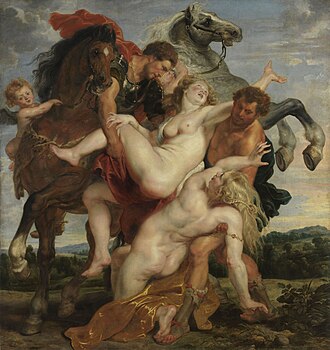 L'Enlèvement des filles de Leucippe - Peter Paul Rubens (1618)
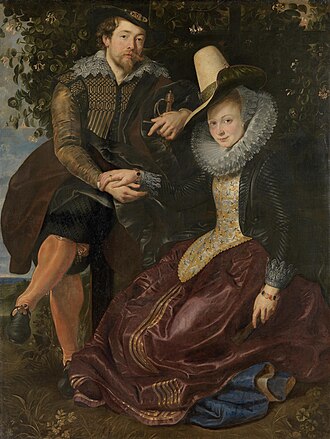 Sous la tonnelle de chèvrefeuille - Peter Paul Rubens (1600s)
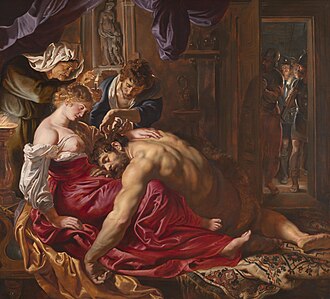 Samson et Dalila - Peter Paul Rubens (1600s)
 La Descente de Croix - Peter Paul Rubens (1611)
 Tête de Méduse - Peter Paul Rubens (1618)
 Hélène Fourment sortant du bain - Peter Paul Rubens (1638)
.jpg) Le Jardin d'Amour - Peter Paul Rubens (1632)
Le Jardin d'Amour - Peter Paul Rubens (1632)
Œuvres d'artistes liés
 La Nuit étoilée - Vincent van Gogh (1889)
.jpg) Terrasse du café le soir - Vincent van Gogh (1888)
Terrasse du café le soir - Vincent van Gogh (1888)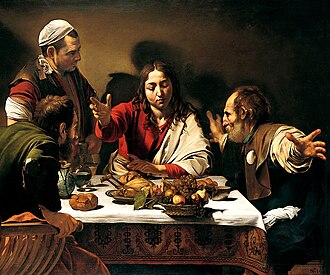 Le Souper à Emmaüs - Caravaggio (1601)
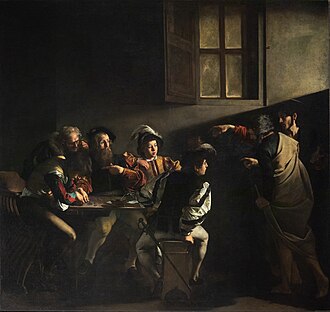 La Vocation de saint Matthieu - Caravaggio (1609)
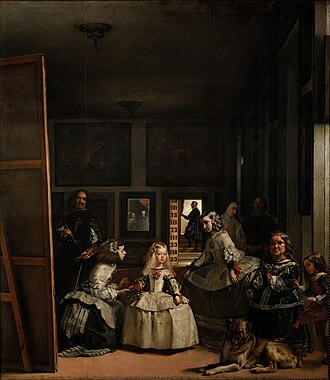 Les Ménines - Diego Velázquez (1656)
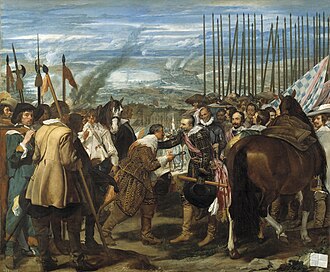 La Reddition de Bréda - Diego Velázquez (1635)
%20-%20Google%20Art%20Project.jpg) Triple portrait de Charles Ier - Anthony van Dyck (1635)
Triple portrait de Charles Ier - Anthony van Dyck (1635)%20with%20M.%20de%20St%20Antoine%20-%20Google%20Art%20Project.jpg) Charles Ier à cheval avec Monsieur de Saint Antoine - Anthony van Dyck (1636)
Charles Ier à cheval avec Monsieur de Saint Antoine - Anthony van Dyck (1636)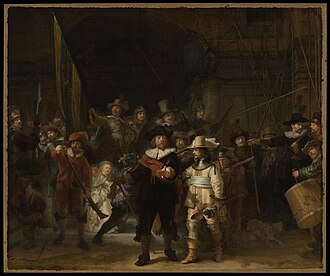 La Ronde de nuit - Rembrandt van Rijn (1642)
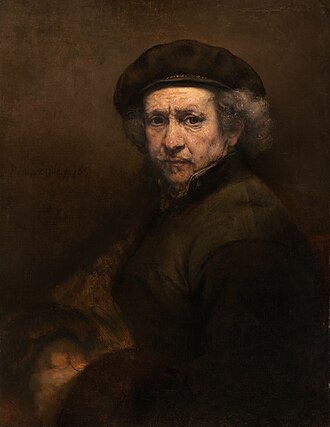 Autoportrait - Rembrandt van Rijn (1659)
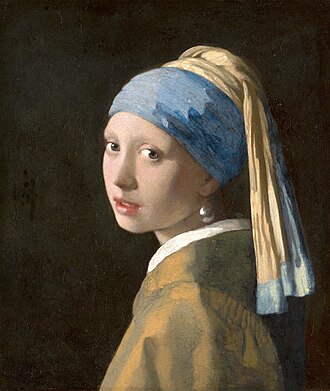 La Jeune Fille à la perle - Johannes Vermeer (1665)
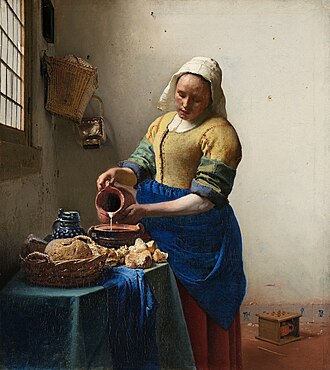 La Laitière - Johannes Vermeer (c. 1658)