Vierge à l'Enfant
Albrecht Dürer · 1490s
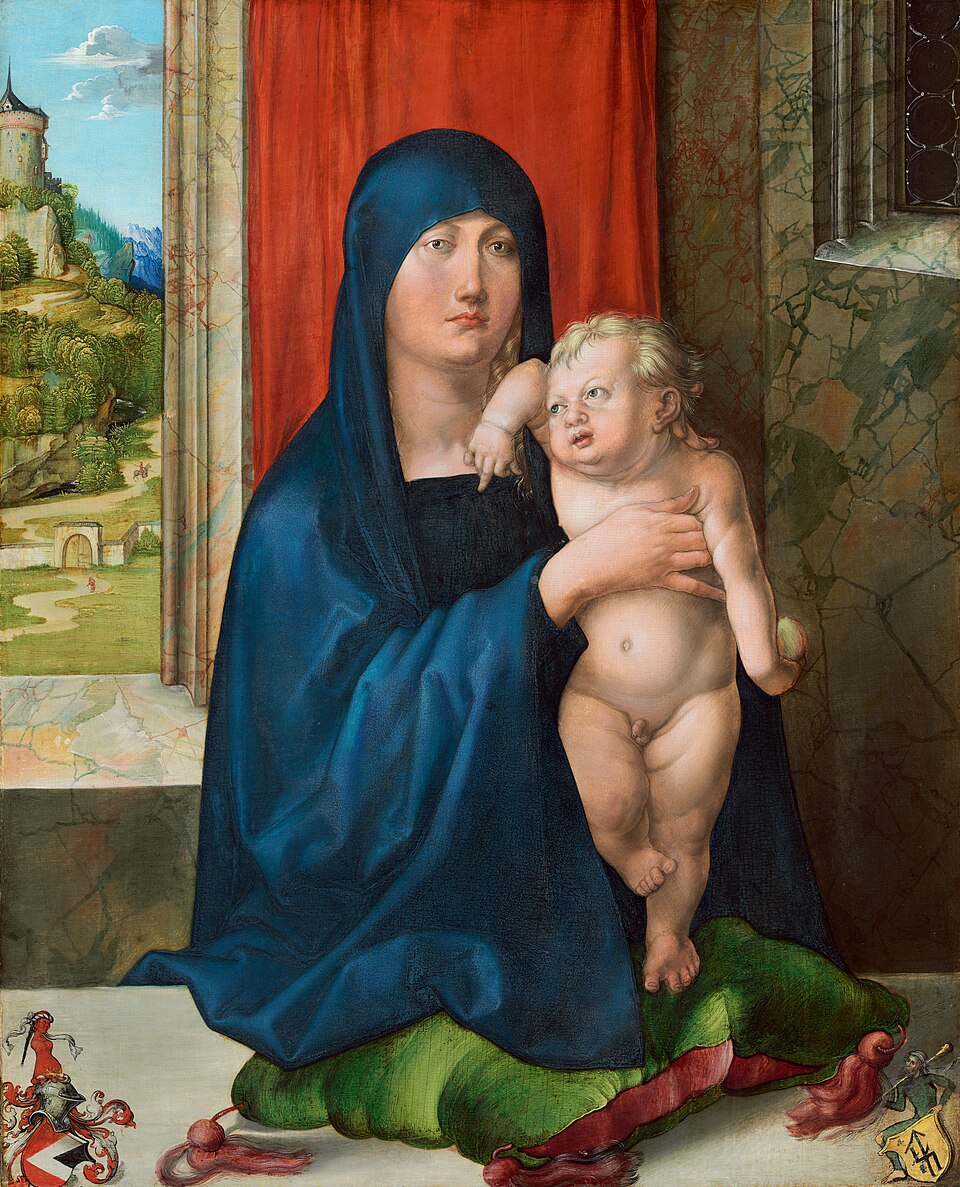
A young Dürer painted a tender Virgin and Child in the Venetian manner, and on the back of the same panel, a family fleeing a burning city.
The story behind the painting
Albrecht Dürer painted the Haller Madonna between 1496 and 1499, soon after his first stay in Venice in 1494-1495. Two coats of arms in the lower corners tell us who it was for. On the left are the arms of the patrician Haller von Hallerstein family; on the right is the mark of the Koberger family, of artisan origin. It has therefore been suggested that it was made for Wolf Haller and his wife Ursula Koberger, probably for private devotion. Ursula was the daughter of the printer Anton Koberger, publisher of the Nuremberg Chronicle, who was also Dürer's godfather and neighbour, and he may have ordered it as a gift for her.
What to look for
Mary holds an athletic-looking, round-cheeked Child, and beside them a window opens onto a distant view. The scheme closely follows the works of Giovanni Bellini that Dürer had seen in Venice, so much so that when the panel appeared on the art market it was attributed to Bellini. It was later given to Dürer because of the landscape and the Child's posture, typical of northern painting. The Child holds a fruit, and he rests on a cushion with red padding and tassels. Turn the panel over, and there is a second full painting, Lot and His Daughters, with Lot fleeing Sodom before a landscape and sea lit by bursts of fire.
Meaning and intent
The small details carry meaning. The fruit in the Child's hand is a symbol of Original Sin, and the red cushion and tassels may hint at the blood of his Passion. The two sides seem unrelated, but one suggestion is that both are private devotional images, each showing an example of a just life and of God's grace. Another view holds that the panel was once part of a diptych that also showed the donor. Either way, it is an object made to be held close and contemplated, in a quiet room, by people who knew the families named in its corners.
Legacy
Behind the painting lies a family story with a sad turn. Wolf Haller first joined his father-in-law's business as a helper and traveller, but after a few years he fell out with him and fled to Vienna, where he died in 1505. Centuries later, in the mid-twentieth century, the panel belonged to the Thyssen-Bornemisza Collection in Lugano. Samuel H. Kress acquired it and later donated it to the National Gallery of Art in Washington, where it remains. It shows the moment when a young German painter absorbed the lessons of Venice.
Le saviez-vous ?
- Painted between 1496 and 1499 (Wikidata: 1490s).
- 52.4 × 42.2 cm, National Gallery of Art, Washington.
- Reverse shows Lot and His Daughters.
- Once attributed to Giovanni Bellini on the art market.
À propos de l'artiste
Albrecht Dürer (1471-1528)
art religieux · femme · Marie · Enfant Jésus · garçon · National Gallery of Art · mère · Renaissance allemande · Samuel H. Kress Collection
Autres œuvres de Albrecht Dürer
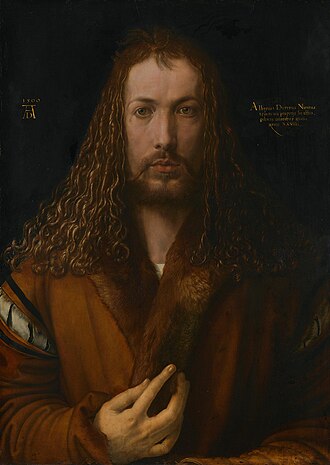 Autoportrait - Albrecht Dürer (1500)
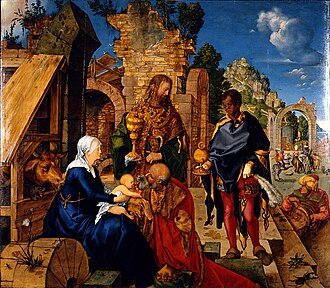 Adoration des mages - Albrecht Dürer (1504)
.jpg) La Vierge de la fête du rosaire - Albrecht Dürer (1506)
La Vierge de la fête du rosaire - Albrecht Dürer (1506)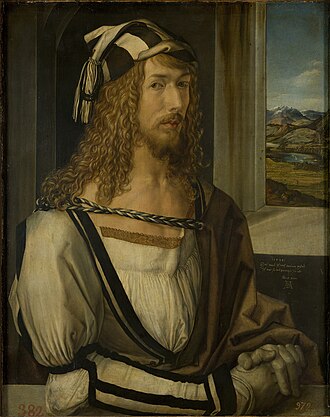 Autoportrait à 26 ans - Albrecht Dürer (1498)
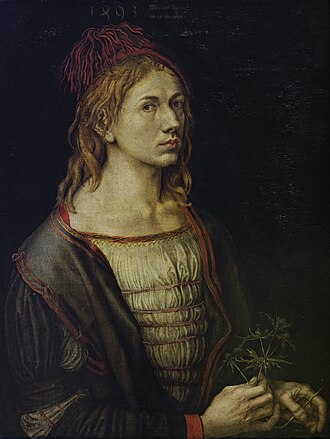 Portrait de l'artiste tenant un chardon - Albrecht Dürer (1493)
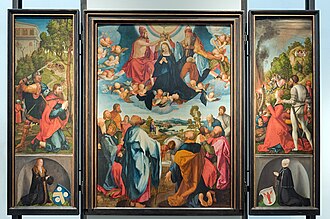 retable Heller - Albrecht Dürer (1500s)
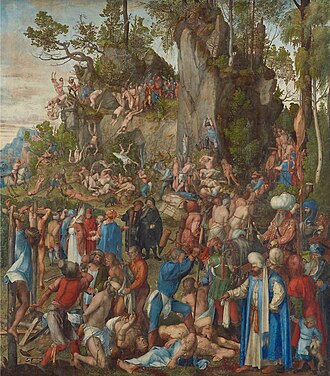 retable des dix mille martyrs - Albrecht Dürer (1508)
%20-%20Google%20Art%20Project.jpg) L'Adoration de la Sainte Trinité - Albrecht Dürer (1511)
L'Adoration de la Sainte Trinité - Albrecht Dürer (1511)