Don Cristóbal Suárez de Ribera
Diego Velázquez · 1620
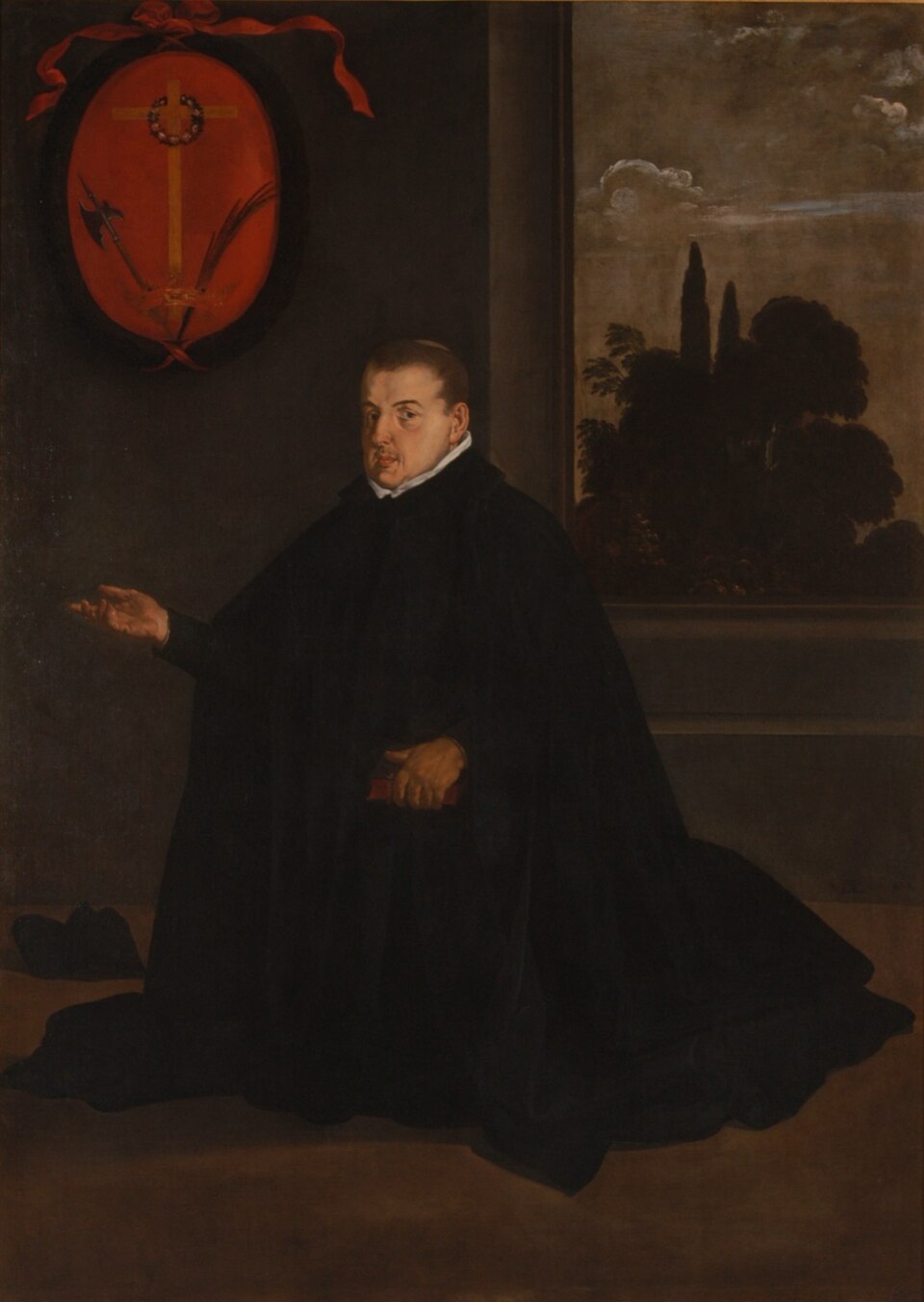
A priest kneels alone in an empty room, painted after his death by the young Velázquez. He had been godfather at the baptism of the woman Velázquez married, and for centuries nobody knew who had painted him.
The story behind the painting
Cristóbal Suárez de Ribera founded the chapel or hermitage of San Hermenegildo in Seville, built between 1607 and 1616. He had been godfather at the baptism of Juana Pacheco, who married Velázquez in April 1618. He died that same year, on 13 October, aged 68. The portrait, dated 1620, is therefore posthumous, and the face does not show the age he would have had when Velázquez knew him. It hung in San Hermenegildo until its restoration and transfer to the Museum of Fine Arts of Seville in 1910, where it remains on deposit from the Brotherhood of San Hermenegildo.
What to look for
The cleric, devoted to Saint Hermenegild, kneels in a bare room. Behind him a large window opens onto trees and clouds that hide the sun. At the top are the arms of the brotherhood: a cross with a garland of roses between an axe, the instrument of the saint's martyrdom, and a palm wound with a crown, on a red ground. The canvas, about 207 by 148 cm, is in poor condition with flaking paint. Because it was painted after death, the face looks pale and too small, and a garment seems too large and empty, far from the lifelike force of Velázquez's Venerable Mother Jerónima de la Fuente.
Meaning and intent
This kind of portrait, perhaps modelled on carved funerary busts, kept a strong bond with the person shown and was normally displayed in the very space of the sacred scene. Because it shows the chaplain praying on his knees, it may have been placed in a quiet spot over his tomb, joined to the sacred decorations of San Hermenegildo above the high altar, which are attributed to Martínez Montañés. It is a picture of remembrance and devotion: the founder kneeling for ever in the chapel he built.
Legacy
An inventory of 1795 attributed the painting to Francisco de Herrera the Elder, and later it was given to the Seville school in general. During cleaning in 1910 two inscriptions appeared: the date 1620 and a monogram read as DOVZ or DLZ, with interlaced letters. On that basis it was attributed to Velázquez, though other readings were proposed. The source says it then came to be considered unanimously his, despite its condition. It remains a rare early work tying the painter's own family life in Seville to his art.
Le saviez-vous ?
- Posthumous portrait dated 1620; the sitter died in October 1618.
- He was godfather at the baptism of Juana Pacheco, Velázquez's wife.
- Cleaning in 1910 revealed the date and a monogram read as DOVZ or DLZ.
- On deposit at the Museum of Fine Arts of Seville.
À propos de l'artiste
Diego Velázquez (1599-1660)
Autres œuvres de Diego Velázquez
 Les Ménines - Diego Velázquez (1656)
 La Reddition de Bréda - Diego Velázquez (1635)
 Vénus à son miroir - Diego Velázquez (1644)
 Les Fileuses - Diego Velázquez
 Innocent X - Diego Velázquez
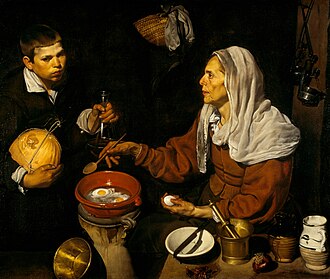 Vieille faisant frire des œufs - Diego Velázquez (1618)
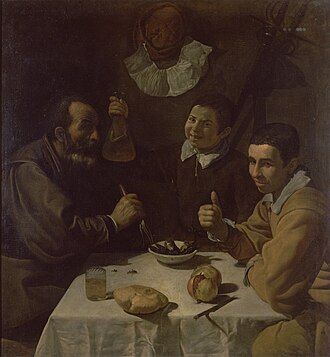 Trois hommes à table, le déjeuner - Diego Velázquez (1617)
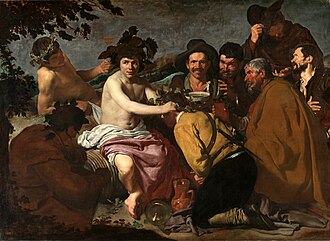 Le Triomphe de Bacchus - Diego Velázquez (1628)
Œuvres d'artistes liés
 Le Souper à Emmaüs - Caravaggio (1601)
 La Vocation de saint Matthieu - Caravaggio (1609)
 Saint Francis in Meditation - Francisco de Zurbarán (1639)
 The Immaculate Conception - Francisco de Zurbarán (1661)
 Triple portrait de Charles Ier - Anthony van Dyck (1635)
 Charles Ier à cheval avec Monsieur de Saint Antoine - Anthony van Dyck (1636)
 L'Érection de la croix - Peter Paul Rubens (1609)
 L'Enlèvement des filles de Leucippe - Peter Paul Rubens (1618)
 La Ronde de nuit - Rembrandt van Rijn (1642)
 Autoportrait - Rembrandt van Rijn (1659)
 Le Joyeux Buveur - Frans Hals (1620s)
 Le Cavalier riant - Frans Hals (1624)