La Danse de la vie
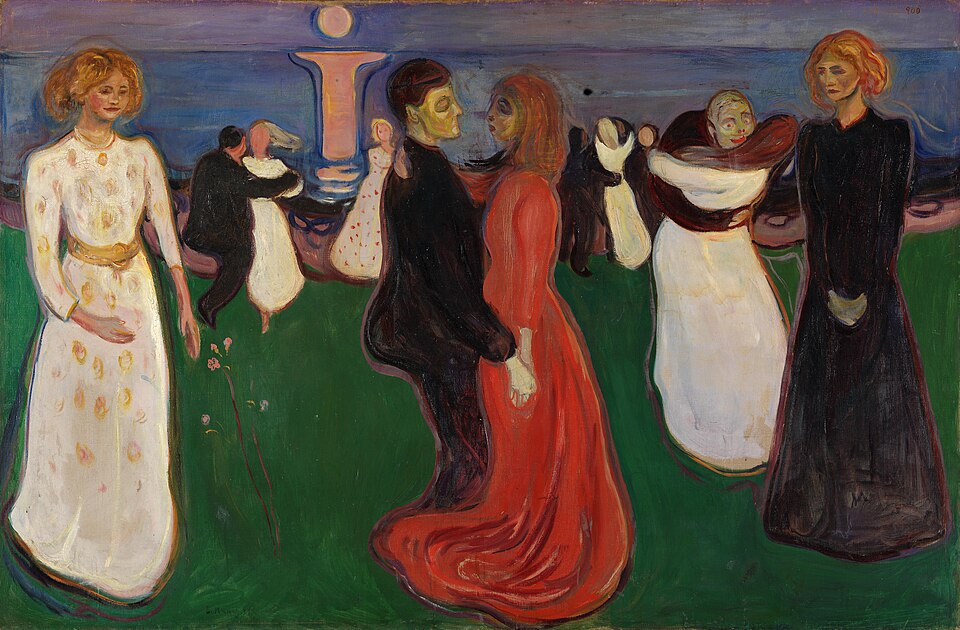
Couples dance on the grass by the water under the moon, while two women stand alone, one in white and one in black. Munch painted The Dance of Life in 1899 to 1900 as part of his great cycle on love, anxiety and death.
The story behind the painting
The Dance of Life was an important work in The Frieze of Life, Munch's project on love, sexual anxiety and death. He is said to have been inspired by Helge Rode's 1898 play Dansen gaar, a copy of which he kept in his own library. Wikipedia dates the picture 1899 to 1900, while Wikidata gives no date. Within that project this large canvas gathers love, desire and loss into a single night scene by the water.
What to look for
Several couples dance on grass beside the water, and the moon hangs above them. Its reflection on the water forms a column of light that is read as a phallic symbol. At the sides, apart from the dancers, two women stand alone: one young and dressed in white, the other older and dressed in black. The canvas measures about 129 by 191 cm. The wide format lets the dancers, the lone women and the moonlit water spread out side by side.
Meaning and intent
The women are often read as the stages of life: the young virgin in white, the mature woman in red, and the old widow in black. The painting may also reflect Munch's feelings toward the women in his own life, since he had a history of love affairs that ended in heartbreak. Seen this way, the bright dance becomes a quiet story of longing, fulfilment and loss. The two lone women frame the dancers like a before and an after.
Legacy
Olaf Schou bought the painting in Oslo in 1910 and immediately gave it to the National Gallery, so it is now in the National Museum of Norway. The picture keeps finding new audiences: in 2026 Madonna referred to it in the song One Step Away on her album Confessions II, and the writer George Vilorio named a chapter of his memoir The Lonesome Dance of Life. It can still be seen in Oslo, in the national collection that received it more than a century ago.
Le saviez-vous ?
- Painted in 1899 to 1900 by Edvard Munch.
- Part of his cycle The Frieze of Life.
- Possibly inspired by Helge Rode's 1898 play Dansen gaar.
- Given to the National Gallery in Oslo by Olaf Schou in 1910.
À propos de l'artiste
Edvard Munch (1863-1944)
femme · homme · danse · Musée national de Norvège
Autres œuvres de Edvard Munch
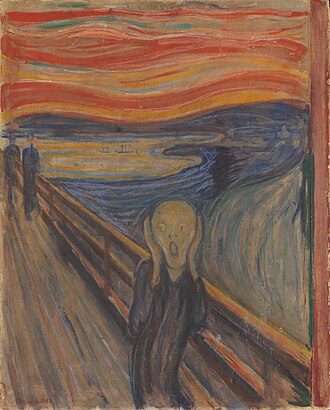 Le Cri - Edvard Munch (1893)
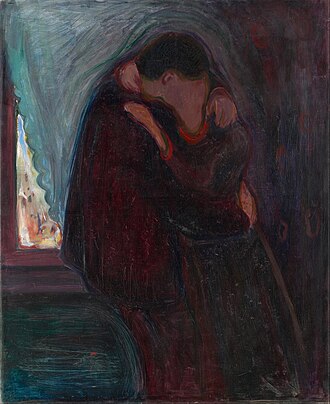 Le Baiser - Edvard Munch (1897)
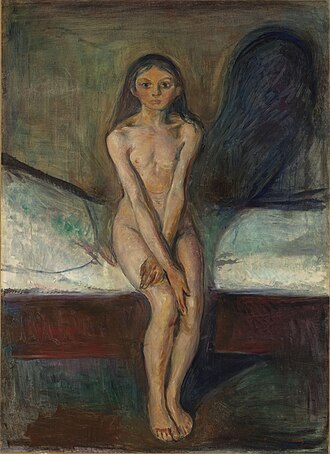 Puberté - Edvard Munch (1895)
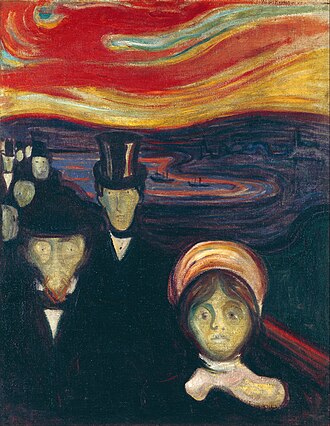 Anxiété - Edvard Munch (1894)
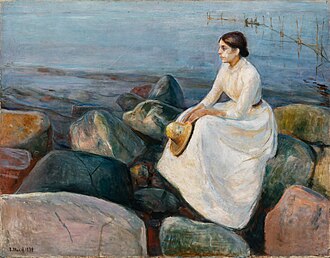 Inger sur la plage - Edvard Munch (1889)
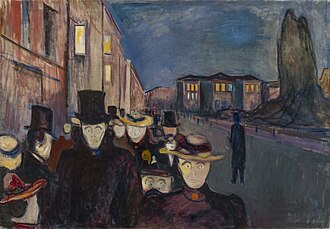 Soirée sur l'avenue Karl Johan - Edvard Munch (1892)
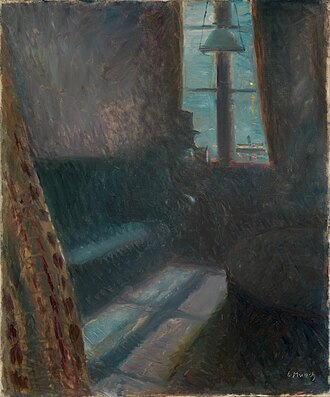 Nuit à Saint-Cloud - Edvard Munch (1890)
 Autoportrait à la cigarette - Edvard Munch (1895)