Tête d’apôtre
Diego Velázquez · 1619
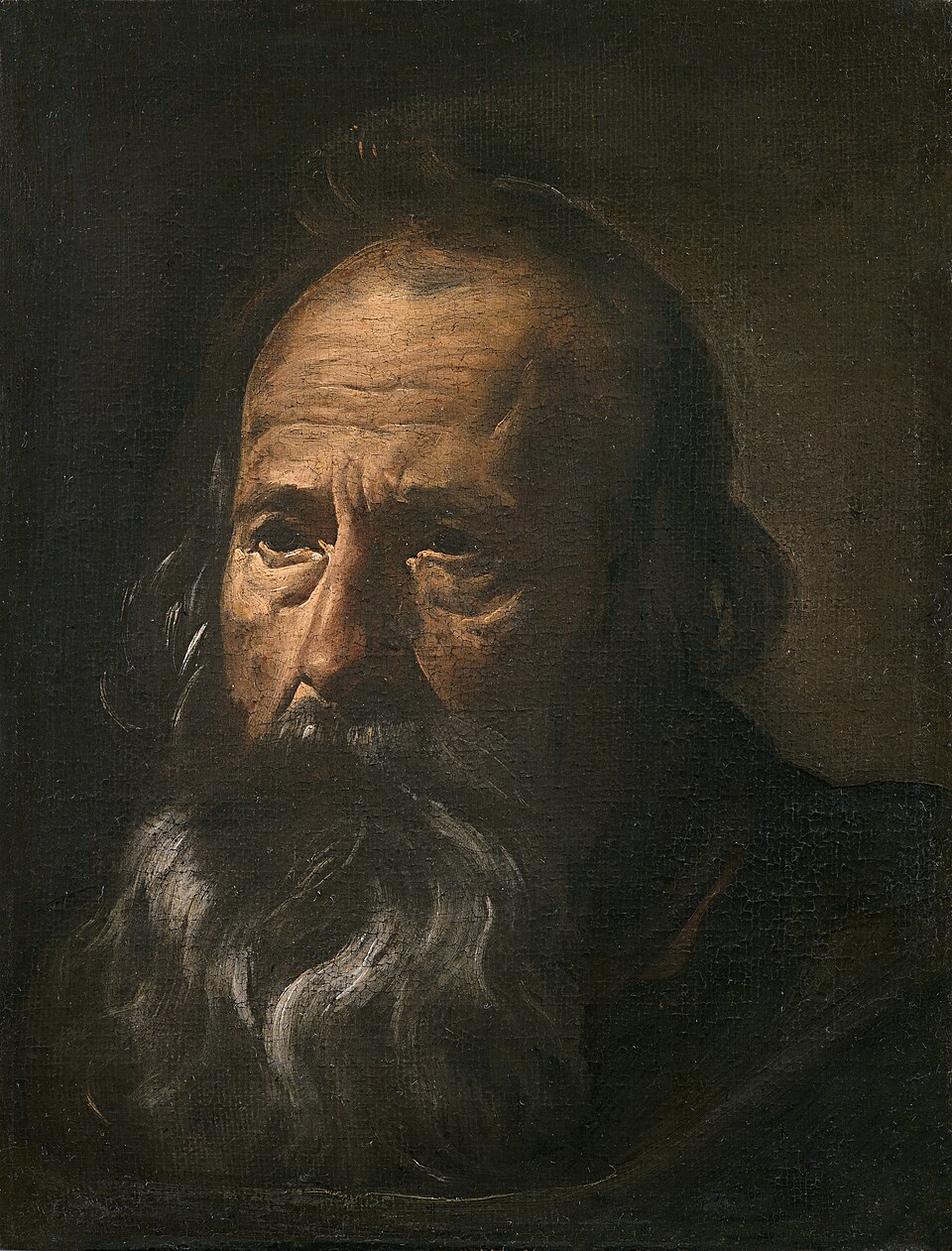
An old man's head, white beard flowing, lit against dark brown. The young Velázquez probably painted it in Seville, though no one wrote it down before 1914, and scholars still argue over whose face it is.
The story behind the painting
Velázquez painted this head in oil on canvas around 1619 to 1620; Wikidata gives 1619. The canvas was cut down at its edges at an unknown date. It may have belonged to a series of apostles painted in Seville, together with the Saint Thomas in Orléans and the Saint Paul in Barcelona. In 1772 Antonio Ponz saw apostle paintings at the Seville Charterhouse said to be by Velázquez, but Francisco Pacheco said nothing of them when he visited in 1632, which keeps the link in doubt.
What to look for
The painter used a dark brown ground, typical of his early Seville work. The dry modelling of the face, with a few touches of light on the skin, contrasts with the fluid handling of the white beard. The likeness to the Barcelona Saint Paul is especially strong, as if the same model were reversed. Benito Navarrete has noted a resemblance to an engraving of Plato by Werner van den Valckert. The canvas is about 38 by 29 cm.
Meaning and intent
Alfonso E. Pérez Sánchez writes that the attribution to Velázquez has been largely accepted, while some critics still keep a question mark. José López-Rey accepted it with reservations because of its condition, and tentatively called the head Saint Paul. At the Prado's 2007 exhibition Fables of Velázquez, his authorship was reaffirmed for a very sure execution that conveys life and energy with great economy of colour. The doubt is real, but so is the force of the head itself.
Legacy
The picture became known in 1914, when it belonged to the Marquis of Casa Torres. A cleaning in 2003 showed it was in good condition apart from the trimming, with only small losses in the clothing. The Museo del Prado acquired it in 2006 and has placed it on deposit at the Museum of Fine Arts of Seville. After the purchase it was shown in the Prado's Fables of Velázquez exhibition in 2007, as number 5.
Le saviez-vous ?
- Painted around 1619 to 1620 in Seville.
- Possibly part of a series of apostles.
- Known only since 1914.
- Owned by the Prado since 2006, on deposit in Seville.
À propos de l'artiste
Diego Velázquez (1599-1660)
portrait · homme · musée du Prado
Autres œuvres de Diego Velázquez
 Les Ménines - Diego Velázquez (1656)
 La Reddition de Bréda - Diego Velázquez (1635)
 Vénus à son miroir - Diego Velázquez (1644)
 Les Fileuses - Diego Velázquez
 Innocent X - Diego Velázquez
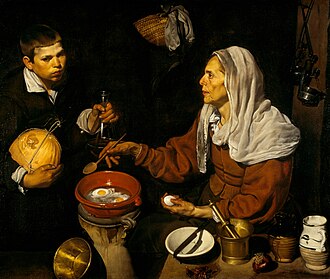 Vieille faisant frire des œufs - Diego Velázquez (1618)
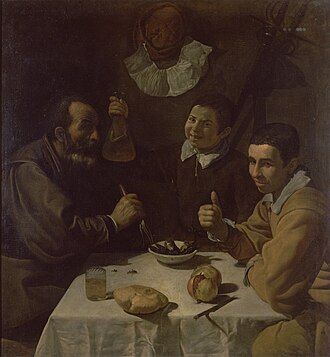 Trois hommes à table, le déjeuner - Diego Velázquez (1617)
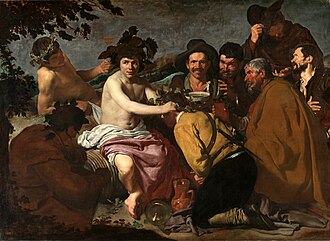 Le Triomphe de Bacchus - Diego Velázquez (1628)
Œuvres d'artistes liés
 Le Souper à Emmaüs - Caravaggio (1601)
 La Vocation de saint Matthieu - Caravaggio (1609)
 Saint Francis in Meditation - Francisco de Zurbarán (1639)
 The Immaculate Conception - Francisco de Zurbarán (1661)
 Triple portrait de Charles Ier - Anthony van Dyck (1635)
 Charles Ier à cheval avec Monsieur de Saint Antoine - Anthony van Dyck (1636)
 L'Érection de la croix - Peter Paul Rubens (1609)
 L'Enlèvement des filles de Leucippe - Peter Paul Rubens (1618)
 La Ronde de nuit - Rembrandt van Rijn (1642)
 Autoportrait - Rembrandt van Rijn (1659)
 Le Joyeux Buveur - Frans Hals (1620s)
 Le Cavalier riant - Frans Hals (1624)