Adoration des Mages
Diego Velázquez · 1619
.jpg)
Velázquez was only twenty when he painted this crowded, glowing Adoration. Out of deep darkness, a single beam of light finds a mother and a tightly wrapped child.
The story behind the painting
Velázquez painted The Adoration of the Magi in 1619, when he was just twenty years old. It is the largest of his early works and an ambitious undertaking, both for its size and for its many figures. Scholars believe it was likely commissioned by the Jesuit Novitiate of San Luis in Seville, its earliest known record. His mentor and father-in-law, Francisco Pacheco, who had close ties to the Jesuits, probably helped shape the commission. The historian Julián Gallego even suggested that Velázquez used his own family as models: his wife Juana as the Virgin, his daughter Francisca as the Child, Pacheco as Melchior and the painter himself as Gaspar. Another historian, Antonio Domínguez Ortiz, notes there is no evidence for this, though live models remain likely.
What to look for
Start at the center, where the Christ Child lies tightly wrapped in white fabric. The Virgin Mary, in a pink dress and white mantle, holds him steadily, her expression calm. Saint Joseph stands on the right. On the left the three Magi press close together. Melchior kneels nearest to you in the foreground; behind him stands Balthazar, marked out by his ruff and red mantle; and between them Gaspar is almost hidden by Melchior's body. They bring gold, frankincense and myrrh, yet wear ordinary clothes. All the figures sit very close to the picture plane against a dark background. A strong beam of light falls from the upper left, bathing mother and child, while a foreboding landscape glimpsed at the top left adds tension.
Meaning and intent
This is a picture made for quiet devotion. One description says Velázquez "achieves a painting for meditation", delivering its religious message in a clear and direct way. The dramatic play of light and dark, called chiaroscuro, and the sharply defined figures belong to his Sevillian phase and show a clear debt to Caravaggio; some scholars call the work somber and tenebrist. The light itself carries meaning: it singles out the Virgin and Child as if with a divine radiance, while everything else falls into deep shadow. Dressing the kings in everyday clothes, and perhaps painting them from real people, brings the sacred story close to the viewer's own world.
Legacy
The painting's journey was long. When King Charles III expelled the Jesuits from Spain, their possessions were dispersed; one account says the Sevillian collector Francisco de Bruna acquired it, and the English traveler Richard Twiss reported seeing it there before 1775. After de Bruna's death in 1804, his nephew Luis Meléndez gave it to King Ferdinand VII. It was first placed at El Escorial and was once wrongly attributed to Zurbarán in a Prado catalogue. In 1819 it moved to the Museo del Prado in Madrid, where it hangs today. Scholars still debate its original size: a 1832 lithograph shows a wider scene, but José López Rey questioned whether that print can be trusted.
Le saviez-vous ?
- Painted in 1619, when Velázquez was twenty.
- Likely commissioned by the Jesuit Novitiate of San Luis in Seville.
- Wikidata gives 203 × 125 cm; Wikipedia gives 202 × 125 cm.
- At the Museo del Prado since 1819.
À propos de l'artiste
Diego Velázquez (1599-1660)
femme · art religieux · Marie · musée du Prado · garçon · Enfant Jésus · Adoration des mages
Autres œuvres de Diego Velázquez
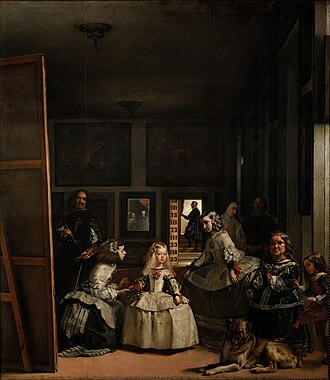 Les Ménines - Diego Velázquez (1656)
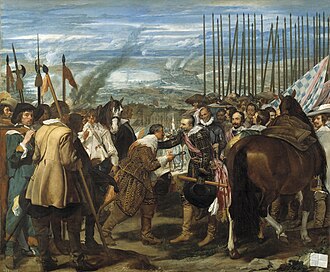 La Reddition de Bréda - Diego Velázquez (1635)
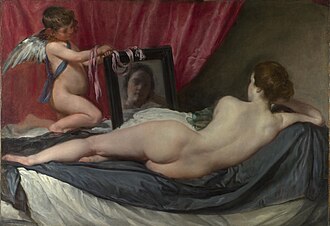 Vénus à son miroir - Diego Velázquez (1644)
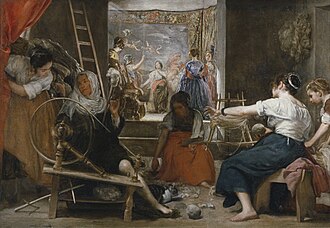 Les Fileuses - Diego Velázquez
.jpg) Innocent X - Diego Velázquez
Innocent X - Diego Velázquez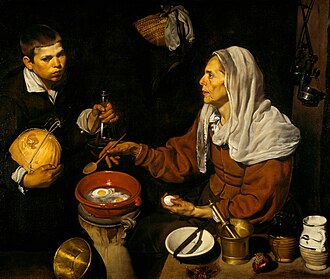 Vieille faisant frire des œufs - Diego Velázquez (1618)
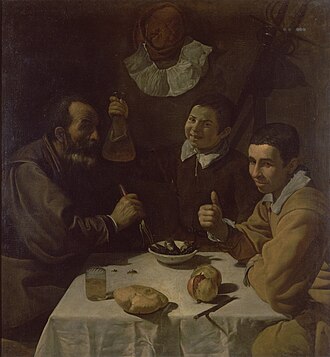 Trois hommes à table, le déjeuner - Diego Velázquez (1617)
.jpg) Le Triomphe de Bacchus - Diego Velázquez (1628)
Le Triomphe de Bacchus - Diego Velázquez (1628)
Œuvres d'artistes liés
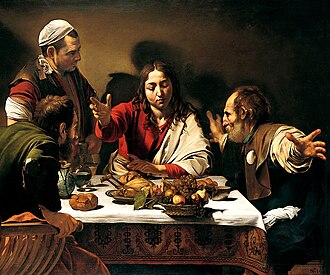 Le Souper à Emmaüs - Caravaggio (1601)
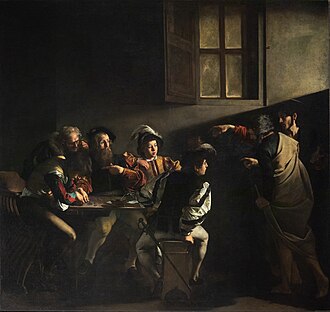 La Vocation de saint Matthieu - Caravaggio (1609)
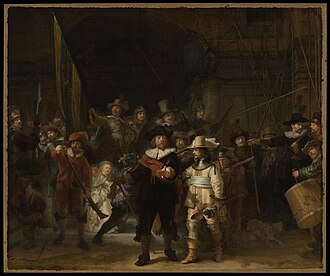 La Ronde de nuit - Rembrandt van Rijn (1642)
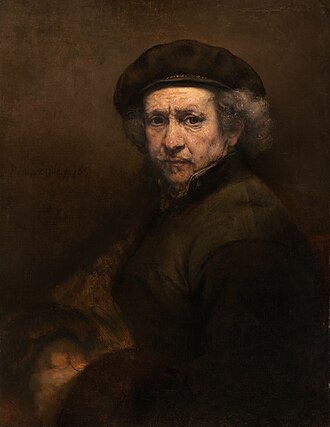 Autoportrait - Rembrandt van Rijn (1659)
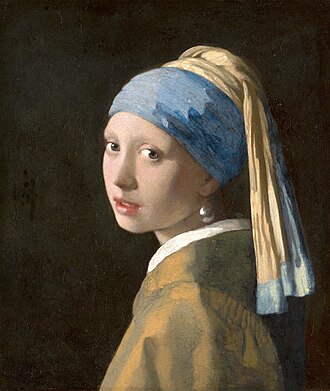 La Jeune Fille à la perle - Johannes Vermeer (1665)
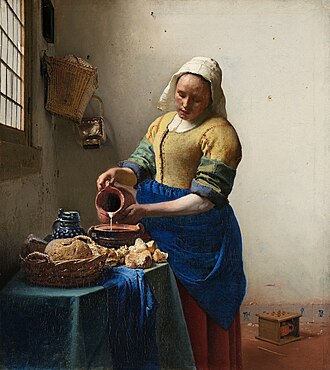 La Laitière - Johannes Vermeer (c. 1658)