Une botte d'asperges
Édouard Manet · 1880
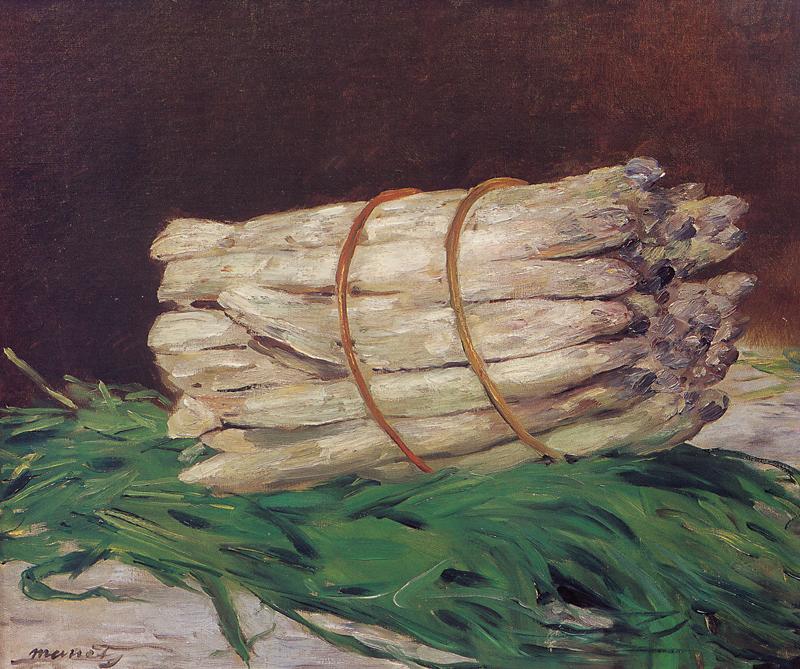
A humble bunch of white asparagus, tied with willow and laid on green leaves, became one of Manet's most loved still lifes, and the reason for one of the wittiest thank-you notes in art history.
The story behind the painting
Manet painted A Bundle of Asparagus in 1880 on commission from the art collector Charles Ephrussi. When the picture arrived, Ephrussi was so pleased that he paid the artist more than the sum they had agreed. Manet answered in his own way: he painted a second, much smaller canvas showing a single stalk, now known as A Sprig of Asparagus, and sent it to Ephrussi with a note saying there had been one missing from his bundle. The gift turned a simple purchase into a small, lasting joke between friends.
What to look for
In the centre lies the bunch of white stalks in bright light, seen from the side, the violet tips lined up toward the right edge. Two thin willow rods hold it together, the kind used to carry the vegetables to market. Beneath it is what Manet's biographer Theodore Duret called a bed of green leaves. A bluish-white surface, perhaps a cloth or a pale marble slab, shows at the lower left, where Manet signed his name, and the upper half is a dark black-brown. The writer Gotthard Jedlicka saw blue, white, rose and violet in the stalks, and red, blue, green and yellow in each separately painted tip.
Meaning and intent
The motif comes from the old tradition of still life, but the art historian Mikael Wivel noted that Manet displays the asparagus the way a greengrocer would show his goods. The leaves and purple tips have the hard task of separating the pale stalks from a background of similar tones. Jedlicka described brushwork ranging from broad, thick paint to the finest lines and dots, and the museum director Gert von der Osten called the picture openly impressionist, painted with ingenious accuracy. It is a modest subject treated as worthy of full attention.
Legacy
In 2008 the Wallraf-Richartz-Museum and Fondation Corboud in Cologne studied the painting closely for the exhibition Impressionism: How the light came to the canvas. Under light shone from behind, they found that Manet had laid the brown background thinly on a grey primed canvas in an old-master manner, leaving the asparagus area free. Under the microscope, the stalks showed narrow strokes placed side by side and crossed, with colours mixed on the canvas itself, wet on wet, suggesting a single working session. The Wikipedia article places the work in Cologne, while Wikidata lists both the Wallraf-Richartz Museum and the Metropolitan Museum of Art.
Le saviez-vous ?
- Painted in 1880 for the collector Charles Ephrussi.
- Manet followed it with A Sprig of Asparagus as a playful gift.
- Studied with microscope and transmitted light in Cologne in 2008.
- Measures about 46 by 55 cm.
À propos de l'artiste
Édouard Manet (1832-1883)
impressionnisme · Metropolitan Museum of Art · nature morte
Autres œuvres de Édouard Manet
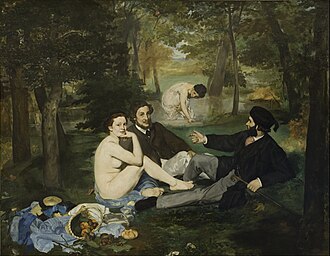 Le Déjeuner sur l'herbe - Édouard Manet (1863)
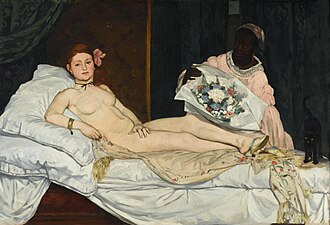 Olympia - Édouard Manet (1863)
%20(33539037428).jpg) Un bar aux Folies Bergère - Édouard Manet (1882)
Un bar aux Folies Bergère - Édouard Manet (1882)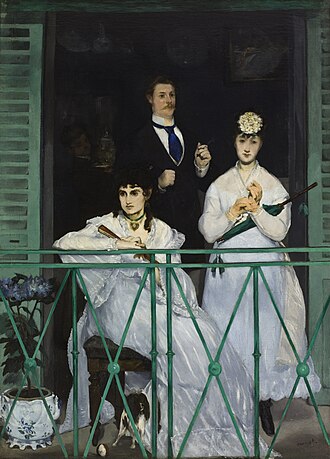 Le Balcon - Édouard Manet (1868)
.jpg) La Musique aux Tuileries - Édouard Manet (1862)
La Musique aux Tuileries - Édouard Manet (1862).jpg) Le Fifre - Édouard Manet (1866)
Le Fifre - Édouard Manet (1866) Le Chemin de fer - Édouard Manet (1873)
 Berthe Morisot au bouquet de violettes - Édouard Manet (1872)
Œuvres d'artistes liés
 Impression, soleil levant - Claude Monet (1872)
 Nymphéas - Claude Monet (1906)
 Bal du moulin de la Galette - Pierre-Auguste Renoir (1876)
 Le Déjeuner des canotiers - Pierre-Auguste Renoir (1881)
 L'Absinthe - Edgar Degas (1875)
 La Famille Bellelli - Edgar Degas (1858)
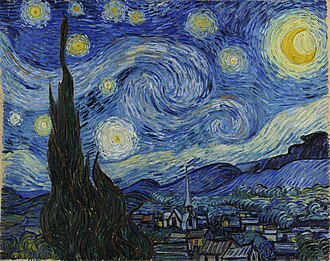 La Nuit étoilée - Vincent van Gogh (1889)
.jpg) Terrasse du café le soir - Vincent van Gogh (1888)
Terrasse du café le soir - Vincent van Gogh (1888)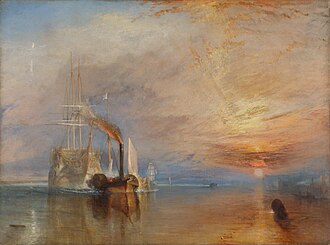 Le Dernier Voyage du Téméraire - J. M. W. Turner (1839)
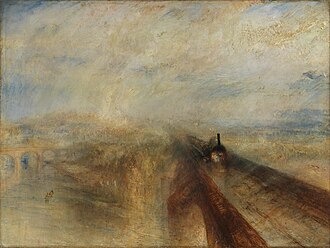 Pluie, Vapeur et Vitesse - J. M. W. Turner (1844)
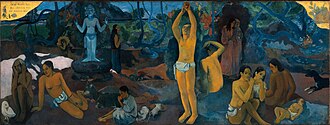 D'où venons-nous ? Que sommes-nous ? Où allons-nous ? - Paul Gauguin (1897-1898)
%201889.jpg) Le Christ jaune - Paul Gauguin (1889)
Le Christ jaune - Paul Gauguin (1889)