Madonna del Mare
Sandro Botticelli · 1477
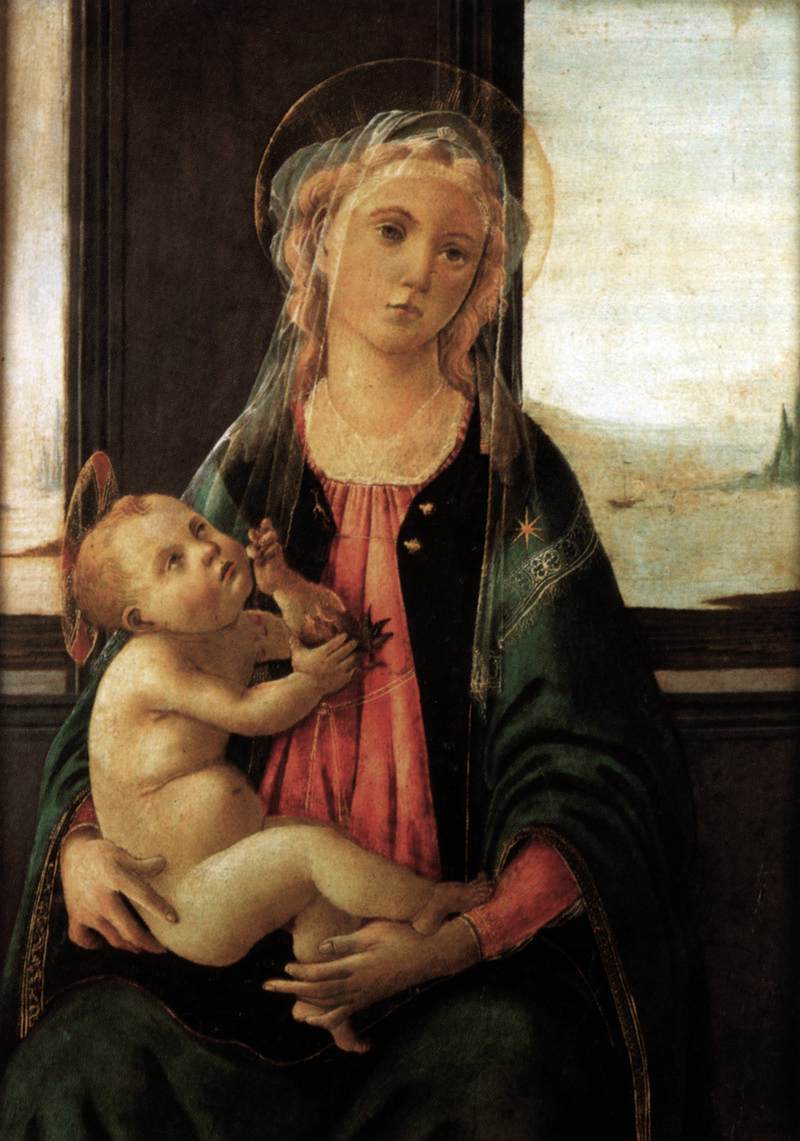
A small, quiet Madonna holds her child in a room with a window open onto the sea. Nobody can say for certain who painted her: Botticelli or the young Filippino Lippi.
The story behind the painting
The painting comes from the convent of Santa Felicita in Florence and is now kept in the Galleria dell'Accademia in the same city. It measures about 40 by 28 cm, a picture made for close, private looking. The dates do not agree: the French Wikipedia article places it around 1480 to 1481, while Wikidata gives 1477. Its Italian name, Madonna del Mare, Madonna of the Sea, comes from the stretch of coastline visible through the window behind the figures, a detail that gives the whole work its gentle identity.
What to look for
Mary sits at the centre on a bench, pensive, in a blue mantle with a star embroidered near the left shoulder over a red dress. On her head lies the transparent veil so typical of Botticelli. She holds the Child tenderly on her lap. He looks up at her, but her face turns slightly to the right and gazes into the distance, avoiding the viewer. In his right hand the Child holds an opened pomegranate, and with his left he tastes a few seeds he has pulled from it. Both figures wear haloes, and behind them a window opens onto the seashore under a clear sky.
Meaning and intent
The pomegranate is a symbol of fertility and of Mary's divinity, and the red of its seeds foreshadows the blood of the Passion. The sea links the picture to one of Mary's titles, Stella maris, star of the sea, which may also explain the star on her shoulder. The clothing, the veil and the rounded forms of the Child with his slight melancholy are typical of Botticelli. The lines are supple and elegant and the feeling calm, still far from the expressive intensity of the artist's last works.
Legacy
The question of authorship has never been settled. In 1893 Ulmann attributed the panel to Sandro Botticelli, while Ronald Lightbown gave it to the young Filippino Lippi. Later repainting makes a correct evaluation of the surface difficult, and many studies and restorations have not given a clear answer. The source also notes echoes of the linear style of Filippo Lippi, matured with a more energetic sense of volume modelled on the example of Andrea del Verrocchio. The painting remains in Florence, at the Galleria dell'Accademia, a tender image whose maker is still a mystery.
¿Sabías que…?
- Comes from the convent of Santa Felicita in Florence.
- Attributed to Botticelli by Ulmann (1893) or to the young Filippino Lippi by Lightbown.
- Named for the sea seen through the window.
- Dated about 1480-1481 by Wikipedia, 1477 by Wikidata.
Sobre el artista
Sandro Botticelli (1445-1510)
arte religioso · mujer · Virgen María · Niño Jesús · niño · Jesús de Nazaret · Primer Renacimiento · madre · Virgen con Niño
Más obras de Sandro Botticelli
 El nacimiento de Venus - Sandro Botticelli (c. 1485)
 La primavera - Sandro Botticelli (1480s)
 Venus y Marte - Sandro Botticelli (1485)
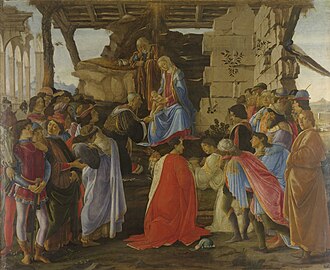 Adoración de los Magos - Sandro Botticelli (1470s)
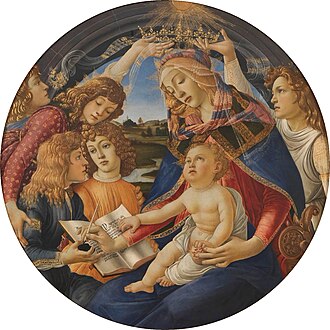 Virgen del Magnificat - Sandro Botticelli (1481)
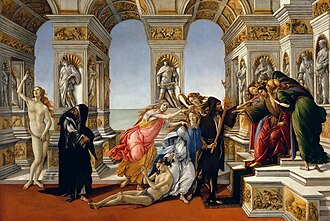 La Calumnia de Apeles - Sandro Botticelli (1490s)
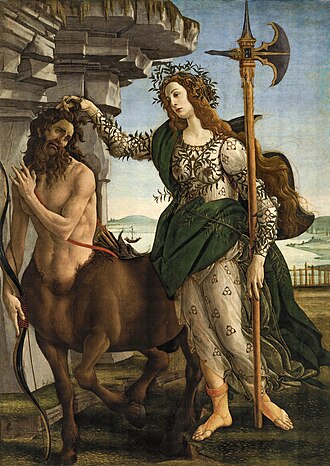 Palas y el Centauro - Sandro Botticelli (1482)
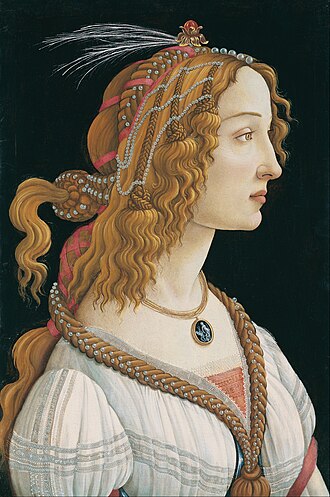 Retrato de una joven - Sandro Botticelli (1480)
Obras de artistas relacionados
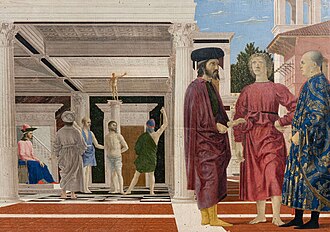 La flagelación - Piero della Francesca (1450s)
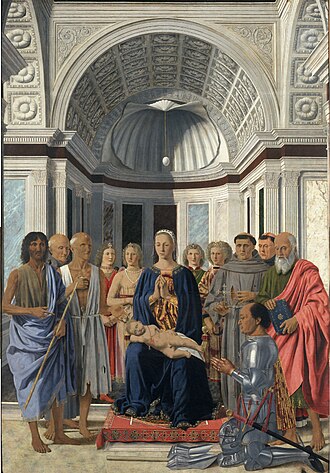 Sacra Conversación - Piero della Francesca (1472)
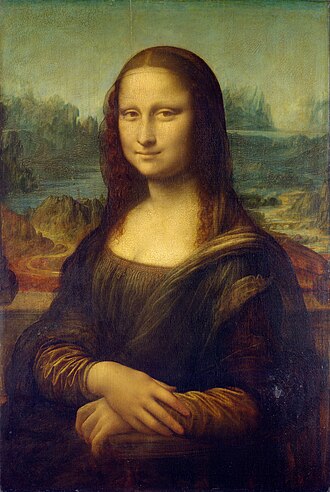 La Gioconda - Leonardo da Vinci (1503-1519)
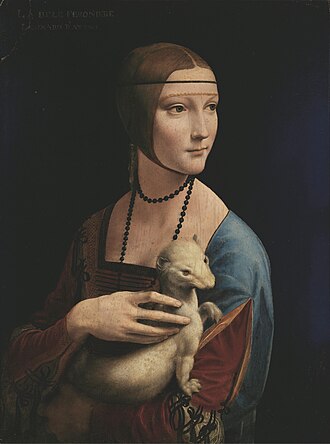 La dama del armiño - Leonardo da Vinci (1490)
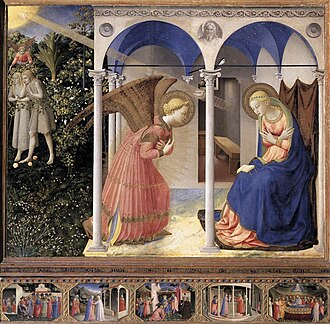 La Anunciación - Fra Angelico (1425)
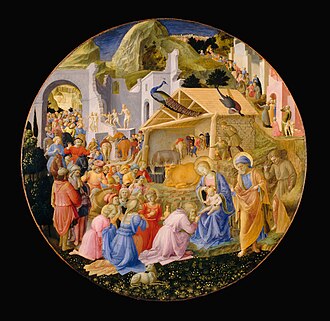 Adoración de los Reyes Magos - Fra Angelico (1430)
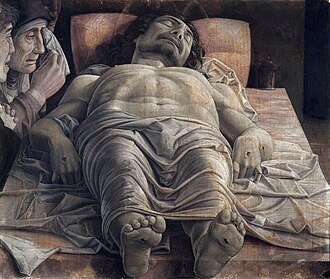 Lamentación sobre Cristo muerto - Andrea Mantegna (1483)
 Madonna de la Victoria - Andrea Mantegna