Silla con pipa
Vincent van Gogh · 1889
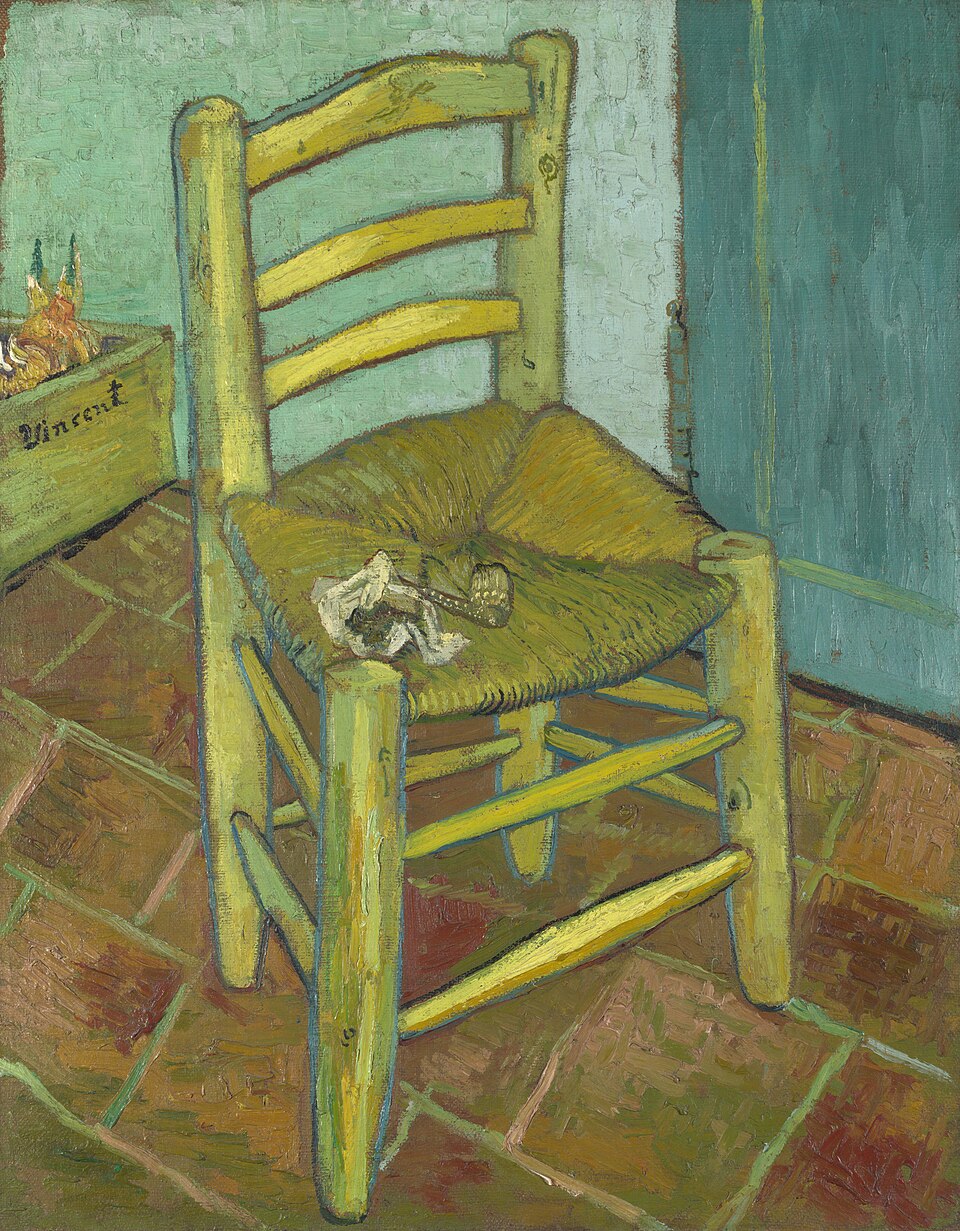
An empty rush-seated chair, a pipe and a pouch of tobacco: with almost nothing, Van Gogh painted one of the most personal portraits ever made, without a single face in it.
The story behind the painting
In May 1888 Van Gogh, living in Arles in the south of France, rented the Yellow House at 2 place Lamartine. He dreamed of filling it with his own work and began a series of paintings intended to decorate it, including The Bedroom, The Night Café and Still Life: Vase with Twelve Sunflowers. Van Gogh's Chair grew out of the turbulent weeks he shared there with Paul Gauguin. He painted it as a pair with Paul Gauguin's Armchair, before the crisis in which he cut off his ear, and he continued to refine both canvases after his hospitalisation, which is why the work is dated to 1888 by some sources and 1889 by others. A likely inspiration was Luke Fildes's illustration of Charles Dickens's empty chair, published in The Graphic after the novelist's death in 1870.
What to look for
Look at how little is here, and how much it holds. A plain wooden chair with a woven straw seat stands on a floor of terracotta tiles. On the seat lie a decorated pipe and a pouch of tobacco. In the background, near a door, is an onion box bearing Vincent's name, a quiet signature inside the scene. The colour is the real subject. Van Gogh built this picture on the complementary pair of blue and orange, while its companion portrait of Gauguin's chair uses red and green. Notice how the warm yellows and oranges of the chair and tiles push against the cool blues of the wall and door. In his own words, quoted in the sources, he sought in these studies an effect of light with bright colour.
Meaning and intent
An empty chair is an absence that speaks of a person. Here the simple, unpretentious chair, with its humble pipe and tobacco, stands in for Van Gogh himself. Its pendant, Paul Gauguin's Armchair, is far more lavish and ornate, and the contrast between them has long been read in the light of the two painters' stormy relationship: one sober and rustic, the other elegant and worldly. If Fildes's drawing of Dickens's chair was indeed the inspiration, the image also carries a note of mourning and memory, an object left behind by someone who is gone. Yet the colours are bright and the light is strong. The painting can be seen at once as a self-portrait without a face and as a portrait of a friendship already under strain.
Legacy
Van Gogh's Chair has become one of the artist's most iconic images. His cataloguer Jan Hulsker noted that there are few pictures by Vincent about which so much was written in later years. Its power comes from its modesty: an ordinary piece of furniture, painted with such intensity that it feels charged with a life story. Read alongside its pendant of Gauguin's armchair, it also offers one of art history's most vivid records of a famous artistic friendship at its breaking point. The painting is held by the National Gallery in London, where visitors can stand before this humble chair and find in it something of the man who sat there, smoked his pipe and dreamed of a house full of paintings.
¿Sabías que…?
- It was painted as a pair with Paul Gauguin's Armchair.
- Van Gogh used blue and orange for his chair, red and green for Gauguin's.
- An onion box in the background bears Vincent's name.
- Luke Fildes's drawing of Dickens's empty chair is cited as an inspiration.
Sobre el artista
Vincent van Gogh (1853-1890)
posimpresionismo · National Gallery de Londres · bodegón · silla · pared · pipa
Más obras de Vincent van Gogh
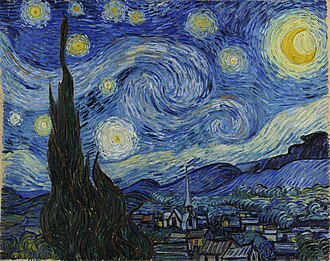 La noche estrellada - Vincent van Gogh (1889)
.jpg) Terraza de café por la noche - Vincent van Gogh (1888)
Terraza de café por la noche - Vincent van Gogh (1888)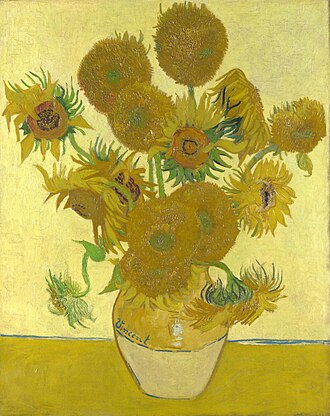 Los girasoles - Vincent van Gogh (1888)
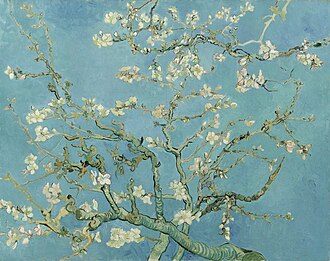 Almendro en flor - Vincent van Gogh (1890)
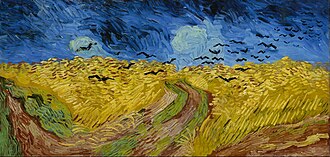 Campo de trigo con cuervos - Vincent van Gogh (1890)
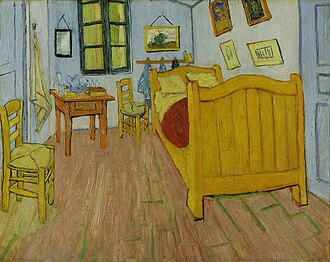 El dormitorio en Arlés - Vincent van Gogh (1888)
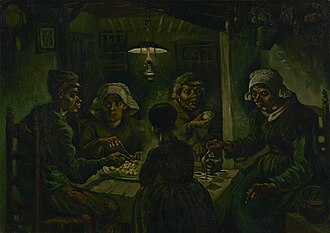 Los comedores de patatas - Vincent van Gogh (1885)
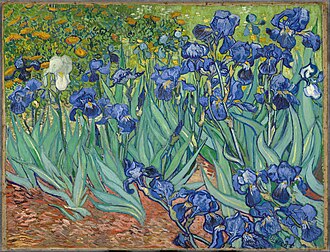 Lirios - Vincent van Gogh (1889)
Obras de artistas relacionados
 ¿De dónde venimos? ¿Qué somos? ¿Adónde vamos? - Paul Gauguin (1897-1898)
%201889.jpg) El Cristo amarillo - Paul Gauguin (1889)
El Cristo amarillo - Paul Gauguin (1889) Almuerzo sobre la hierba - Édouard Manet (1863)
 Olympia - Édouard Manet (1863)