El aguador de Sevilla
Diego Velázquez · 1620
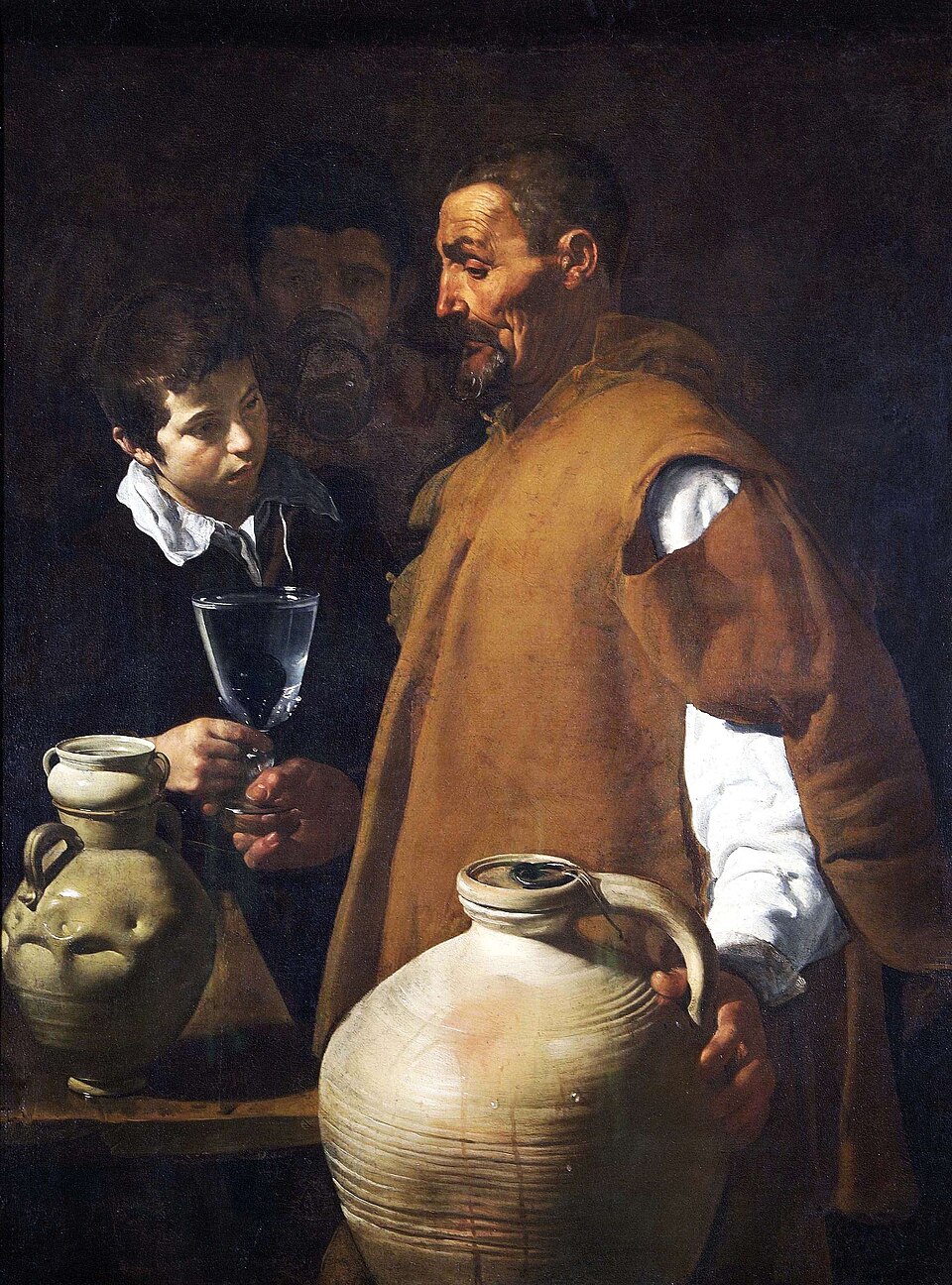
An old man hands a boy a glass of water, and though their fingers share the glass, their eyes never meet. Velázquez painted this hushed exchange in Seville when he was barely out of his teens.
The story behind the painting
The Waterseller of Seville exists in three versions by Diego Velázquez, dating from 1618 to 1622; the original, considered among the finest works of his Seville period, was painted when he was in his late teens or early twenties. José Gudiol placed it shortly before the artist moved to Madrid and classed it as a bodegón, because of its drinks and still objects, simple design and limited colour range. According to Jon Moffitt it was not a commissioned work. The subject was ordinary: water selling was a common trade among the poor of 17th-century Seville. Velázquez's teacher and father-in-law, Francisco Pacheco, praised these bodegones at a time when he felt they were not given due credit.
What to look for
Begin at the front, where the seller's enormous water jars glisten with splashes; they are so large and round that they almost push into our space. Light enters from the left, catching the young boy and the drops of water on the pot. Follow the old man's hand to the glass he offers: inside is a fig, placed to make the water taste fresher. Now study his face, weathered by sun and deeply lined, with short shaved hair and plain old clothes that give him the air of a monk or philosopher. Behind them, in the shadows, a young man drinks; time has faded him somewhat. The boy may share a model with The Lunch and Old Woman Cooking Eggs.
Meaning and intent
Notice what does not happen. The old man does not look at the boy, the boy does not look at him or at the man behind, and no one looks at us. Both touch the same glass, yet their gazes never meet, perhaps because of age or social standing. Writers on the painting see in it Velázquez's respect for the poor: the simple, elemental life of a water seller is treated with the weight of a higher subject, and even the slightest gestures seem like sacred acts. Like Caravaggio, whose influence is felt here, Velázquez does not idealise; he captures the imperfections of the pots, their damp sides, the gleam on glass and water, faithful to life.
Legacy
The painting's journey is remarkable. It entered the Spanish Royal Collection, moving from the Buen Retiro Palace to the Royal Palace of Madrid, where Antonio Ponz saw it and Anton Raphael Mengs praised it. During the Napoleonic wars it was taken by Joseph Bonaparte, and the Duke of Wellington recovered it, with 82 other paintings, at the Battle of Vitoria; the King of Spain let him keep them. It hangs today in the Waterloo Gallery at Apsley House in London, Wellington's former home. Two other versions survive, one in the Uffizi in Florence and one in Baltimore. Antonio Palomino was the first to mention the painting, though his description is considered exaggerated.
¿Sabías que…?
- Three versions, dating from 1618-1622
- Painted in Velázquez's late teens or early twenties
- Recovered by Wellington at the Battle of Vitoria
- Hangs in the Waterloo Gallery, Apsley House, London
Sobre el artista
Diego Velázquez (1599-1660)
Más obras de Diego Velázquez
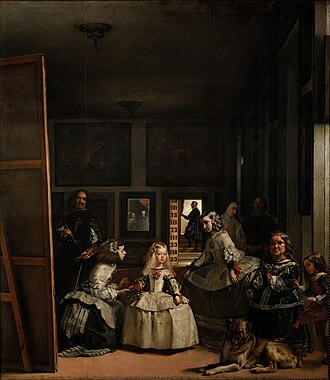 Las meninas - Diego Velázquez (1656)
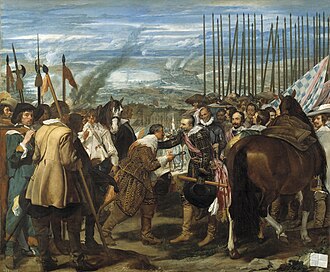 La rendición de Breda - Diego Velázquez (1635)
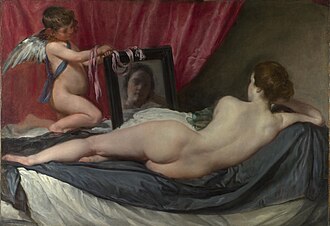 Venus del espejo - Diego Velázquez (1644)
 Las Hilanderas - Diego Velázquez
.jpg) Inocencio X - Diego Velázquez
Inocencio X - Diego Velázquez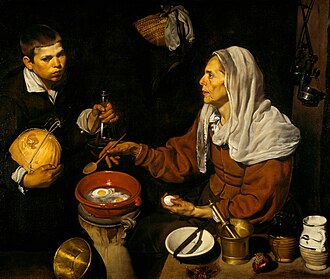 Vieja friendo huevos - Diego Velázquez (1618)
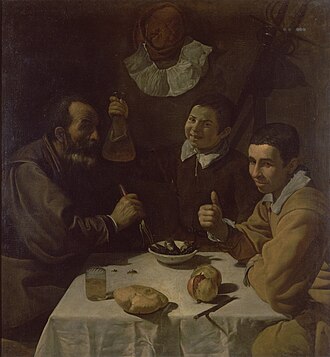 El almuerzo - Diego Velázquez (1617)
.jpg) El triunfo de Baco - Diego Velázquez (1628)
El triunfo de Baco - Diego Velázquez (1628)
Obras de artistas relacionados
 La cena de Emaús - Caravaggio (1601)
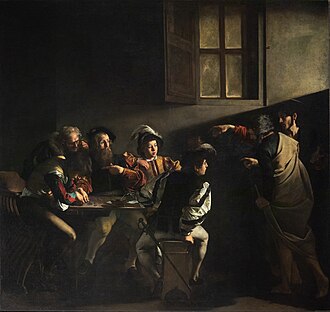 La vocación de San Mateo - Caravaggio (1609)
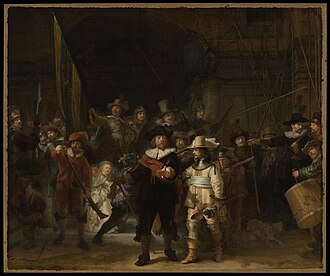 La ronda de noche - Rembrandt van Rijn (1642)
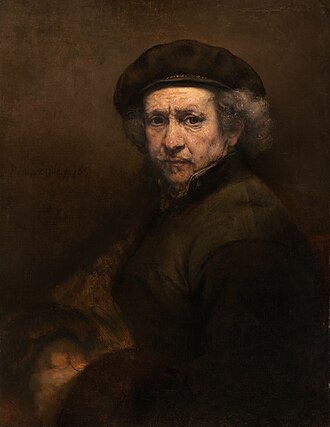 Autorretrato - Rembrandt van Rijn (1659)
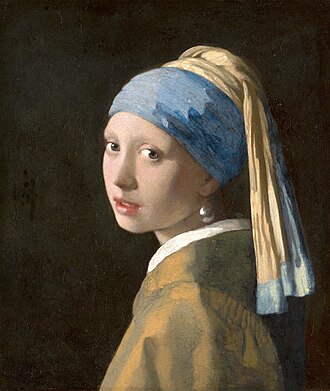 La joven de la perla - Johannes Vermeer (1665)
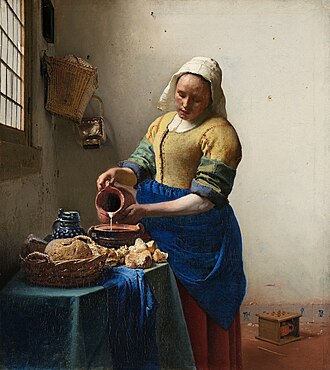 La lechera - Johannes Vermeer (c. 1658)