El almuerzo
Diego Velázquez · 1617
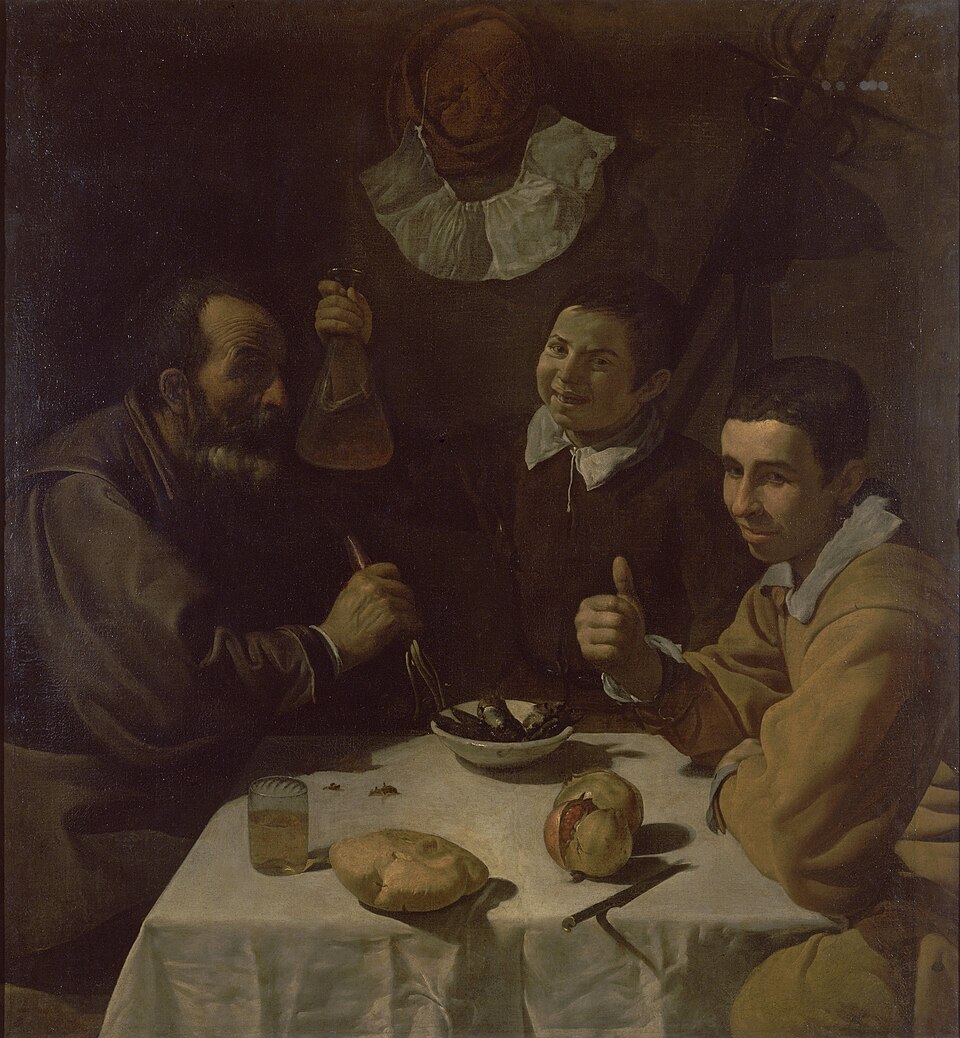
A crumpled tablecloth, two pomegranates, a piece of bread - and a young man grinning straight out at you, thumb raised. It is one of the very first paintings Velázquez ever finished.
The story behind the painting
The Lunch is a very early work by Diego Velázquez, finished around 1617, long before he became the great court painter of Spain. The surviving sources say little about why or for whom it was made, so it is best enjoyed for what it shows: a young artist testing himself on a humble subject - ordinary people gathered around a simple meal. It belongs to the tradition of genre painting, scenes of everyday life. Velázquez returned to the same idea soon after: The Farmers' Lunch, dated 1618, is nearly identical to this canvas, a sign that the composition mattered to him and that he was still working it out.
What to look for
Start with the table. A white cloth, still marked by its creases, carries two pomegranates and a piece of bread. On the left sits an old man; on the right, a young man smiles and appears to give a thumbs-up sign. Between and behind them, a boy who seems carefree pours wine into a jug. Then let your eyes drift to the wall at the back, where objects hang like a second still life: a white neck-band, a leather bag, and on the right, a sword. Notice how much of the picture is built from plain things - cloth, fruit, leather - given the same attention as the faces.
Meaning and intent
The sources do not offer a fixed interpretation, and it is wise not to invent one. What we can say is that Velázquez gives an everyday meal the seriousness usually reserved for grander subjects. Three figures of different ages share one table: an old man, a young man and a boy, one quiet, one smiling outward, one busy with the wine. The hanging sword, bag and collar hint at lives beyond this room, but the painting leaves them unexplained. Part of its charm is precisely that openness - a moment of ordinary company, caught without a sermon.
Legacy
The Lunch belongs to the collection of the Hermitage Museum in Saint Petersburg. From 2 February to 25 August 2019 it travelled to Amsterdam, where it was shown under the title 'The Breakfast' at the H'ART Museum in the exhibition 'De Schatkamer!'. Its near-twin, The Farmers' Lunch of 1618, lets viewers compare how a young Velázquez revisited his own idea. For anyone who knows only his later royal portraits, this table of bread and fruit is a reminder of where his gift for looking began: with ordinary people and things, observed closely.
¿Sabías que…?
- The Lunch is nearly identical to another Velázquez painting, The Farmers' Lunch of 1618.
- In 2019 it was exhibited in Amsterdam under the title 'The Breakfast'.
- It is one of Velázquez's very earliest paintings, finished around 1617.
Sobre el artista
Diego Velázquez (1599-1660)
escena de género · Museo del Hermitage
Más obras de Diego Velázquez
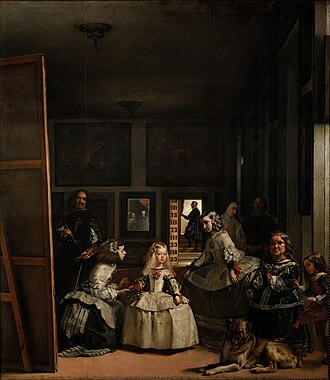 Las meninas - Diego Velázquez (1656)
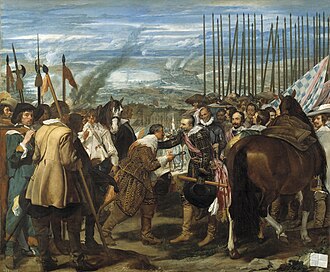 La rendición de Breda - Diego Velázquez (1635)
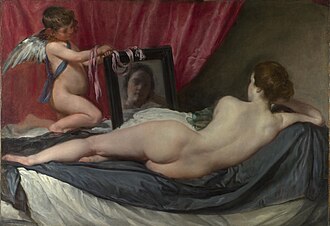 Venus del espejo - Diego Velázquez (1644)
 Las Hilanderas - Diego Velázquez
.jpg) Inocencio X - Diego Velázquez
Inocencio X - Diego Velázquez Vieja friendo huevos - Diego Velázquez (1618)
.jpg) El triunfo de Baco - Diego Velázquez (1628)
El triunfo de Baco - Diego Velázquez (1628).jpg) La fragua de Vulcano - Diego Velázquez (1630)
La fragua de Vulcano - Diego Velázquez (1630)
Obras de artistas relacionados
 La cena de Emaús - Caravaggio (1601)
 La vocación de San Mateo - Caravaggio (1609)
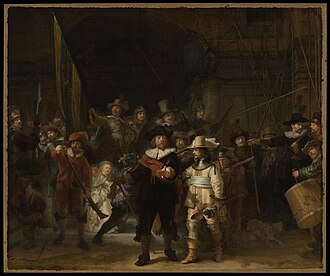 La ronda de noche - Rembrandt van Rijn (1642)
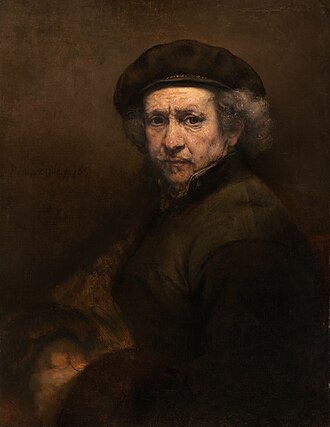 Autorretrato - Rembrandt van Rijn (1659)
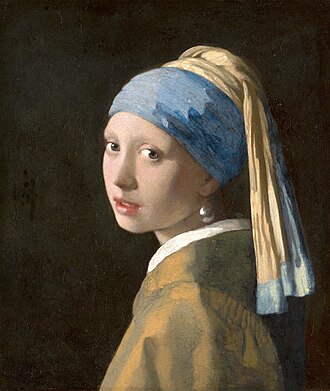 La joven de la perla - Johannes Vermeer (1665)
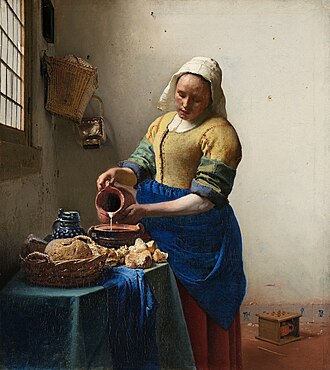 La lechera - Johannes Vermeer (c. 1658)