Magdalena Penitente
El Greco · 1580
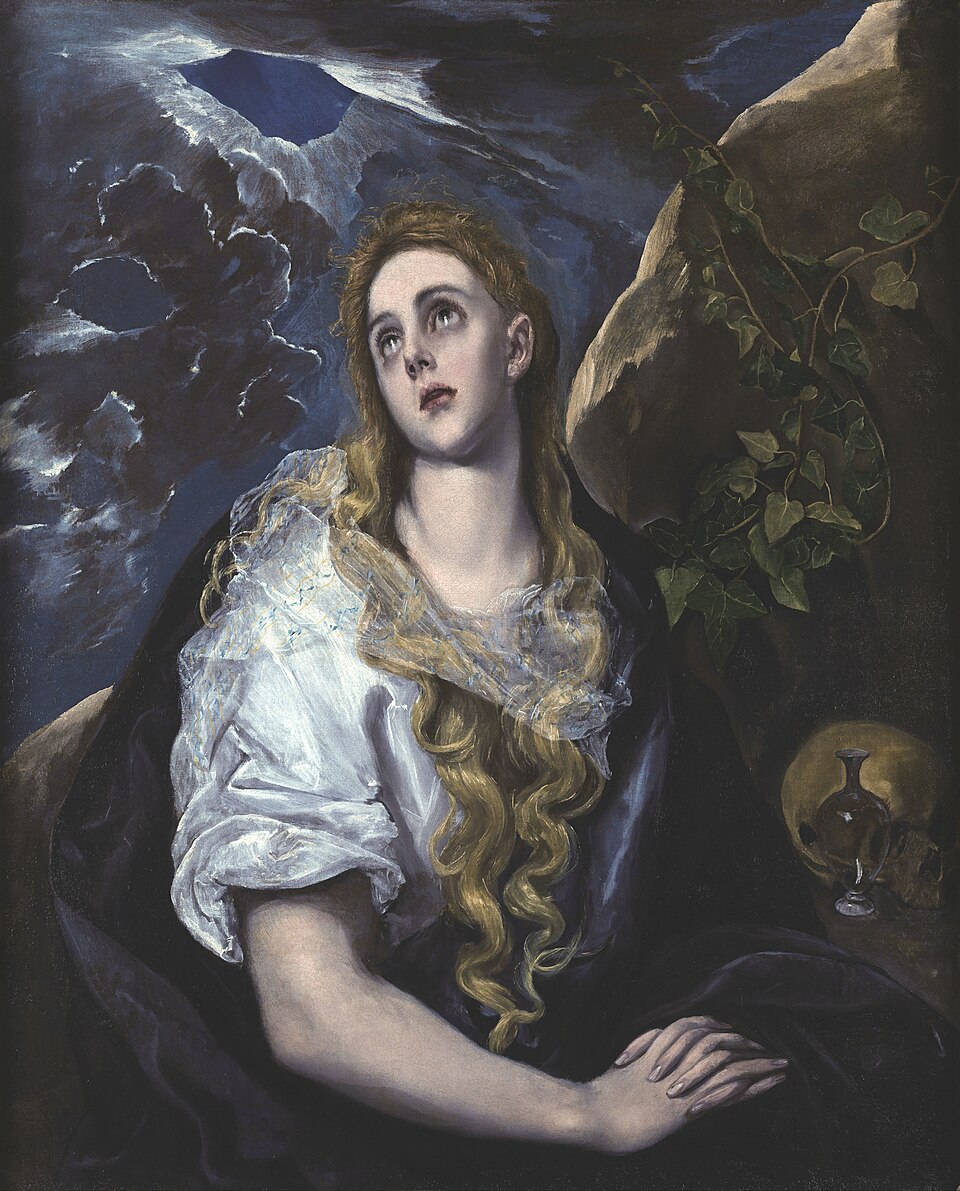
Mary Magdalene lifts tear-filled eyes to heaven, her hair falling loose, a transparent veil across her shoulders, a skull and a jar of ointment beside her. In this second version of the subject, El Greco made her gentler and closer to us.
The story behind the painting
Harold Wethey distinguished five models of the Penitent Magdalene in El Greco's work. This canvas, in the Nelson-Atkins Museum of Art in Kansas City, Missouri, is the second the painter made and forms type II. The article's opening dates it around 1577, its technical data around 1580 to 1585, and Wikidata gives 1580. Mary Magdalene combines three figures that Pope Gregory the Great identified as one: Mary of Bethany, sister of Martha and Lazarus; the woman who anointed Jesus's feet and dried them with her hair; and the woman at the cross who later became the first to see him risen.
What to look for
What sets this version apart from the first, now in Worcester, is that the rocky background with the skull, the jar of ointment and the ivy appears on the right. Look at the beautiful treatment of the hair, the delicacy of the transparent veil, the cool and luminous colour. Her neck is still too long, but more believable, and her gaze, eyes wet with tears, turned to heaven, is more convincing than in type I. The point of view is closer and the figure less geometric. The canvas measures 104 by 85 cm according to Wethey, or 101.6 by 81.9 cm according to the museum, and it is not signed.
Meaning and intent
Overall it is a sweeter, more exquisite and less theatrical work, more sensual and refined than the earlier variant. According to José Gudiol, El Greco here reaches a softer, more spontaneous modelling that had been hidden by the geometry of type I. With his first two versions of the theme, El Greco laid the foundations for his three later variations, and also for related subjects such as the Tears of Saint Peter and some images of Francis of Assisi: figures close to us, in ecstatic poses, tearful eyes raised to heaven, before a rocky background with ivy or vine leaves and sometimes a skull.
Legacy
The painting's condition is not ideal, as it has suffered heavy restorations; Wethey says the sky is much repainted. It was in Seville with D.J. Rodrigues in 1908, then with Enrique Martínez Lechón around 1929 and M. Gutiérrez, and then with Raimundo Ruiz y Ruiz in Madrid, before the William Rockhill Nelson Gallery acquired it in 1930. Wethey lists it as number 260 and Tiziana Frati as 20-b. The most interesting copy, by a very skilled follower, is in the parish church of Paradas near Seville.
¿Sabías que…?
- El Greco's second Penitent Magdalene, Wethey's type II.
- Dated about 1577 to 1585 in the sources; Wikidata says 1580.
- Not signed; the sky is heavily repainted.
- In the Nelson-Atkins Museum of Art since 1930.
Sobre el artista
El Greco (1541-1614)
arte religioso · manierismo · melena · María Magdalena · cabeza ósea · Museo Nelson-Atkins · Mortificación de la carne
Más obras de El Greco
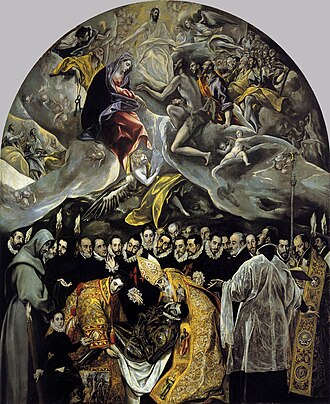 El entierro del Conde de Orgaz - El Greco (1586)
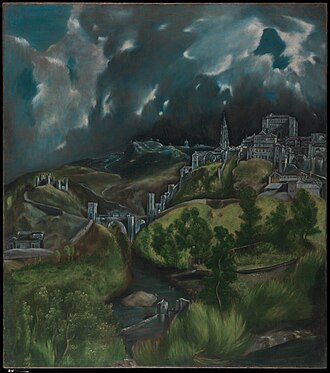 Vista de Toledo - El Greco (1596)
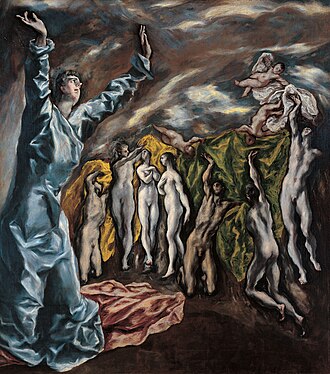 Visión del Apocalipsis - El Greco (1610)
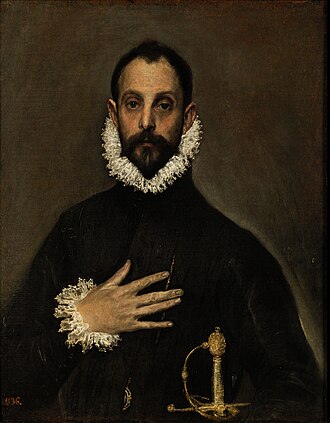 El caballero de la mano en el pecho - El Greco (1580)
%20-%20Laoco%C3%B6n%20-%20Google%20Art%20Project.jpg) Laocoonte - El Greco (1610s)
Laocoonte - El Greco (1610s)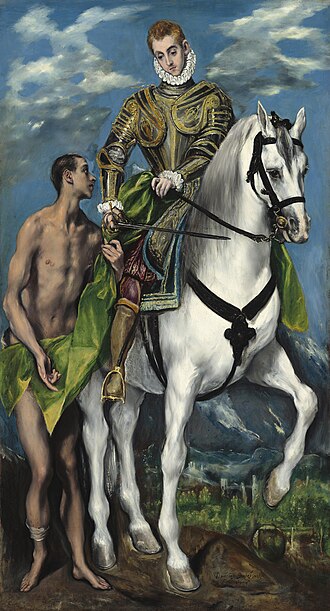 San Martín y el mendigo - El Greco (1597)
.jpg) Adoración de los pastores - El Greco (1612)
Adoración de los pastores - El Greco (1612) Concierto de ángeles - El Greco (1600s)
Obras de artistas relacionados
.jpg) Venus de Urbino - Titian (1538)
Venus de Urbino - Titian (1538)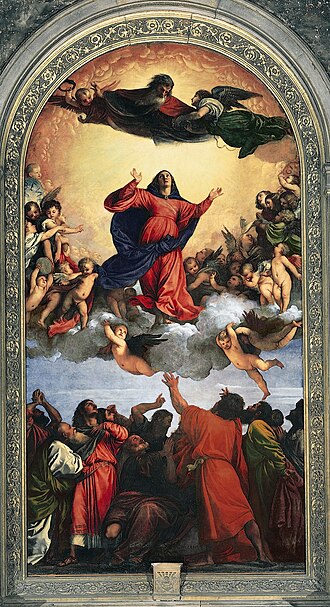 La Asunción de la Virgen - Titian (1510s)
 La cena de Emaús - Caravaggio (1601)
 La vocación de San Mateo - Caravaggio (1609)
 Los embajadores - Hans Holbein the Younger (1533)
 El cuerpo de Cristo en la tumba - Hans Holbein the Younger (1520s)