El parque
Gustav Klimt · 1900s
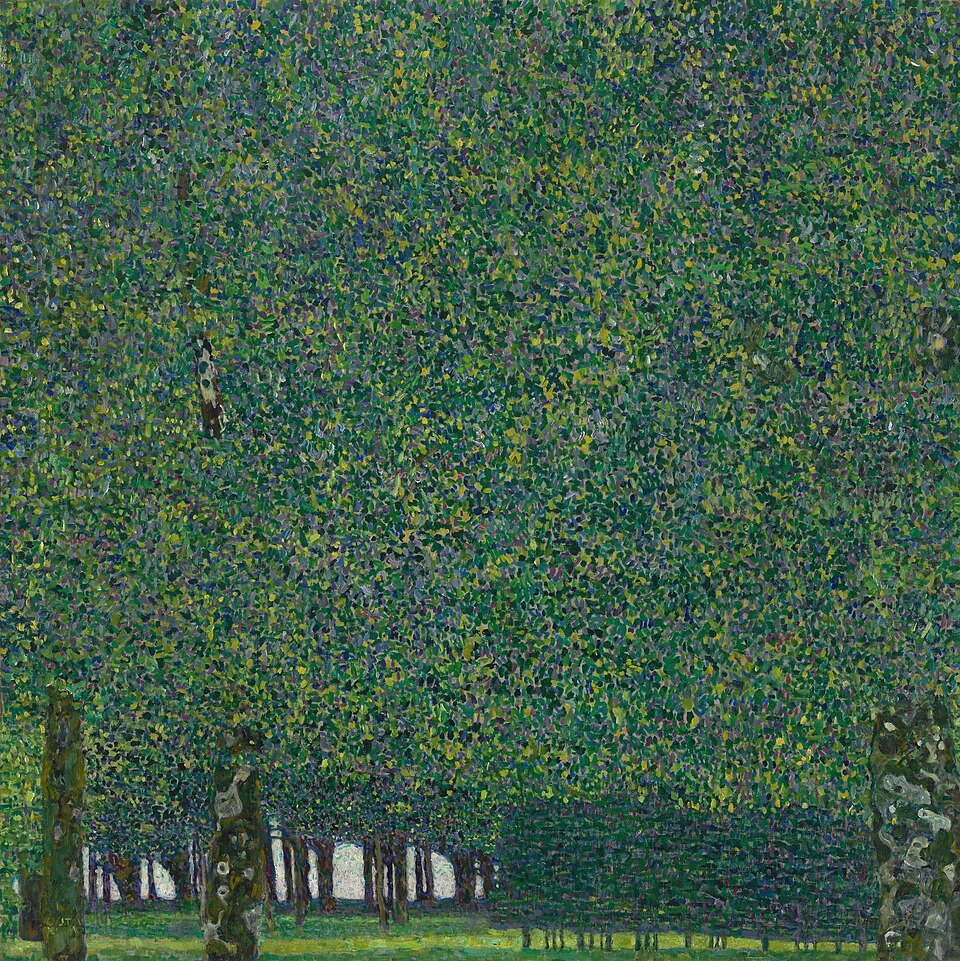
A wall of leaves fills almost the whole canvas, a shimmering mosaic of green, blue and yellow, with only a thin strip of trunks and grass below. Klimt painted this park on the Attersee, and it is close to abstraction.
The story behind the painting
Klimt spent his summer holidays at Schloss Kammer on the Attersee in Austria, and it was there that he developed his landscape painting. The Park shows a stand of trees in the castle grounds, on the land-facing side of the house, and was painted on the spot. Klimt left it undated, but it can be placed between the summer of 1909 and its first exhibition in April 1910. Wikipedia therefore gives about 1909 to 1910, while Wikidata only says the 1900s.
What to look for
Dense, tapestry-like foliage covers most of the surface. Only a narrow band at the bottom shows tree trunks, grass and a clipped hedge, and through the trunks a glimpse of the Attersee may be visible. Above, small spots of green, blue and yellow of similar size build a mosaic that is, to all intents and purposes, abstract. Stephan Koja sees the composition as orthogonal, built from rectangles of varying colour and density, broken only by one slender trunk at the upper left. Angela Wenzel notes a flickering effect from the small dots and changing brush directions. Koja adds that later varnishing altered the original colours and atmosphere.
Meaning and intent
Writers compare the canopy to the background of Klimt's The Golden Knight of 1903 and describe it as a flat mass of colour. Margaret Livingstone says the semi-repetitive leaves create an illusion of depth. Tobias G. Natter sees the canopy running past the edges of the picture and fusing into a flat tapestry, with light and distance entering only through the trunks below. Koja speaks of Klimt's personal pointillism turning into a mosaic-like form. The writer Ruth Ronen, drawing on Freud, argues that the green thicket and uncertain space make the viewer anxious, despite the apparently innocent subject, and that the anxiety lies in the spectator rather than in any detail of the image.
Legacy
The Park was first shown at the Ninth Venice Biennale from April to October 1910, then in Rome in 1911 and Stockholm in 1917. When Klimt died in 1918 it was still in his studio. The Neue Galerie in Vienna acquired it from Emilie Louise Flöge in 1928. By 1939 it was with Galerie St. Etienne in Paris, which moved to New York the next year. The Museum of Modern Art bought it from Otto Kallir in 1957. It was Klimt's first significant work in an American public collection, at a time when he was little known there, and it became one of the museum's most popular paintings.
¿Sabías que…?
- Painted at Schloss Kammer on the Attersee, about 1909 to 1910.
- First exhibited at the Venice Biennale in 1910.
- Still in Klimt's studio when he died in 1918.
- Bought by the Museum of Modern Art in 1957.
Sobre el artista
Gustav Klimt (1862-1918)
Más obras de Gustav Klimt
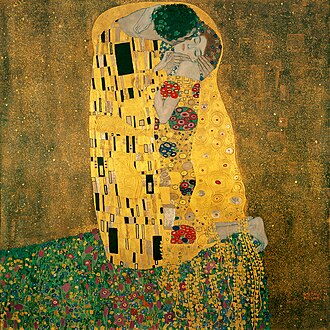 El beso - Gustav Klimt (1907-1908)
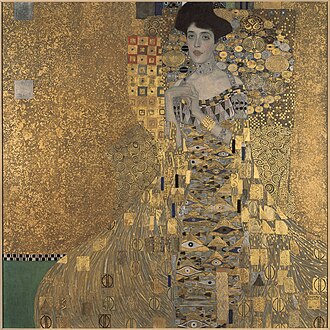 Retrato de Adele Bloch-Bauer I - Gustav Klimt (1907)
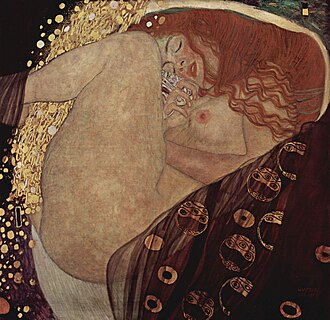 Dánae - Gustav Klimt (1907)
 Judit I - Gustav Klimt (1901)
 Las tres edades de la mujer - Gustav Klimt (1905)
 Dama con abanico - Gustav Klimt (1917)
 Retrato de Adele Bloch-Bauer II - Gustav Klimt (1912)
 Retrato de una dama - Gustav Klimt (1910s)