La venerable madre Jerónima de la Fuente
Diego Velázquez · 1620
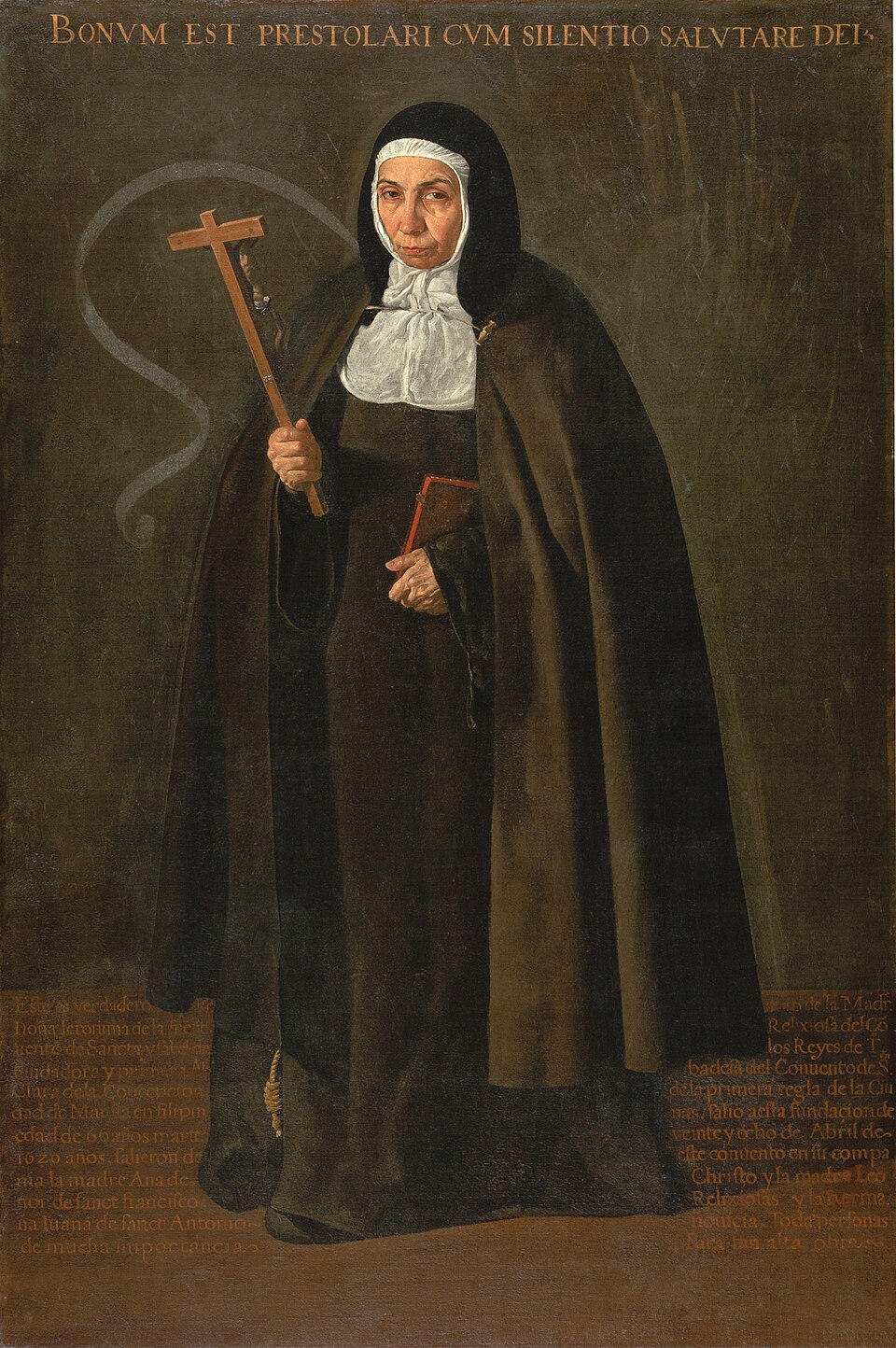
An old nun stands upright in the dark, a crucifix in one hand and a book in the other, staring straight at us. Velázquez painted her in Seville in 1620, as she waited to sail for Manila at the age of 66.
The story behind the painting
In June 1620 the Franciscan nun Jerónima de la Asunción stopped for about two months in Seville on her way to the Philippines, where she would found a convent. During that stay the young Velázquez painted her. The commission came either from one of the Franciscans travelling with her or from Alvaro de Villegas, vicar of the Santa Isabel convent in Toledo. At the time she was far more famous than the painter, and the portrait helped his reputation on the road that later made him a court painter. When the picture surfaced at an exhibition in 1926 it was credited to Luis Tristán, until restoration revealed Velázquez's signature.
What to look for
She stands full length against a dark ground, a small book in her left hand, a wooden crucifix gripped in her right. At the top runs a Latin line from Lamentations: it is good to await the salvation of God in silence. A speech scroll near her mouth reads, in a modified psalm verse, I shall be satisfied as long as he is glorified. A long Spanish caption at the bottom names her as foundress and first abbess of the convent of Santa Clara in Manila, who set out at 66 on Tuesday, 28 April 1620, with three companions. Look at the tight brushwork and the harsh, Caravaggesque light that shows every irregularity of her face and hands.
Meaning and intent
Velázquez, still shaped by his father-in-law and teacher Francisco Pacheco, aimed at a sacred image full of truth that also offered a model of sainthood. The crucifix points to her rigorous imitation of Christ's passion; a fellow nun, Ana, said she practised penitence with a cross, sometimes for hours. The inscriptions echo the Poor Clares' rule of not speaking without need. Yet the painting leaves out what accounts describe: a dry body full of scars and wounds from self-mortification. Here she is unscathed, upright, with an unyielding gaze and an authoritative presence. In 1633 Vicente Carducho wrote that such a portrait could ease the absence felt by the nuns left behind in Toledo.
Legacy
This is one of the earliest known portraits by Velázquez and one of the earliest records of the growing cult around Jerónima. The Museo del Prado acquired the full-length picture from the Santa Isabel convent in 1944, and it hangs in Madrid today. An almost identical copy remains in Toledo. A half-length version, painted either by Velázquez or by a follower, belongs to an anonymous collector in Santiago de Chile. Wikidata records the canvas at 160 by 110 cm and dates it 1620.
¿Sabías que…?
- Painted in Seville in June 1620.
- Attributed to Luis Tristán until restoration revealed Velázquez's signature.
- Acquired by the Museo del Prado from Santa Isabel, Toledo, in 1944.
- An almost identical copy remains in Toledo.
Sobre el artista
Diego Velázquez (1599-1660)
retrato · Museo del Prado · crucifijo
Más obras de Diego Velázquez
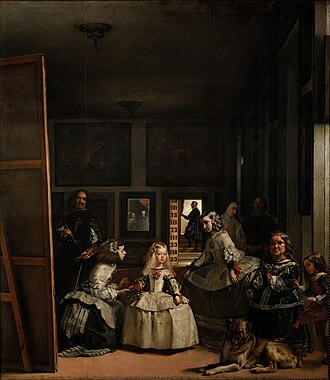 Las meninas - Diego Velázquez (1656)
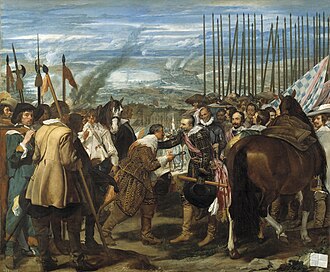 La rendición de Breda - Diego Velázquez (1635)
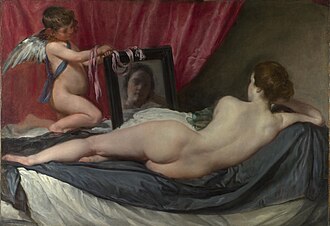 Venus del espejo - Diego Velázquez (1644)
 Las Hilanderas - Diego Velázquez
.jpg) Inocencio X - Diego Velázquez
Inocencio X - Diego Velázquez Vieja friendo huevos - Diego Velázquez (1618)
 El almuerzo - Diego Velázquez (1617)
.jpg) El triunfo de Baco - Diego Velázquez (1628)
El triunfo de Baco - Diego Velázquez (1628)
Obras de artistas relacionados
 La cena de Emaús - Caravaggio (1601)
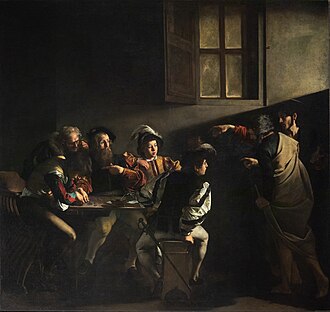 La vocación de San Mateo - Caravaggio (1609)
.jpg) La elevación de la cruz - Peter Paul Rubens (1609)
La elevación de la cruz - Peter Paul Rubens (1609)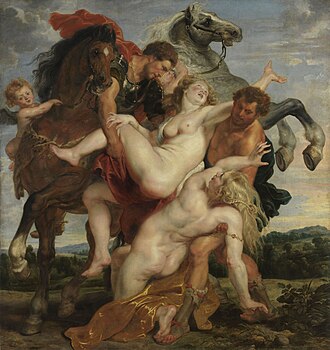 Rapto de las hijas de Leucipo - Peter Paul Rubens (1618)
%20-%20Google%20Art%20Project.jpg) Triple retrato de Carlos I - Anthony van Dyck (1635)
Triple retrato de Carlos I - Anthony van Dyck (1635)%20with%20M.%20de%20St%20Antoine%20-%20Google%20Art%20Project.jpg) Charles I (1600-1649) with M. de St Antoine - Anthony van Dyck (1636)
Charles I (1600-1649) with M. de St Antoine - Anthony van Dyck (1636)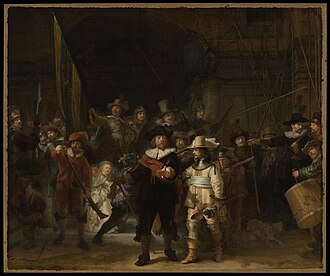 La ronda de noche - Rembrandt van Rijn (1642)
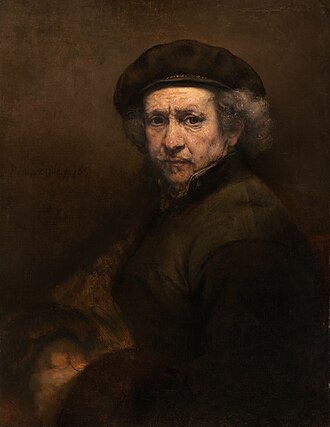 Autorretrato - Rembrandt van Rijn (1659)
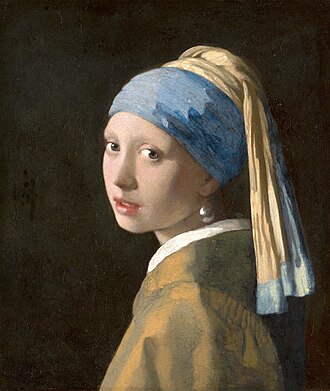 La joven de la perla - Johannes Vermeer (1665)
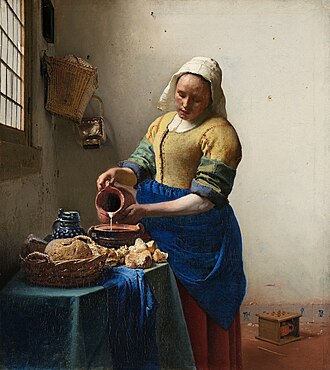 La lechera - Johannes Vermeer (c. 1658)