La Inmaculada Concepción vista por San Juan Evangelista
El Greco · 1580s
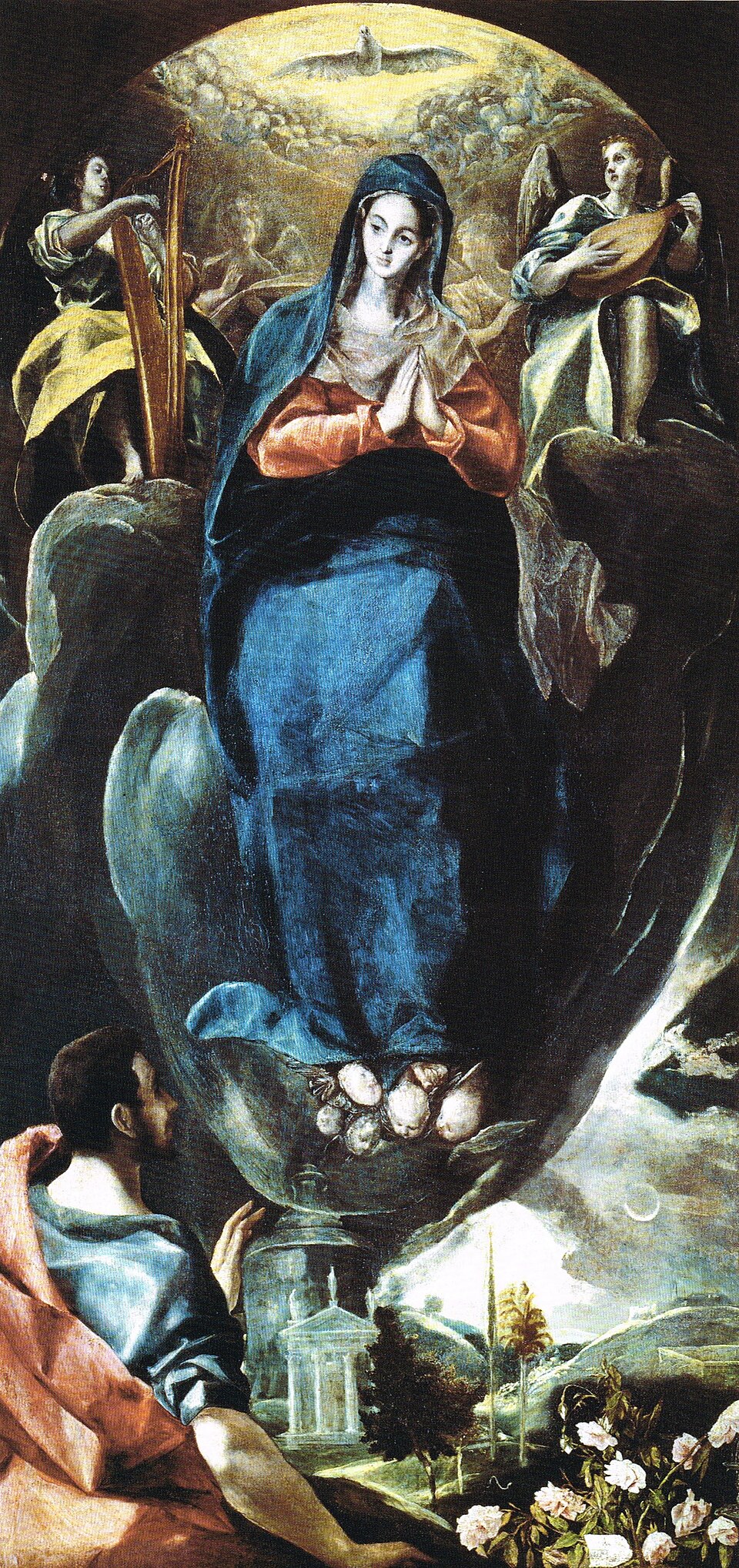
Saint John, his back to us, looks up at the Virgin floating above him, and in his place we see what he sees. Around 1585 El Greco turned a doctrine into a vision we are invited to share.
The story behind the painting
El Greco moved to Toledo in 1577 after years in Venice and Rome. He hoped for the patronage of King Philip II, but legal disputes over what he considered inadequate pay, and his choice to put his own style before a plain, naturalistic treatment of religious subjects, achieved the opposite, and he stayed in Toledo for the rest of his life. There he found success: between 1581 and 1585 demand for devotional works rose rapidly, and clients could choose from samples, often smaller versions, which he adapted. This oil on canvas dates from around 1585; Wikidata gives the 1580s.
What to look for
Start in the lower left corner, where Saint John sits with his back to the viewer, struck by the vision of the Madonna floating above. A mandorla frames Mary's head like a halo, rays of sunlight beam around her, and cherub heads at her feet form an implied throne, as in El Greco's Holy Trinity of 1577 to 1579. Look for the crescent moon below her, the roses, iris, olive and palm, and the enclosed garden. The canvas, 236 by 117 cm according to Wikidata, has an angular, schematic quality that reflects El Greco's ties to his Byzantine roots.
Meaning and intent
Instead of leading the eye from right to left in the usual Western way, El Greco puts John in the corner so that the viewer stands in his shoes and shares his vision. The saint, though important, gives the spotlight to the mother of Christ. His presence stands for the doctrine itself, through his vision at Patmos. The crescent moon reflects the widespread Spanish cult of the Virgin; the thornless roses suggest a relation between God and Christ without imperfection; the enclosed garden refers to Mary as hortus conclusus, a sign of her virtue and purity.
Legacy
The canvas is described as essentially a predecessor of El Greco's later Immaculate Conception, a theme he developed over a couple of decades of his career. It belongs to the years when his Toledo workshop grew, later producing architectural and framing devices for churches and enjoying a profitable decade from 1597 to 1607. The poet and preacher Hortensio Félix Paravicino wrote that Crete gave El Greco life and his craft, and Toledo a better homeland. According to Wikidata, this painting is today in the Museo de Santa Cruz in Toledo.
¿Sabías que…?
- Painted around 1585; Wikidata says the 1580s.
- John, seen from behind, places the viewer inside the vision.
- A predecessor of El Greco's later Immaculate Conception.
- Today in the Museo de Santa Cruz, Toledo.
Sobre el artista
El Greco (1541-1614)
arte religioso · manierismo · Juan el Evangelista · Museo de Santa Cruz
Más obras de El Greco
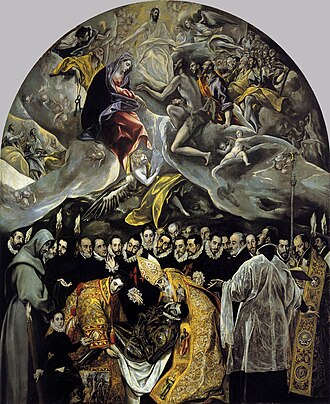 El entierro del Conde de Orgaz - El Greco (1586)
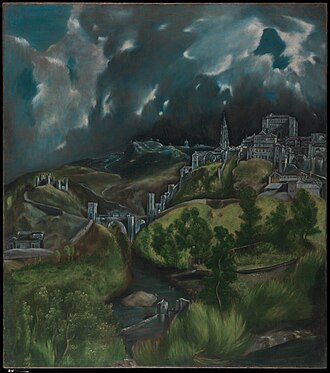 Vista de Toledo - El Greco (1596)
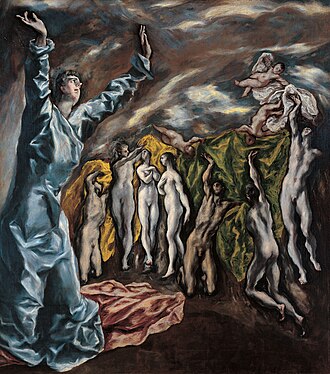 Visión del Apocalipsis - El Greco (1610)
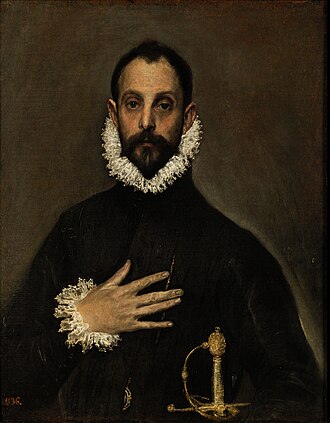 El caballero de la mano en el pecho - El Greco (1580)
%20-%20Laoco%C3%B6n%20-%20Google%20Art%20Project.jpg) Laocoonte - El Greco (1610s)
Laocoonte - El Greco (1610s)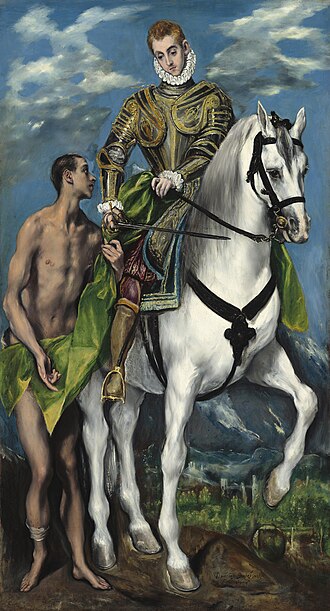 San Martín y el mendigo - El Greco (1597)
.jpg) Adoración de los pastores - El Greco (1612)
Adoración de los pastores - El Greco (1612) Concierto de ángeles - El Greco (1600s)
Obras de artistas relacionados
.jpg) Venus de Urbino - Titian (1538)
Venus de Urbino - Titian (1538)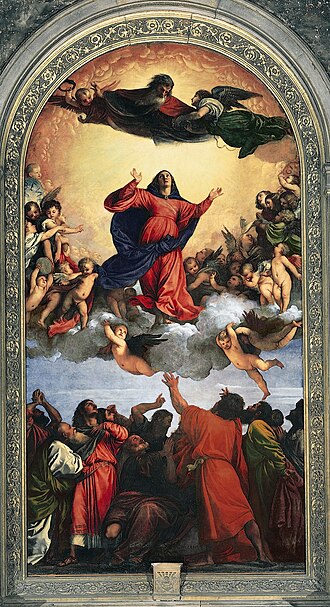 La Asunción de la Virgen - Titian (1510s)
 La cena de Emaús - Caravaggio (1601)
 La vocación de San Mateo - Caravaggio (1609)
 Los embajadores - Hans Holbein the Younger (1533)
 El cuerpo de Cristo en la tumba - Hans Holbein the Younger (1520s)