La Huida a Egipto
Sandro Botticelli · 1510
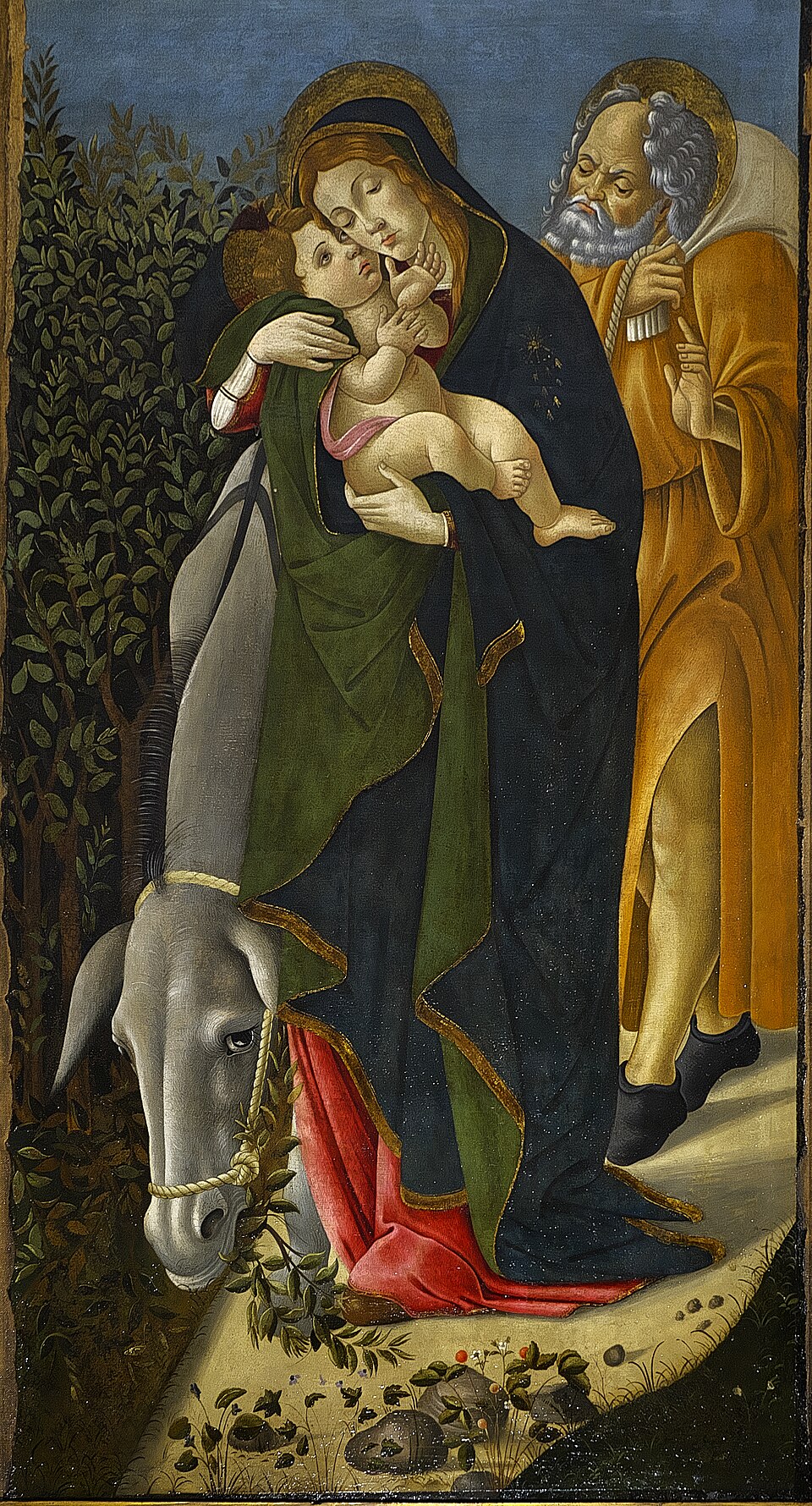
A family on the road, a patient animal, and at the centre a mother holding her child as if the whole journey rested in her arms. This Flight into Egypt comes from the very last year of Botticelli's life.
The story behind the painting
The French Wikipedia article dates The Flight into Egypt to 1510 and describes it as the work of Sandro Botticelli together with an assistant. That year matters: according to the English Wikipedia article on the painter, Botticelli died in Florence on 17 May 1510. The same article explains that many surviving works came from Botticelli or, especially, from his workshop, so that attribution is often uncertain, which helps us understand why an assistant's hand is named here. The painting, oil on canvas and measuring 151 by 89 centimetres according to Wikidata, is today kept at the Musee Jacquemart-Andre in Paris.
What to look for
The subject is the Holy Family and their donkey on the Flight into Egypt. Yet, as the French source notes, the tight framing and the use of foreshortening shift our attention firmly onto the Virgin Mary and the Christ Child. Together they form a full-length Madonna standing at the very centre of the composition, almost an image of devotion set inside a travel story. Wikidata lists Saint Joseph, a mule, a tree and flowers among the things depicted, quieter elements around the central pair. The tall, narrow format, nearly twice as high as it is wide, suits this upright, central figure.
Meaning and intent
A journey is usually told from the side, as movement across a landscape. Here the framing does something different: it lets the story of flight fold inward into a single still image of mother and child. Visitors can enjoy how an episode of danger and travel becomes, in Botticelli's late hands, a meditation centred on the two figures. The English article on the painter observes that in his last decade Botticelli moved away from the emerging High Renaissance, returning to a style many have described as more Gothic or archaic, a context worth keeping in mind before this picture.
Legacy
The sources available say little about the later history of this painting, and nothing about how it reached Paris, so we do not tell that part of the story here. What they do give is its present home, the Musee Jacquemart-Andre, which presents the work on its own website, and its place among resources such as the Federico Zeri Foundation catalogue. Wikidata classes the painting with the High Renaissance. For the viewer, it remains a rare chance to stand before a picture made in the final year of a great Florentine painter's life, completed with the help of his workshop.
¿Sabías que…?
- Dated 1510, by Botticelli and an assistant (French Wikipedia).
- Botticelli died in Florence on 17 May 1510.
- Oil on canvas, 151 x 89 cm (Wikidata).
- Kept at the Musee Jacquemart-Andre, Paris.
Wikipedia · Wikipedia (Sandro Botticelli) · Wikidata
Sobre el artista
Sandro Botticelli (1445-1510)
arte religioso · Virgen María · Niño Jesús · Alto Renacimiento · árbol · flor · José de Nazaret
Más obras de Sandro Botticelli
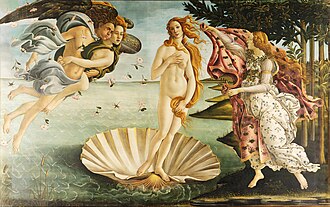 El nacimiento de Venus - Sandro Botticelli (c. 1485)
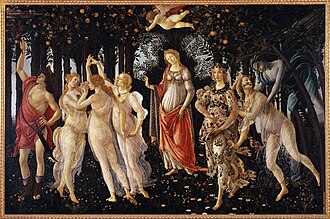 La primavera - Sandro Botticelli (1480s)
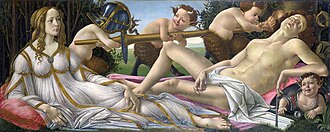 Venus y Marte - Sandro Botticelli (1485)
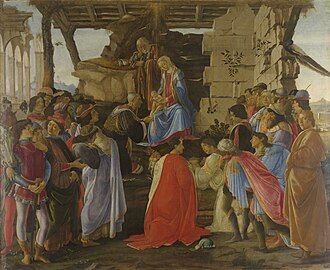 Adoración de los Magos - Sandro Botticelli (1470s)
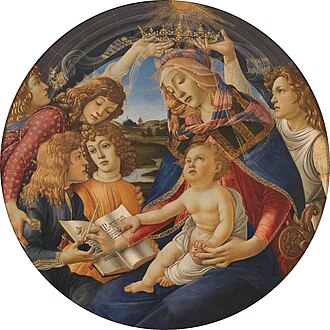 Virgen del Magnificat - Sandro Botticelli (1481)
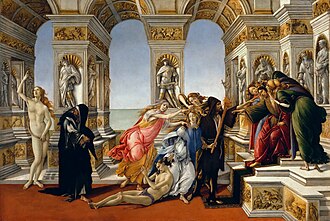 La Calumnia de Apeles - Sandro Botticelli (1490s)
.jpg) Palas y el Centauro - Sandro Botticelli (1482)
Palas y el Centauro - Sandro Botticelli (1482)%20-%20Google%20Art%20Project.jpg) Retrato de una joven - Sandro Botticelli (1480)
Retrato de una joven - Sandro Botticelli (1480)
Obras de artistas relacionados
 La Gioconda - Leonardo da Vinci (1503-1519)
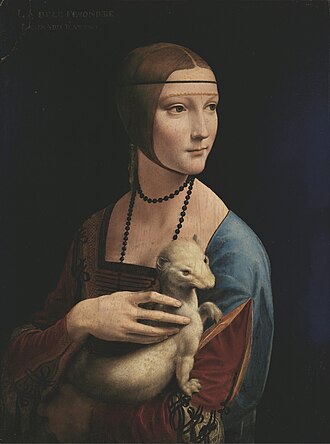 La dama del armiño - Leonardo da Vinci (1490)
.jpg) Venus de Urbino - Titian (1538)
Venus de Urbino - Titian (1538)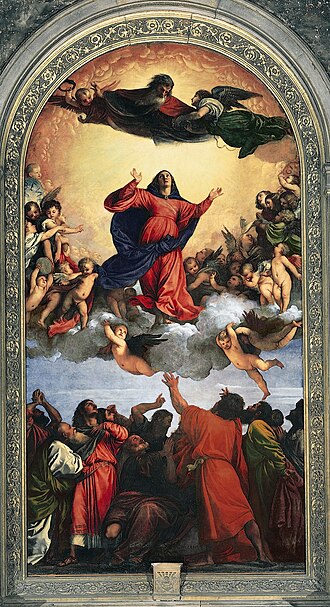 La Asunción de la Virgen - Titian (1510s)
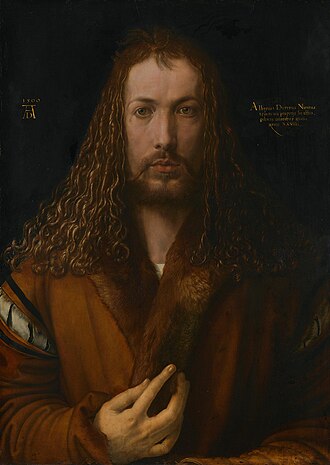 Autorretrato de Durero - Albrecht Dürer (1500)
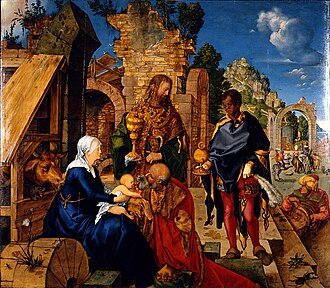 Adoración de los Magos - Albrecht Dürer (1504)