La coronación de la Virgen
El Greco · 1591
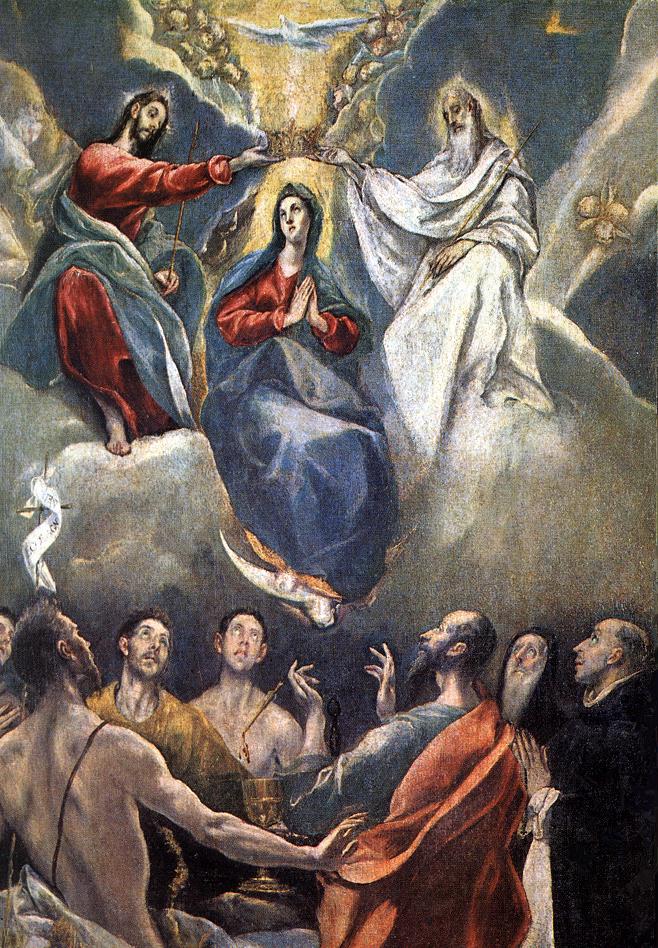
On a throne of clouds, resting on a crescent moon, Mary is crowned by the Father and the Son while saints gather below around a chalice. This is the first known version of a subject El Greco would return to again and again.
The story behind the painting
The canvas was part of the altarpiece of Talavera la Vieja, which no longer exists. It is documented in 1591 to 1592, and all the saints below except Francis and Paul were painted according to a contract of 1591. It is the first known version of the Coronation of the Virgin by El Greco, who would repeat the subject several times during his life. Harold Wethey listed it as number 9 in his catalogue. Today it is in the Museo de Santa Cruz in Toledo. It is oil on canvas and measures 105 by 80 cm.
What to look for
The composition is split into two zones. Above, Mary sits on a throne of clouds over a crescent moon and is crowned by God the Father and God the Son, watched by the Holy Spirit as a dove, with angels and seraphim around them. Jesus and Mary wear almost purple red tunics and blue cloaks, while the Father, in brilliant white, sits on clouds much lighter than those opposite. Below, saints surround a chalice held by John the Evangelist: Francis of Assisi, John the Baptist, Sebastian, Paul, Anthony the Abbot and Dominic. Look at the magnificent, almost naked figure of John the Baptist.
Meaning and intent
José Álvarez Lopera notes that the way Mary is shown makes her resemble an Immaculate Conception. José Gudiol stresses the daring chromatic asymmetry. The group of saints is almost symmetrical, with four figures on the left and three on the right, and that imbalance is answered by the intense light streaming from God the Father, which shows how much El Greco valued light. The Father here is more distant, majestic and idealised than in El Greco's earlier Trinity for Santo Domingo el Antiguo, yet never impersonal.
Legacy
Opinions on the execution differ. Wethey thought the drawing was El Greco's but the painting probably the work of his workshop, while Álvarez Lopera highlights the quality of the canvas and its importance as the first version. The signature, at the lower right by Saint Dominic, has been completely repainted and has no value as evidence. Its clear and simple structure, cottony clouds and gradually opening sky recall The Burial of the Count of Orgaz, and show El Greco's ability both to create and to vary his own imagery.
¿Sabías que…?
- From the lost altarpiece of Talavera la Vieja, documented 1591 to 1592.
- El Greco's first known Coronation of the Virgin.
- Measures 105 by 80 cm, in the Museo de Santa Cruz, Toledo.
- Wethey credits the design to El Greco, the painting probably to his workshop.
Sobre el artista
El Greco (1541-1614)
arte religioso · Virgen María · Jesús de Nazaret · manierismo · Museo de Santa Cruz
Más obras de El Greco
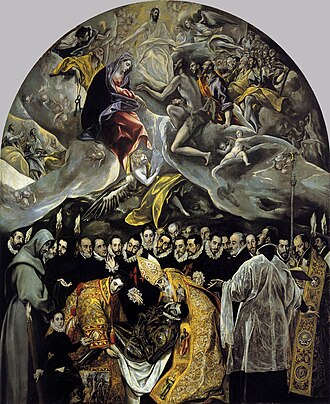 El entierro del Conde de Orgaz - El Greco (1586)
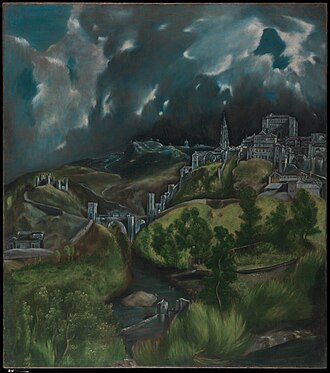 Vista de Toledo - El Greco (1596)
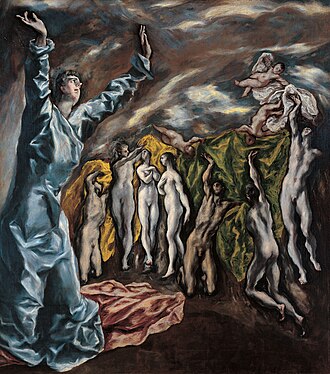 Visión del Apocalipsis - El Greco (1610)
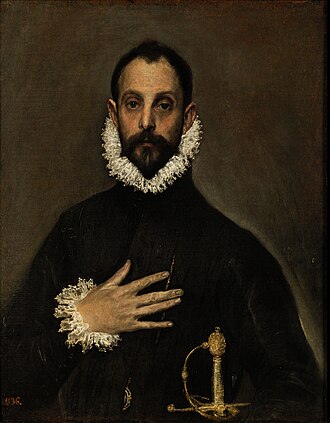 El caballero de la mano en el pecho - El Greco (1580)
%20-%20Laoco%C3%B6n%20-%20Google%20Art%20Project.jpg) Laocoonte - El Greco (1610s)
Laocoonte - El Greco (1610s)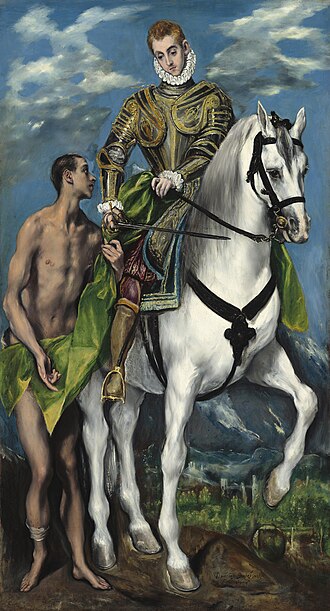 San Martín y el mendigo - El Greco (1597)
.jpg) Adoración de los pastores - El Greco (1612)
Adoración de los pastores - El Greco (1612)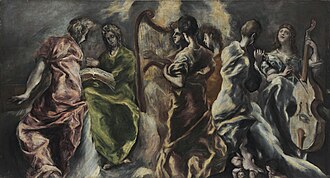 Concierto de ángeles - El Greco (1600s)
Obras de artistas relacionados
.jpg) Venus de Urbino - Titian (1538)
Venus de Urbino - Titian (1538)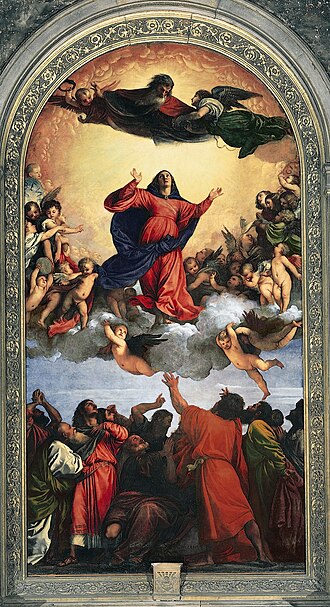 La Asunción de la Virgen - Titian (1510s)
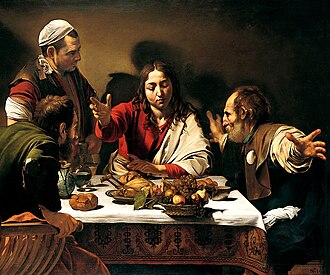 La cena de Emaús - Caravaggio (1601)
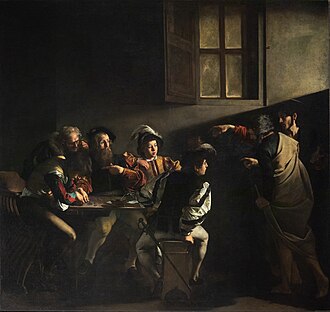 La vocación de San Mateo - Caravaggio (1609)
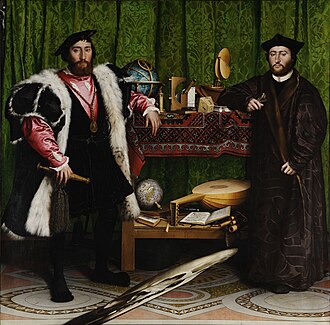 Los embajadores - Hans Holbein the Younger (1533)
 El cuerpo de Cristo en la tumba - Hans Holbein the Younger (1520s)