Concierto de ángeles
El Greco · 1600s
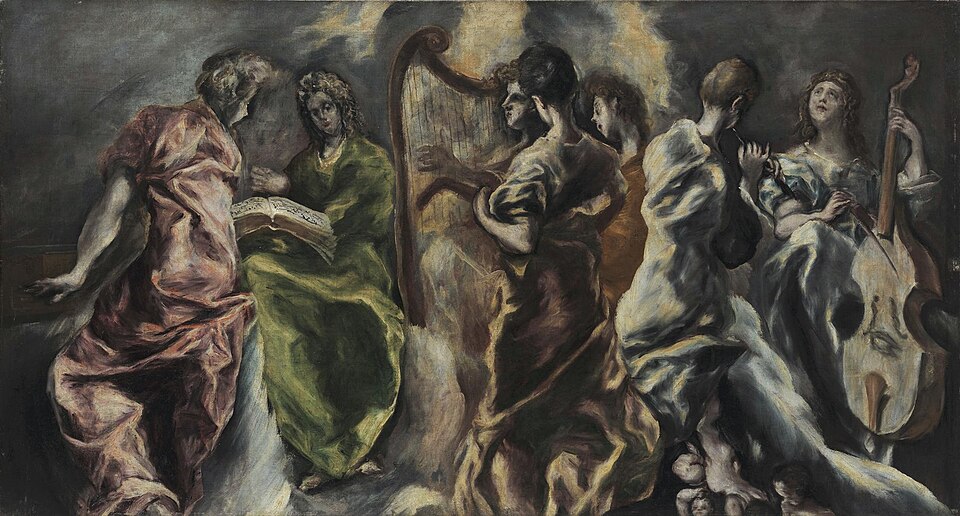
A choir of angels plays in a heavenly sky, some turning their backs to us. This canvas in Athens is only a fragment, cut from a larger work El Greco painted near the end of his life.
The story behind the painting
Concert of Angels is an oil on canvas by El Greco, dated 1608 in the Wikipedia article, during his last period in Toledo; Wikidata gives the 1600s. Created near the end of his life, it has puzzled art historians, who disagree whether it is a finished work or part of a working study for a commission of the Annunciation for the chapel of the Hospital de Tavera. It once formed part of a group of three paintings for that chapel. When the paintings left the chapel is unknown, and so is the moment it was cut down, although Tiziana Frati assumes this happened in the latter half of the nineteenth century. It is now exhibited at the National Gallery in Athens.
What to look for
The canvas, about 115 by 217 cm, shows a celestial choir of angels. Wikidata lists among its subjects a flute, a harp and a viol, so look for these instruments among the figures. Several angels have their backs turned to the viewer, an unusual and intimate choice that draws us into the group. Notice the very elongated heads and the anatomy of the figures, which show the influence of Michelangelo. The painting was designed to hang high above the viewer's head, and the stretching of the forms makes most sense when you imagine looking up at it. Remember too that this is not an independent composition but a fragment, so its edges were once part of something larger.
Meaning and intent
El Greco's biography describes how he increasingly elongated his figures, particularly in works destined for altarpieces, as part of a tendency to dramatise rather than to describe. This choir shows that late style. The angels are not a scene from a story but a vision of heavenly music, meant to be read from below as part of an Annunciation, the moment the Virgin learns she will bear Christ. Stylistically, the Wikipedia article compares it with the concert of angels at the top of El Greco's Annunciation in the Prado. It also notes that parts may have been retouched by Jorge Manuel Theotocópuli, the painter's son, a reminder that late works were often shared within his workshop.
Legacy
The commission at the Hospital de Tavera was one of the last of El Greco's life; according to his biography he fell seriously ill while working on a commission for the hospital and died a month later, on 7 April 1614. This fragment carries something of that final chapter. Today, hanging in Athens, it brings the work of the Crete-born painter to the National Gallery of Greece. Because it was cut down and its original setting is lost, viewers must imagine the whole, but the surviving choir remains a vivid glimpse of the visionary, elongated style that later generations came to admire.
¿Sabías que…?
- Dated 1608 in the Wikipedia article; Wikidata gives the 1600s.
- It is a cut-down fragment, probably connected with an Annunciation for the Hospital de Tavera.
- Parts may have been retouched by El Greco's son, Jorge Manuel Theotocópuli.
- It is exhibited at the National Gallery in Athens.
Wikipedia · Wikipedia (El Greco) · Wikidata
Sobre el artista
El Greco (1541-1614)
Más obras de El Greco
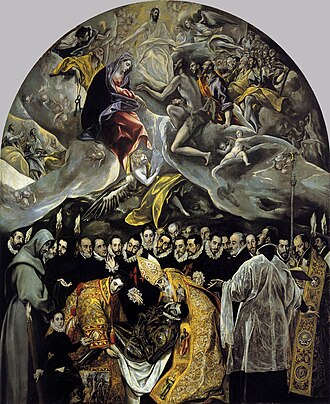 El entierro del Conde de Orgaz - El Greco (1586)
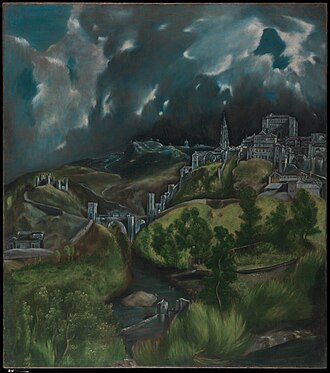 Vista de Toledo - El Greco (1596)
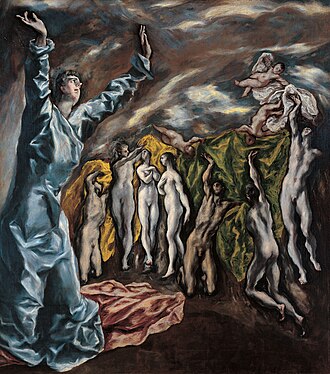 Visión del Apocalipsis - El Greco (1610)
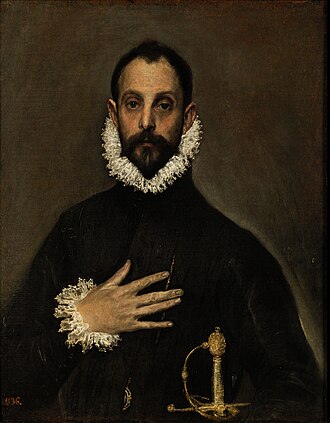 El caballero de la mano en el pecho - El Greco (1580)
%20-%20Laoco%C3%B6n%20-%20Google%20Art%20Project.jpg) Laocoonte - El Greco (1610s)
Laocoonte - El Greco (1610s)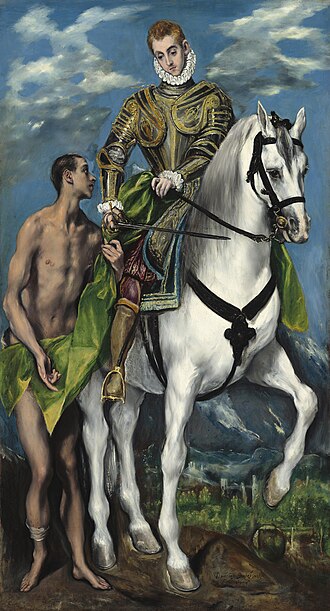 San Martín y el mendigo - El Greco (1597)
.jpg) Adoración de los pastores - El Greco (1612)
Adoración de los pastores - El Greco (1612)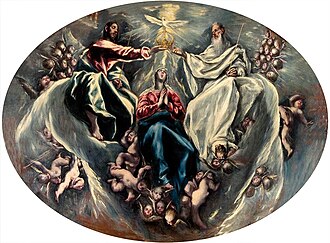 La coronación de la Virgen - El Greco (1597)
Obras de artistas relacionados
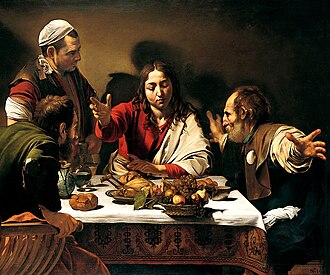 La cena de Emaús - Caravaggio (1601)
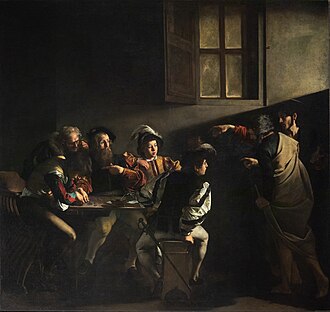 La vocación de San Mateo - Caravaggio (1609)