Springtime
Claude Monet · 1872
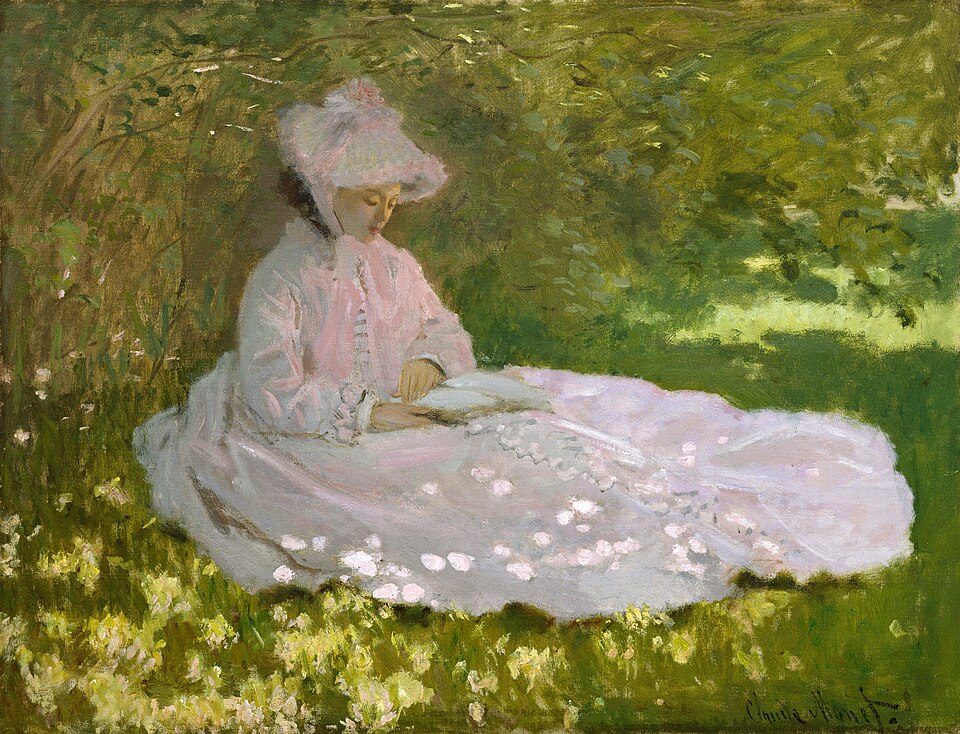
Camille sits reading under the lilacs, sunlight slipping through the leaves onto her muslin dress. Monet painted his wife in their garden in the spring of 1872, and his canvases are almost all that remain of her image.
The story behind the painting
Springtime, also called The Reader, was painted in 1872. Its model is Camille Doncieux, Monet's first wife. The two married in 1870; before that she had been his companion and the model for many of his figure paintings of the 1860s and 1870s, and she was said to have an unusual talent as a model, posing also for Renoir and Manet. Late in 1871 the family settled in Argenteuil, a village northwest of Paris popular with weekend visitors, where Monet's colleagues often joined him. In the spring of 1872 he painted several canvases in his garden, often showing Camille.
What to look for
Camille is seated calmly beneath a canopy of lilacs, absorbed in her book. Her face and figure are in close focus. Look at how the sunlight peeks through the leaves and falls in patches on the ground and on her pale muslin dress, broken into small touches of colour. The picture is a scene of quiet domestic life in the garden, painted at a moment when Monet and his friends were making Argenteuil a place associated with Impressionism, and it measures about 50 by 65.5 cm.
Meaning and intent
The painting is an intimate record of a shared life: a wife reading in her own garden on a spring day, seen with warmth and attention. That intimacy carries particular weight because of what followed. Monet's second wife, Alice Hoschedé, ordered the destruction of pictures and mementos from Camille's life with Monet. As a result, Camille's image survives almost entirely through his paintings, and a canvas like this one is among the few places where we can still see her as he saw her, young and at peace.
Legacy
Monet showed the work at the second Impressionist exhibition, held at Paul Durand-Ruel's gallery in Paris from 30 March to 30 April 1876, under the more generic title Woman Reading; Camille had posed for six of his eighteen works there. It was later shown at the Monet-Rodin exhibition of 1889 and in many exhibitions in the United States and Japan. It now belongs to the Walters Art Museum in Baltimore, and in 2012 a weatherproof reproduction appeared at the Cylburn Arboretum as part of Off the Wall, an open-air exhibition on the city's streets.
¿Sabías que…?
- Painted in 1872 in Monet's garden at Argenteuil.
- The model is Camille Doncieux, Monet's first wife.
- Shown in 1876 under the title Woman Reading.
- Held in the Walters Art Museum, Baltimore.
Sobre el artista
Claude Monet (1840-1926)
Más obras de Claude Monet
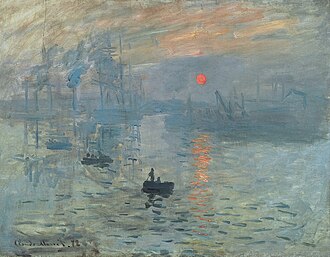 Impresión, sol naciente - Claude Monet (1872)
 Nenúfares - Claude Monet (1906)
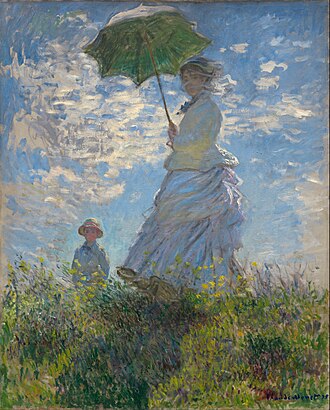 Mujer con sombrilla - Claude Monet (1875)
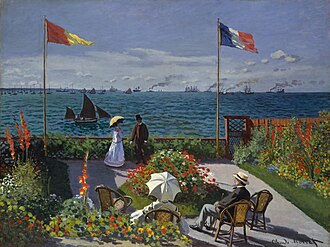 La terraza de Sainte-Adresse - Claude Monet (1867)
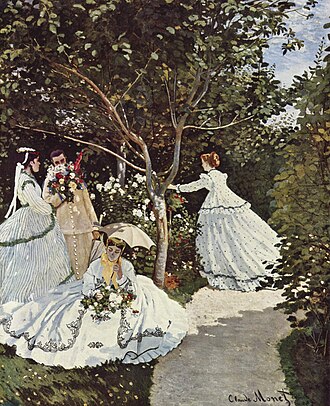 Mujeres en el jardín - Claude Monet (1866)
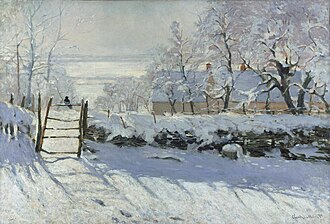 La urraca - Claude Monet (1868)
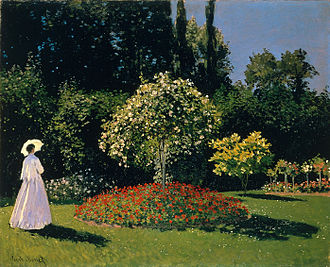 Mujer en el jardín - Claude Monet (1867)
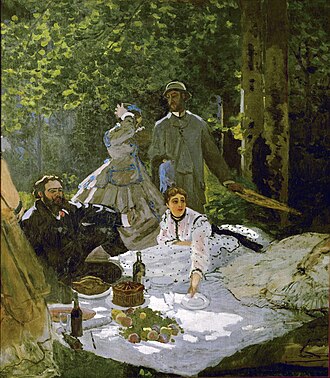 El almuerzo sobre la hierba - Claude Monet (1866)
Obras de artistas relacionados
 El Temerario remolcado - J. M. W. Turner (1839)
 Lluvia, vapor y velocidad. El gran ferrocarril del Oeste - J. M. W. Turner (1844)
 El origen del mundo - Gustave Courbet (1866)
 Entierro en Ornans - Gustave Courbet (2020)
 Almuerzo sobre la hierba - Édouard Manet (1863)
 Olympia - Édouard Manet (1863)
 Baile en el Moulin de la Galette - Pierre-Auguste Renoir (1876)
 El almuerzo de los remeros - Pierre-Auguste Renoir (1881)
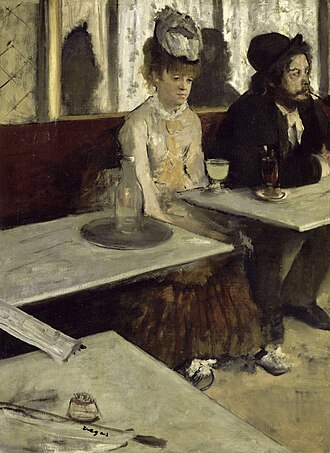 El ajenjo - Edgar Degas (1875)
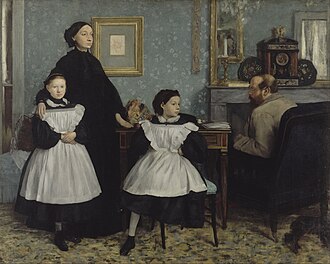 Die Bellelli Familie - Edgar Degas (1858)
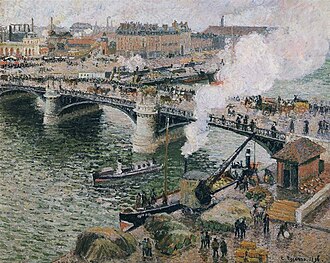 Pont Boieldieu in Rouen, Rainy Weather - Camille Pissarro (1896)
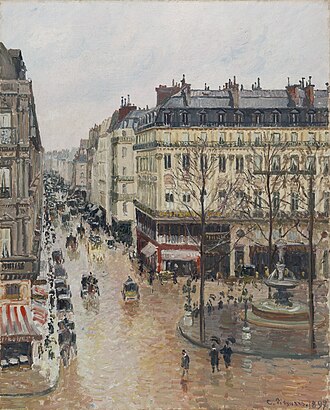 Rue Saint-Honoré por la tarde. Efecto de lluvia. - Camille Pissarro (1897)