El príncipe Guillermo Nii Nortey Dowuona
Gustav Klimt · 1890s
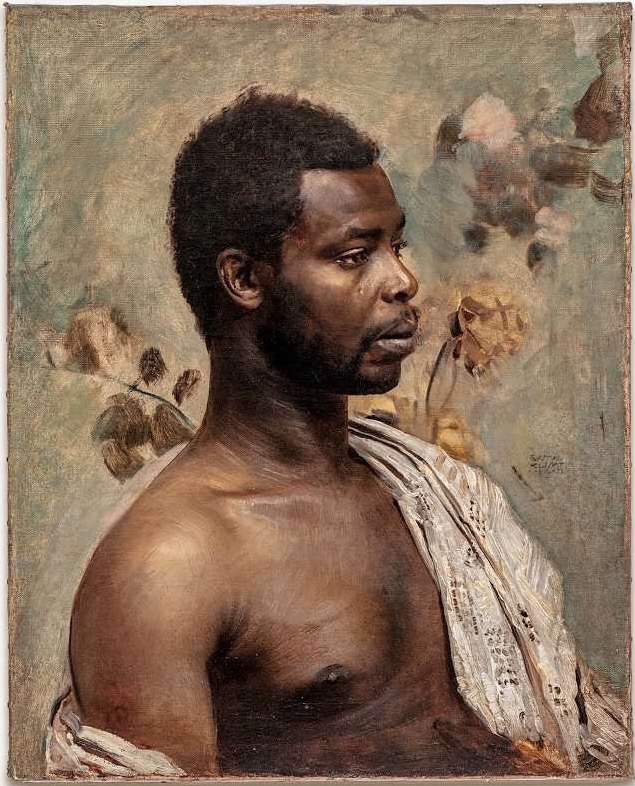
A Ghanaian prince, his gaze turned inward, painted with care by a young Gustav Klimt in 1897. The portrait vanished for decades, resurfaced dirty and forgotten, and was shown to the public for the first time only in 2025.
The story behind the painting
In 1897 Prince William Nii Nortey Dowuona, from Osu near Accra and a member of the Ga people, was in Vienna as head of a group of performers at the Great Ethnographic Exhibition: The African Gold Coast, organised by Viktor Bamberger. Held from 18 April to 24 October 1897 at the Tiergarten am Schuettel beside the Prater, it was a human zoo presented as a native village, with 120 people, mostly from Ghana. How Klimt, then 35 and already established in Vienna, met the prince is unknown. The prince was painted by both Klimt and Franz Matsch, possibly as commissions from the textile entrepreneur Nikolaus Dumba.
What to look for
The prince is seen in three quarter view, slightly from above, his bare torso partly covered by a toga. His head is modelled with great precision, in the naturalistic, almost photographic manner of Klimt's early portraits, while the plain background and the clothing with floral motifs are handled more freely. Notice that contrast between the exact face and the looser, decorative surroundings. The Klimt specialist Alfred Weidinger sees in the composition Klimt's growing interest in decorative elements, which would mark his later work and lead directly to his innovative portraits of the following years.
Meaning and intent
The prince's gaze seems turned inward. The art historian Alexandra Matzner argues that this is not a degrading look from painter to model, and that Klimt painted Dowuona with care and devotion. That matters because of where they met: an exhibition that put living people on display. Weidinger suggests that since Klimt did not sign his portrait and kept it, the client chose Matsch's version instead. The canvas may have been a commission that failed, yet it stayed with Klimt as a sensitive record of a man he met in uncomfortable circumstances.
Legacy
The painting remained in Klimt's studio until his death, then passed to the Klein family, owners of the Klimt villa in Hietzing. It was lent in 1928 to the Klimt memorial exhibition at the Vienna Secession under a demeaning title. After the Kleins went into exile in 1938, the diplomat Fedor Vest reportedly took it to Budapest and refused to return it after the war. First catalogued in 2012, it was offered to dealers in 2023, heavily soiled and thought lost, and authenticated by Weidinger. After a restitution agreement with the Klein heirs it was shown at TEFAF in 2025. In November 2025 Hungary announced a possible restitution claim, and ownership remains uncertain. A 2025 documentary tells its story.
¿Sabías que…?
- Painted in 1897 in Vienna; Wikidata dates it only to the 1890s.
- The sitter led a group at a human zoo exhibition in Vienna's Prater.
- Long considered lost; first shown publicly at TEFAF Maastricht in 2025.
- Its ownership is disputed after a possible restitution claim by Hungary.
Sobre el artista
Gustav Klimt (1862-1918)
Más obras de Gustav Klimt
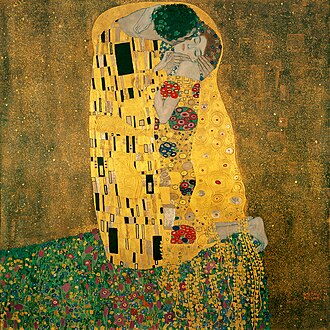 El beso - Gustav Klimt (1907-1908)
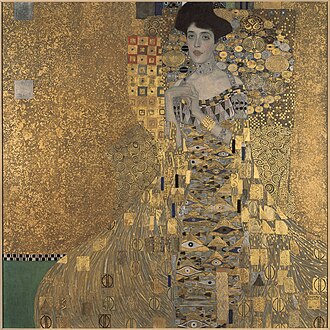 Retrato de Adele Bloch-Bauer I - Gustav Klimt (1907)
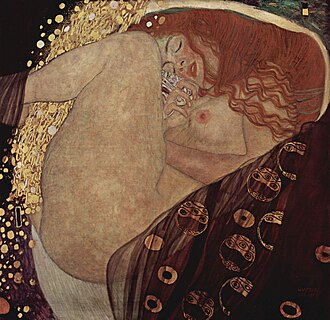 Dánae - Gustav Klimt (1907)
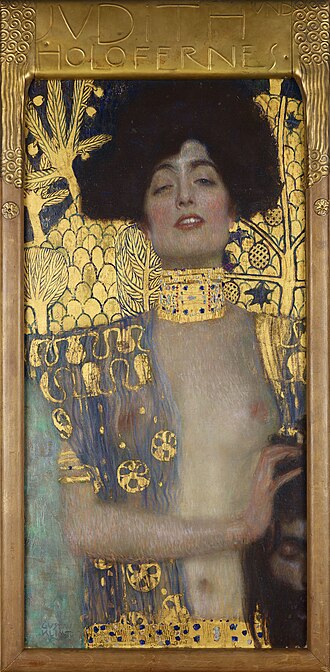 Judit I - Gustav Klimt (1901)
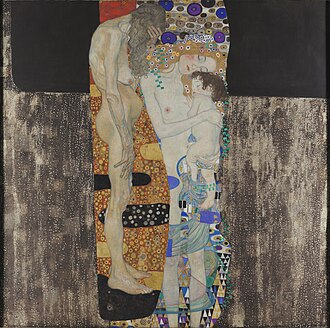 Las tres edades de la mujer - Gustav Klimt (1905)
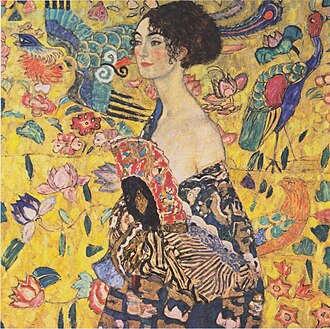 Dama con abanico - Gustav Klimt (1917)
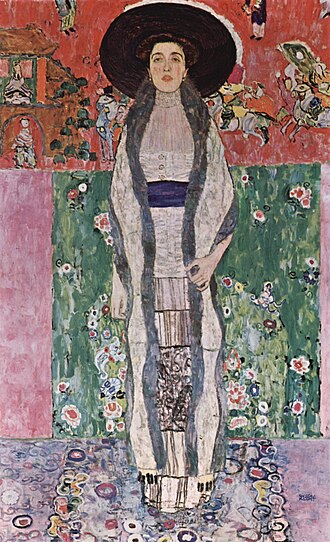 Retrato de Adele Bloch-Bauer II - Gustav Klimt (1912)
 Retrato de una dama - Gustav Klimt (1910s)