Portrait of Gustave Geffroy
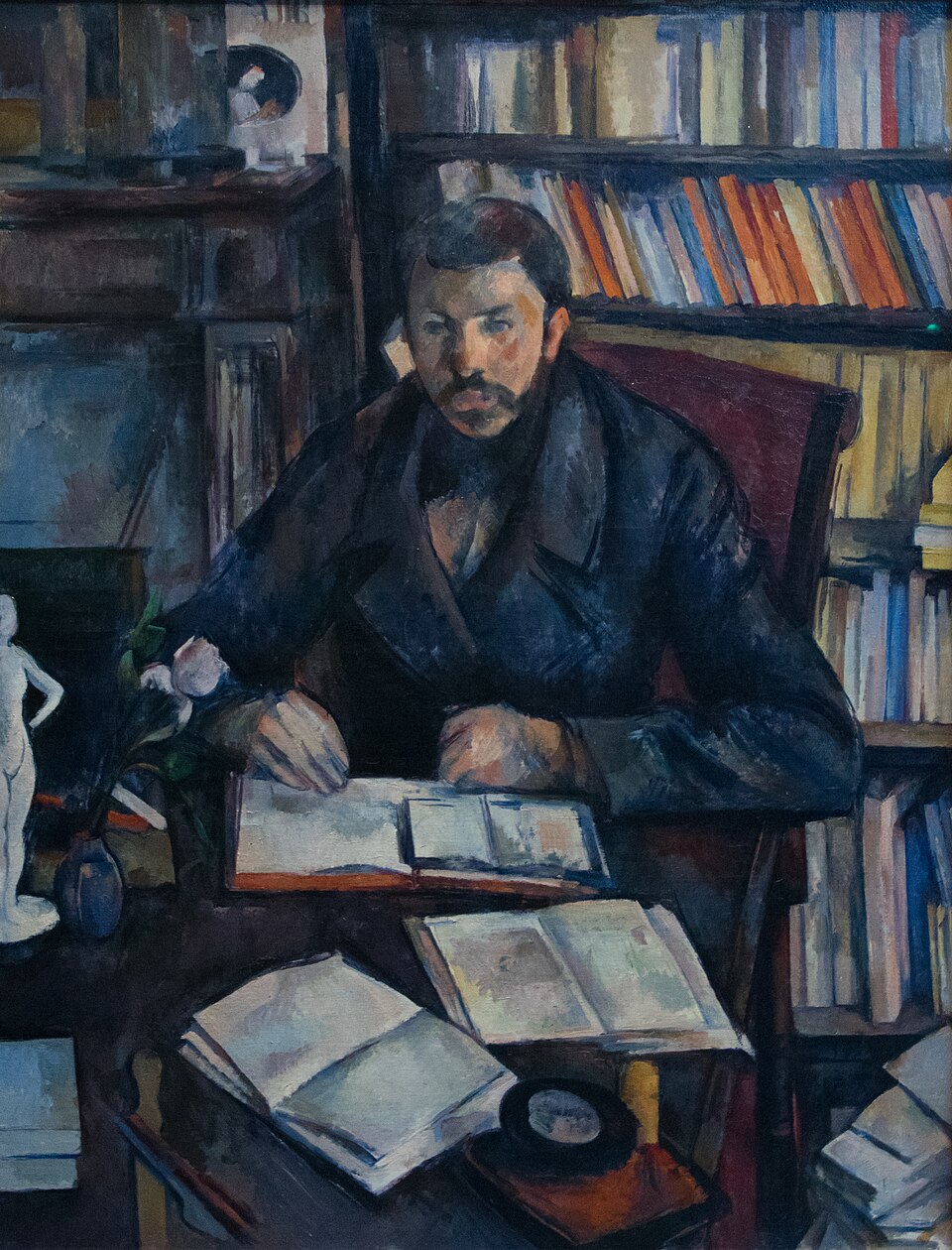
A critic sits among his books, the shelves and table tilting around him. Cézanne painted Gustave Geffroy for three months in 1895, then fled to Aix, leaving the face and hands unfinished.
The story behind the painting
In March 1894 Gustave Geffroy, a novelist and critic and one of the first historians of Impressionism, praised Cézanne in Le Journal, at a time when the painter had won little critical favour. Claude Monet arranged a meeting in November, which ended abruptly because of Cézanne's erratic behaviour. Geffroy kept writing well of him, saying he was a great teller of truth who would go to the Louvre. Cézanne thanked him in letters and, perhaps feeling understood, chose to paint him. In April 1895 Geffroy began sitting for him daily in the study of his Paris home.
What to look for
Geffroy sits at the centre as a pyramid or triangle, surrounded by shelves, books and figurines that converge on his profile. The books, in the cases and on the vast table, are seen from several angles at once, creating a zigzag movement for the eye. Geffroy noted that Cézanne painted the whole canvas at once, leaving the face and hands for last, and they were never finished. Look at how the bookcase and the tilted table build the picture like geometry.
Meaning and intent
After three months Cézanne, disappointed, abandoned the canvas and Paris for Aix-en-Provence. On 6 July he wrote to Monet that he was upset at the meagre result after so many sittings and bursts of enthusiasm and despair. Some have speculated that he had come to resent the critic, with reasons suggested ranging from politics to art to religion. The portrait also continues a recurring theme for Cézanne: people in their own surroundings, reserved, absorbed in their daily tasks. Critics have compared it to Degas's earlier Portrait of Duranty.
Legacy
Unfinished and disliked by its maker, the portrait became popular after Cézanne's death. Cubist painters were drawn to the geometry of the bookcase and the perspective of the great table in relation to the rest of the picture. The family of the collector Auguste Pellerin gave the painting to the French state in 1969, and it is on permanent display at the Musée d'Orsay in Paris. Wikipedia dates it around 1895, while Wikidata gives no year.
¿Sabías que…?
- Painted by Cézanne from April 1895, about 110 by 89 cm.
- Geffroy sat for him daily for three months.
- Left unfinished: the face and hands were never completed.
- Given to the French state in 1969; in the Musée d'Orsay.
Sobre el artista
Paul Cézanne (1839-1906)
Más obras de Paul Cézanne
 Las grandes bañistas - Paul Cézanne (1900s)
 The Boy in the Red Vest - Paul Cézanne
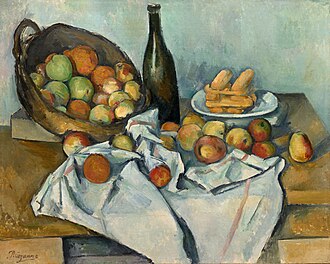 Cesto de manzanas - Paul Cézanne (1893)
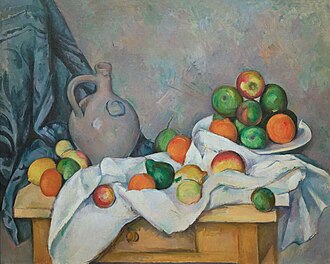 Rideau, Cruchon et Compotier - Paul Cézanne (1890s)
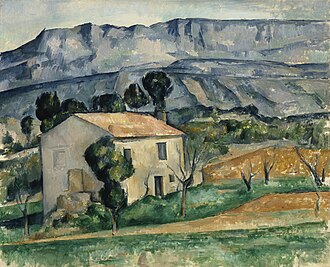 Maison devant la Sainte-Victoire près de Gardanne - Paul Cézanne (1880s)
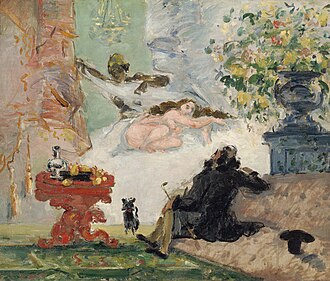 Una Olympia moderna - Paul Cézanne (1873)
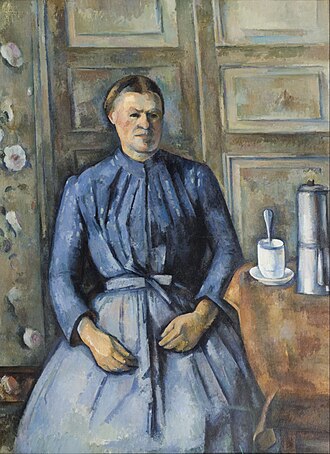 Mujer con cafetera - Paul Cézanne (1895)
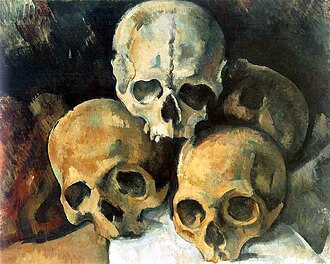 Pyramid of Skulls - Paul Cézanne (1899)
Obras de artistas relacionados
 La noche estrellada - Vincent van Gogh (1889)
 Terraza de café por la noche - Vincent van Gogh (1888)
 ¿De dónde venimos? ¿Qué somos? ¿Adónde vamos? - Paul Gauguin (1897-1898)
 El Cristo amarillo - Paul Gauguin (1889)
 Paseo a orillas del mar - Joaquín Sorolla (1909)
 Triste herencia - Joaquín Sorolla (1898)
 Baile en el Moulin de la Galette - Pierre-Auguste Renoir (1876)
 El almuerzo de los remeros - Pierre-Auguste Renoir (1881)
 En el Moulin Rouge - Henri de Toulouse-Lautrec (1892)
 La toilette - Henri de Toulouse-Lautrec (1896)