Una Olympia moderna
Paul Cézanne · 1873
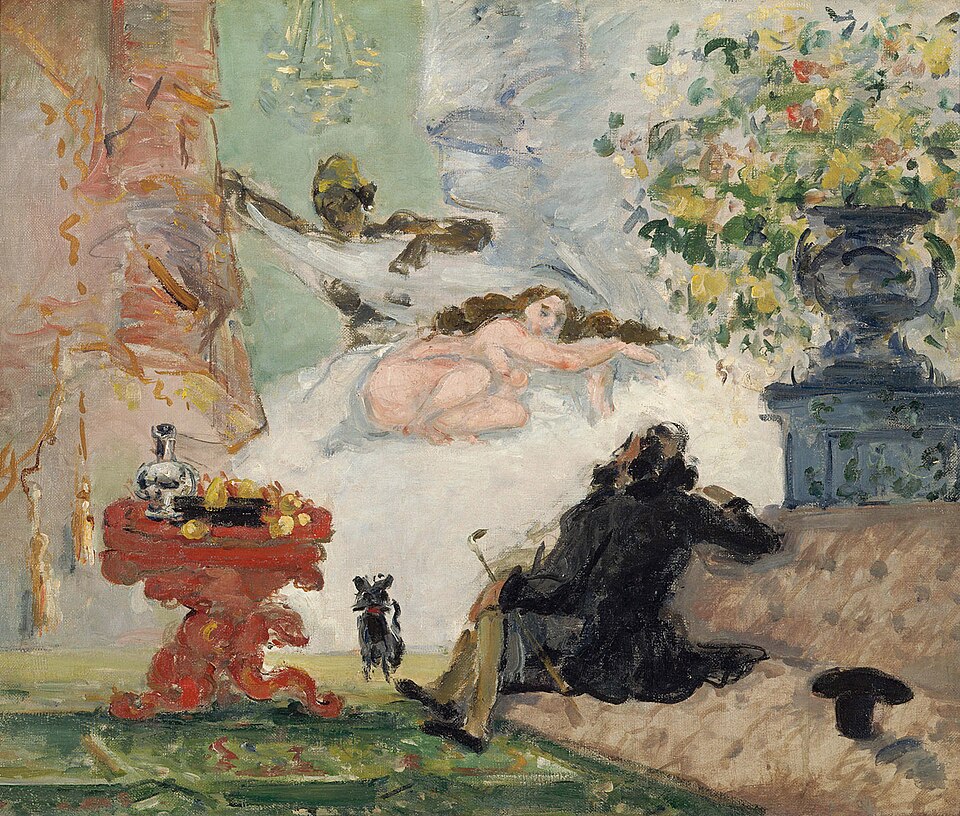
A bald, bearded man sits and gazes at a nude woman being unveiled by her maid. That visitor is Cezanne himself, answering Manet's Olympia after a friend dared him: well, do it then.
The story behind the painting
In 1873 Paul Cezanne was living in Auvers-sur-Oise, where his friend Camille Pissarro had introduced him to Dr Paul Gachet, an eccentric amateur artist who loved the new and admired Cezanne's work. During a conversation Gachet praised Edouard Manet's Olympia. Cezanne, unimpressed, is said to have replied that he could do that sort of thing, and Gachet answered: well, do it then. Gachet was reportedly present while the picture was painted and bought it himself. It was the first painting Cezanne ever sold. Wikipedia dates it about 1873 to 1874, while Wikidata gives 1873.
What to look for
Manet's Olympia of 1863 shows a nude woman on a bed attended by a black maid, with her patron only implied. Cezanne puts the patron into the scene. His bald head, dark hair, full beard and the profile of his nose show that he is a self-portrait of the painter. Look for the small animal too: it looks like a cat, but its red collar indicates that it is a dog. The canvas is small, only 46 by 55 cm, and the handling is free and loose.
Meaning and intent
Manet's picture had shocked the Salon of 1865: the name Olympia was linked with prostitutes in 1860s Paris, the woman's gaze was confrontational, and the quick brushwork and harsh studio light broke academic habits. Cezanne's homage goes further by showing the client and making him himself, turning the viewer's role into part of the picture. The painting has been described as anticipating the Expressionist movement, which would begin about forty years later.
Legacy
Gachet lent the picture back to Cezanne for the First Impressionist Exhibition in 1874. Despite its small size, it drew more mockery and derision from critics and visitors than any other painting in the show. Cezanne had painted an earlier version around 1869 to 1870, also called The Pasha, and made a watercolour Olympia around 1877. Gachet himself copied the picture at least twice, and his pupil Blanche Derousse made two more copies at his request. In 1951 Gachet's heirs gave it to the Louvre, and it is now in the Musee d'Orsay.
¿Sabías que…?
- Painted in Auvers-sur-Oise as a homage to Manet's Olympia.
- The first painting Cezanne ever sold, to Dr Paul Gachet.
- Mocked more than any other work at the 1874 Impressionist exhibition.
- Given to the Louvre by Gachet's heirs in 1951, now in the Musee d'Orsay.
Sobre el artista
Paul Cézanne (1839-1906)
mujer · escena de género · desnudo · Museo de Orsay · desnudo · cama · trabajador doméstico · vaso
Más obras de Paul Cézanne
 Las grandes bañistas - Paul Cézanne (1900s)
 The Boy in the Red Vest - Paul Cézanne
 Cesto de manzanas - Paul Cézanne (1893)
%201893-94%20FWN%20854.jpg) Rideau, Cruchon et Compotier - Paul Cézanne (1890s)
Rideau, Cruchon et Compotier - Paul Cézanne (1890s)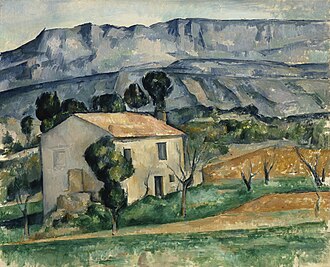 Maison devant la Sainte-Victoire près de Gardanne - Paul Cézanne (1880s)
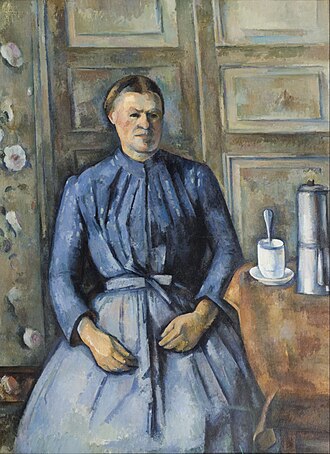 Mujer con cafetera - Paul Cézanne (1895)
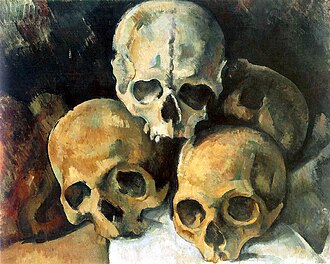 Pyramid of Skulls - Paul Cézanne (1899)
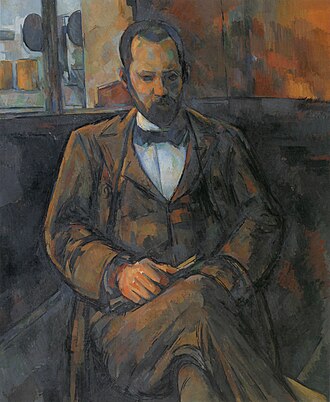 Portrait of Ambroise Vollard - Paul Cézanne (1899)
Obras de artistas relacionados
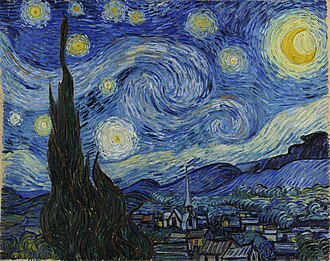 La noche estrellada - Vincent van Gogh (1889)
.jpg) Terraza de café por la noche - Vincent van Gogh (1888)
Terraza de café por la noche - Vincent van Gogh (1888)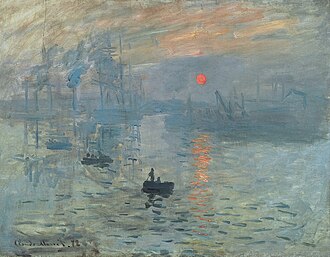 Impresión, sol naciente - Claude Monet (1872)
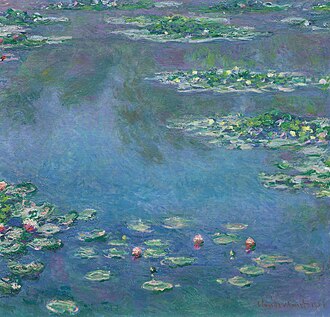 Nenúfares - Claude Monet (1906)
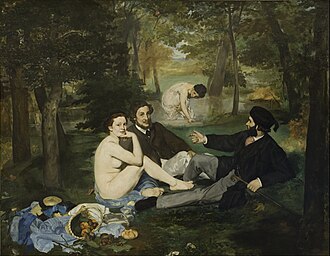 Almuerzo sobre la hierba - Édouard Manet (1863)
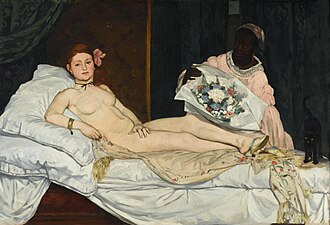 Olympia - Édouard Manet (1863)
 Baile en el Moulin de la Galette - Pierre-Auguste Renoir (1876)
 El almuerzo de los remeros - Pierre-Auguste Renoir (1881)
 El ajenjo - Edgar Degas (1875)
 Die Bellelli Familie - Edgar Degas (1858)
 El Temerario remolcado - J. M. W. Turner (1839)
 Lluvia, vapor y velocidad. El gran ferrocarril del Oeste - J. M. W. Turner (1844)