Ferdinando Brandani
Diego Velázquez · 1650
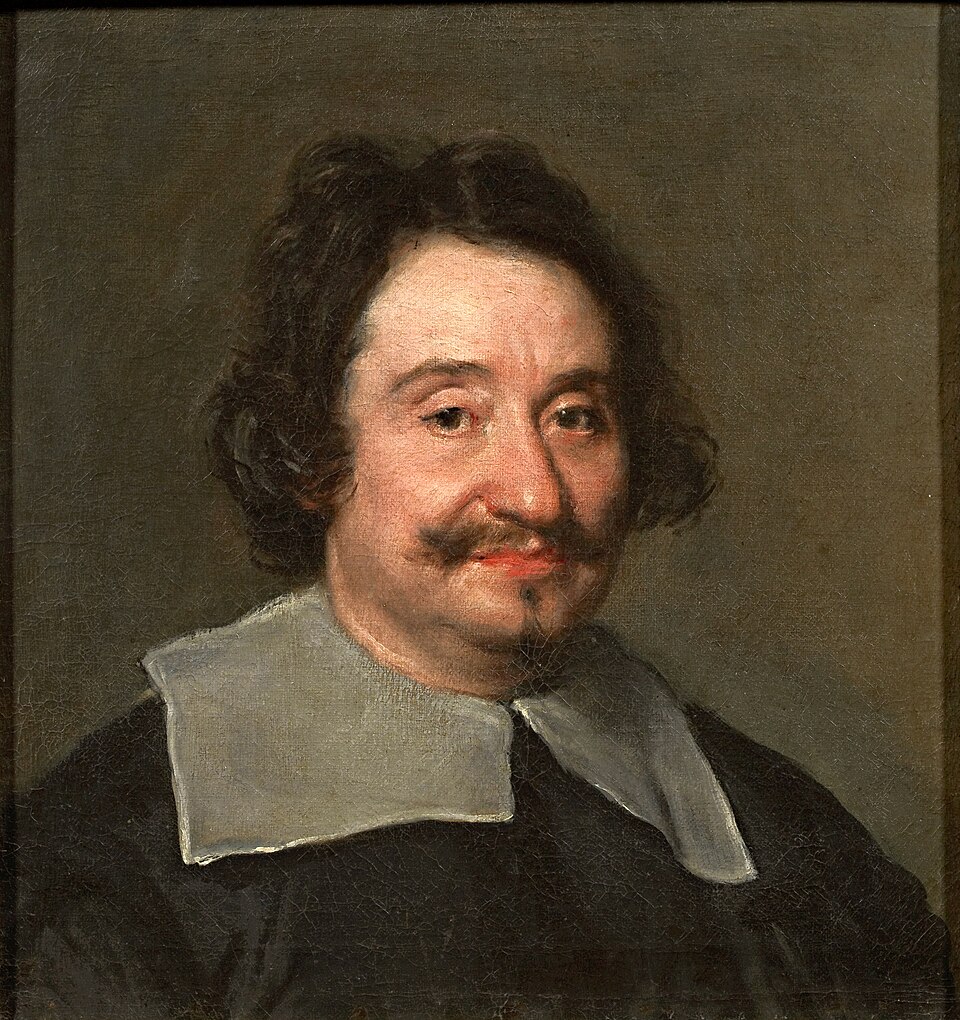
For centuries he was called the Pope's barber. Velázquez painted this man in Rome in 1650, and only recently did a historian give him back his real name: Ferdinando Brandani, a senior official in the papal secretariat.
The story behind the painting
Velázquez painted this oil on canvas in 1650, during his second stay in Rome. For a long time the sitter was thought to be someone from the court of Pope Innocent X, first identified as a jester and later as the Pope's barber. The painter's biographer Antonio Palomino noted that in Rome Velázquez portrayed Michel Angelo Augurio, barber to His Holiness, so the picture was assumed to show Augurio, although critics cautiously avoided giving it that title. The historian Francesca Curti then identified him as Ferdinando Brandani, a high official in the Pope's secretariat.
What to look for
The canvas is small, about 50.5 by 47 cm, and holds only the man himself. The shining clothes seemed to support the old idea that he served at the papal court, and the simple collar is not the kind worn by a cardinal or a powerful churchman. That plain collar is part of why viewers first imagined a humble servant rather than a prelate. Look at how little Velázquez needs: a face, a collar, the gleam of the fabric, and a presence that kept people guessing about who this man was for more than three centuries.
Meaning and intent
The story of this painting is a story of names. A jester, a barber, a Portrait of a Man, and finally Ferdinando Brandani: each title reflects what people believed about the sitter at the time. The shift matters because it changes how we see him, from a servant of the Pope's household to a senior official of his administration. Velázquez gives no label in the picture itself, only the man, and the careful hesitation of the critics, who would not call him Augurio without proof, shows how much weight a name carries in a portrait.
Legacy
The canvas stayed in private collections for more than 200 years, until it was shown to the public in the United Kingdom in 1909, where it hung in a country house. The expert August L. Mayer authenticated it as an original Velázquez in 1936, and it then passed to the family of the art dealer Georges Wildenstein, who kept it for decades before selling it to the Spanish state. Its authenticity is not in doubt; it was in the Prado's great Velázquez exhibition of 1990. Until then the Prado had owned no canvas from the painter's second Roman stay.
¿Sabías que…?
- Painted by Velázquez in 1650, during his second stay in Rome.
- Long called the Pope's barber; identified by Francesca Curti as Ferdinando Brandani.
- Authenticated by August L. Mayer in 1936.
- The Prado's first painting from Velázquez's second Roman stay.
Sobre el artista
Diego Velázquez (1599-1660)
retrato · varón · Museo del Prado
Más obras de Diego Velázquez
 Las meninas - Diego Velázquez (1656)
 La rendición de Breda - Diego Velázquez (1635)
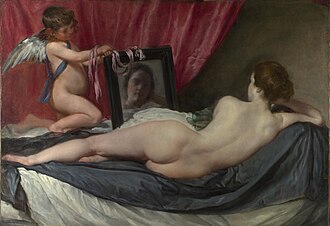 Venus del espejo - Diego Velázquez (1644)
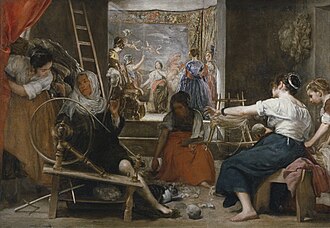 Las Hilanderas - Diego Velázquez
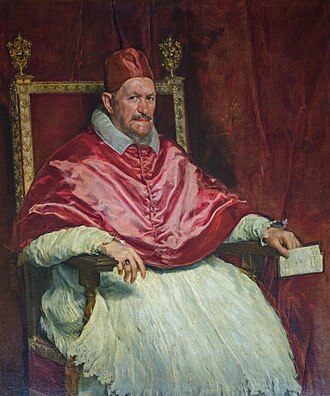 Inocencio X - Diego Velázquez
 Vieja friendo huevos - Diego Velázquez (1618)
 El almuerzo - Diego Velázquez (1617)
 El triunfo de Baco - Diego Velázquez (1628)
Obras de artistas relacionados
 La cena de Emaús - Caravaggio (1601)
 La vocación de San Mateo - Caravaggio (1609)
 Saint Francis in Meditation - Francisco de Zurbarán (1639)
 Inmaculada Concepción - Francisco de Zurbarán (1661)
 Triple retrato de Carlos I - Anthony van Dyck (1635)
 Charles I (1600-1649) with M. de St Antoine - Anthony van Dyck (1636)
 La elevación de la cruz - Peter Paul Rubens (1609)
 Rapto de las hijas de Leucipo - Peter Paul Rubens (1618)
 La ronda de noche - Rembrandt van Rijn (1642)
 Autorretrato - Rembrandt van Rijn (1659)
 El alegre bebedor - Frans Hals (1620s)
 Caballero sonriente - Frans Hals (1624)