Retrato de un monje trinitario
El Greco · 1609
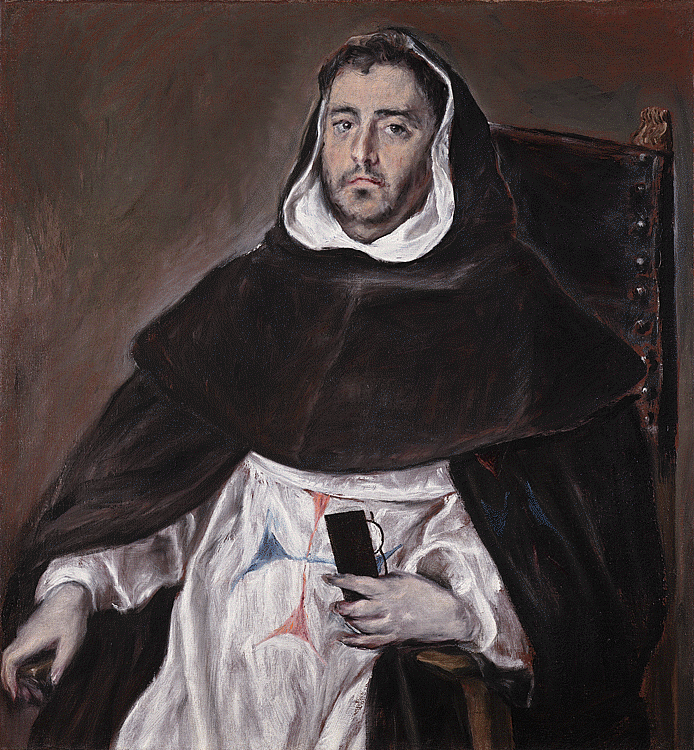
A heavy-set friar sits in a studded leather chair, his spectacles and their case in one hand. El Greco rarely painted a stout man, and this canvas has survived only as a worn shadow of what he made.
The story behind the painting
El Greco painted this oil on canvas around 1605 to 1610; the museum dates it about 1609. It is number 111 in Harold Wethey's catalogue of the painter's work and is held by the Nelson-Atkins Museum of Art in Kansas City. Gregorio Marañón believed El Greco painted the preacher Hortensio Félix Paravicino three times and that this is the third portrait. In the first two, Paravicino appears young and handsome; here, Marañón suggested, time has made him a mature, plump man who needs glasses.
What to look for
The friar is shown in three-quarter view, seated in a leather armchair nailed to its wooden frame and decorated at the ends. He wears a white habit under a dark brown cloak that rises over his head as a hood. On the habit is a cross with blue horizontal arms and pink vertical ones, described in the source as a Maltese cross. His right hand rests on the arm of the chair while the left holds his spectacles and their case. On the chair arm, lower right, El Greco signed in small Greek cursive letters.
Meaning and intent
Along with the Portrait of a Master, this is one of the only surviving works in which El Greco portrays a heavy-set person. If Marañón is right, the painting is a quiet record of a man growing older across three likenesses, ending with this fuller face and the glasses held ready in his hand. The spectacles, the hood and the plain habit give the picture an everyday, human closeness. Marañón's identification is his own proposal; the title the source records is simply a Trinitarian friar.
Legacy
When the Nelson-Atkins acquired the canvas it was completely overpainted, and even the shape of the chair had been changed. Restoration removed those layers and revealed damage: the glazes are almost entirely lost, especially on the hands and face, and the paint surface is fragmented, so it gives only a vague idea of El Greco's mastery. It belonged to the eighth Marquis de la Torrecilla in Madrid around 1908 to 1925, passed to his nephew the Duke of Medinaceli, was bought by Wildenstein in 1950, and was bought by the Nelson-Atkins in 1952.
¿Sabías que…?
- Oil on canvas, about 92 by 85 cm, around 1609.
- Signed in Greek letters on the chair arm.
- Possibly the third portrait of Hortensio Félix Paravicino, per Gregorio Marañón.
- In the Nelson-Atkins Museum of Art since 1952.
Sobre el artista
El Greco (1541-1614)
Más obras de El Greco
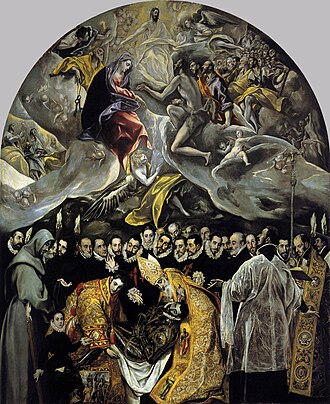 El entierro del Conde de Orgaz - El Greco (1586)
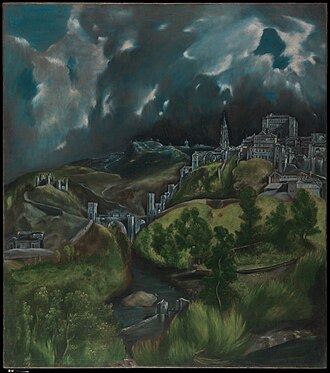 Vista de Toledo - El Greco (1596)
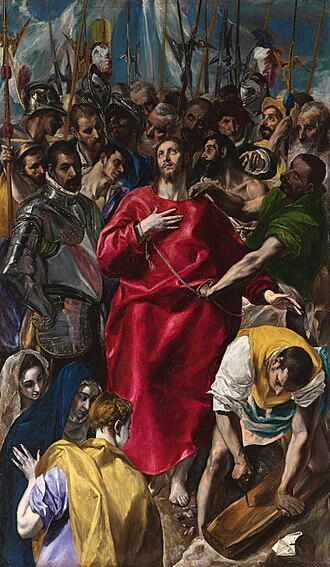 El expolio - El Greco (1570s)
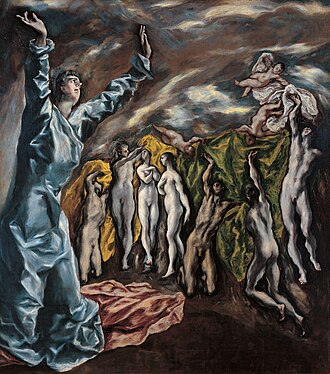 Visión del Apocalipsis - El Greco (1610)
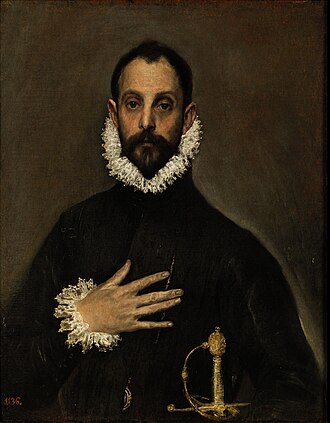 El caballero de la mano en el pecho - El Greco (1580)
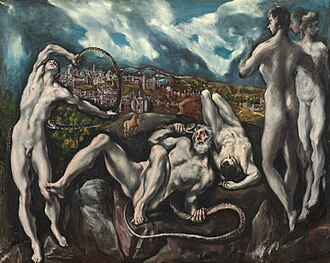 Laocoonte - El Greco (1610s)
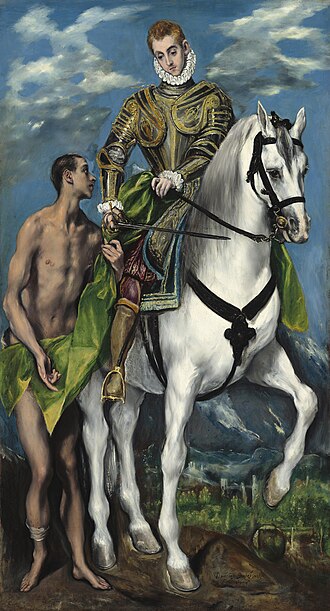 San Martín y el mendigo - El Greco (1597)
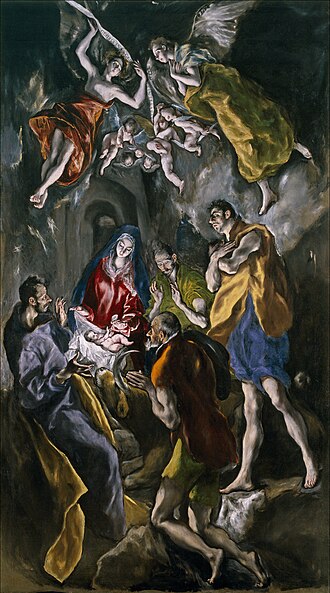 Adoración de los pastores - El Greco (1612)
Obras de artistas relacionados
 Las bodas de Caná - Paolo Veronese (1560s)
 Cena en casa de Leví - Paolo Veronese (1573)
 La Última Cena - Jacopo Tintoretto (1563)
 San Marcos liberando al esclavo - Jacopo Tintoretto (1540s)
 Venus de Urbino - Titian (1538)
 La Asunción de la Virgen - Titian (1510s)
 La cena de Emaús - Caravaggio (1601)
 La vocación de San Mateo - Caravaggio (1609)
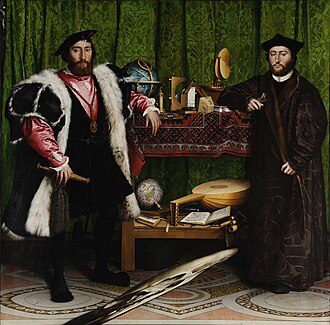 Los embajadores - Hans Holbein the Younger (1533)
 El cuerpo de Cristo en la tumba - Hans Holbein the Younger (1520s)