Retrato de un maestro
El Greco · 1600s
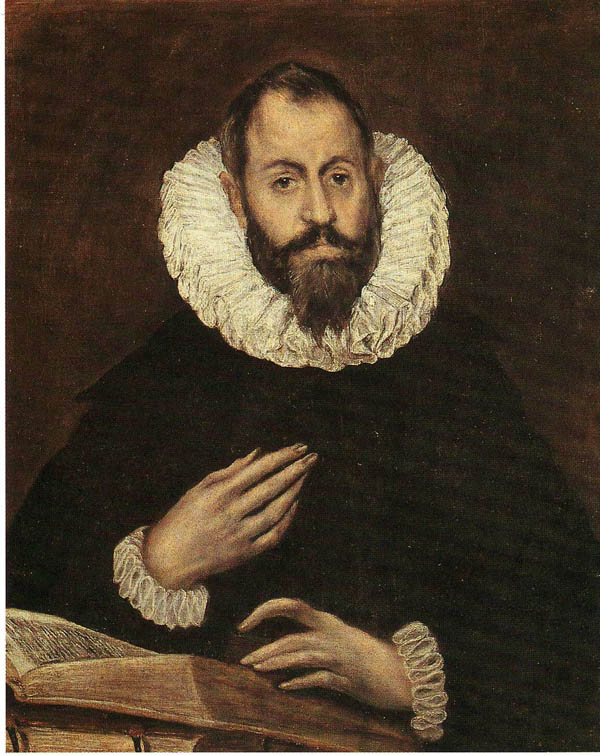
A long-faced man in a high white ruff lays one hand on his chest and the other on a book. El Greco's sitter was once named as Gabriel Alonso de Herrera, but nobody can be sure.
The story behind the painting
El Greco painted this oil on canvas around 1600, late in his life; the French Wikipedia says the late date seems certain, and Wikidata places it in the 1600s. The painting entered the Musée de Picardie in Amiens in 1890 as a gift from the Lavallard brothers, whose collection Wikidata also records. It was first identified as a portrait of Gabriel Alonso de Herrera, which is why its English title says possibly, but the identity of the man is uncertain. It is a mature work by an artist whose paintings are rare in French museums.
What to look for
The man's features are stretched: a long face, a very large forehead and large hands. Guillaume Kientz, a curator of paintings at the Louvre and a specialist in Spanish art, sees this elongation as a legacy of Roman Mannerism, picked up during El Greco's years in Rome. He is dressed like a nobleman of the time, with a ruff, the very high white collar still fashionable among Spanish gentlemen in the early seventeenth century. A glint in his eyes gives the face its psychological intensity. The canvas measures about 79.7 by 64.7 cm.
Meaning and intent
The hands tell us who he is meant to be. His right hand folds onto his chest in a gesture of presentation, an affirmation of himself. His left hand rests on a book, showing that he is a man of letters or a scholar, the book being a symbol of knowledge. His attitude and his orator's gesture suggest a teacher or a magistrate. The source finds a deep humanity in him despite his austere bearing, and that balance between severity and warmth is what makes the picture hold the eye.
Legacy
The portrait is representative of the classical, austere form that marks El Greco's work, and it stands as an emblem of his maturity. For visitors in France it offers a rare chance to meet the painter outside Spain, in a regional museum in Amiens. The sitter may never be named with certainty, but the book, the hand on the heart and the burning eyes give him an identity of another kind: a thinker, painted by an artist at the end of his life.
¿Sabías que…?
- Painted by El Greco around 1600, late in his life.
- Once identified as Gabriel Alonso de Herrera, but the sitter is uncertain.
- Given to the Musée de Picardie, Amiens, by the Lavallard brothers in 1890.
- The book in his hand marks him as a scholar.
Sobre el artista
El Greco (1541-1614)
retrato · varón · libro · barba · cuello
Más obras de El Greco
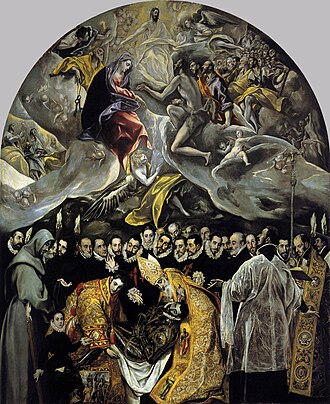 El entierro del Conde de Orgaz - El Greco (1586)
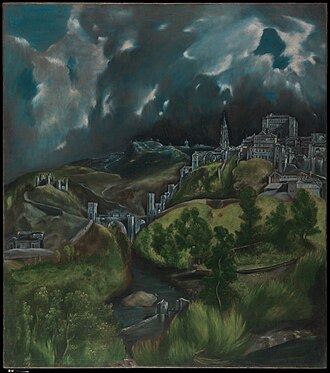 Vista de Toledo - El Greco (1596)
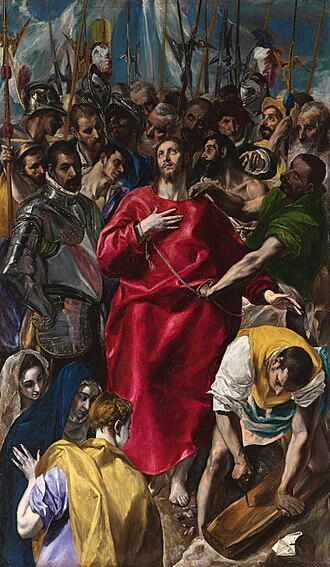 El expolio - El Greco (1570s)
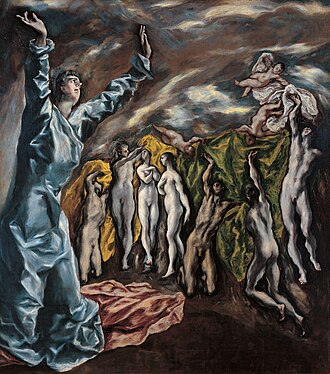 Visión del Apocalipsis - El Greco (1610)
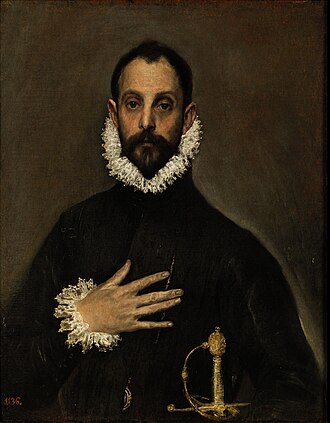 El caballero de la mano en el pecho - El Greco (1580)
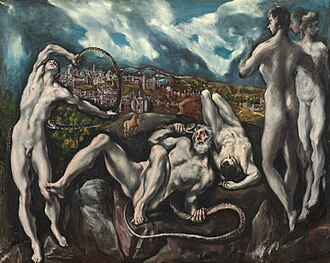 Laocoonte - El Greco (1610s)
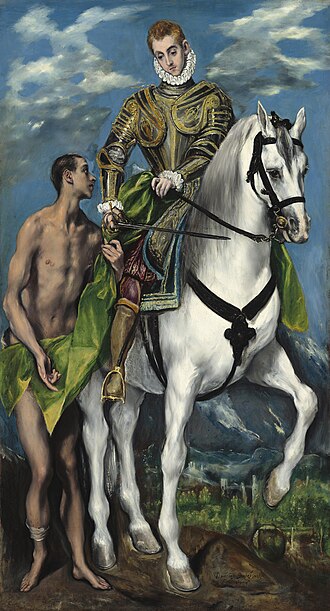 San Martín y el mendigo - El Greco (1597)
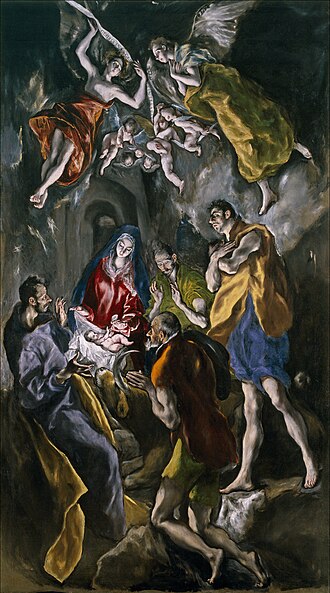 Adoración de los pastores - El Greco (1612)
Obras de artistas relacionados
 Las bodas de Caná - Paolo Veronese (1560s)
 Cena en casa de Leví - Paolo Veronese (1573)
 La Última Cena - Jacopo Tintoretto (1563)
 San Marcos liberando al esclavo - Jacopo Tintoretto (1540s)
 Venus de Urbino - Titian (1538)
 La Asunción de la Virgen - Titian (1510s)
 La cena de Emaús - Caravaggio (1601)
 La vocación de San Mateo - Caravaggio (1609)
 Los embajadores - Hans Holbein the Younger (1533)
 El cuerpo de Cristo en la tumba - Hans Holbein the Younger (1520s)