Nocturne in Black and Gold – The Falling Rocket
James McNeill Whistler · 1875
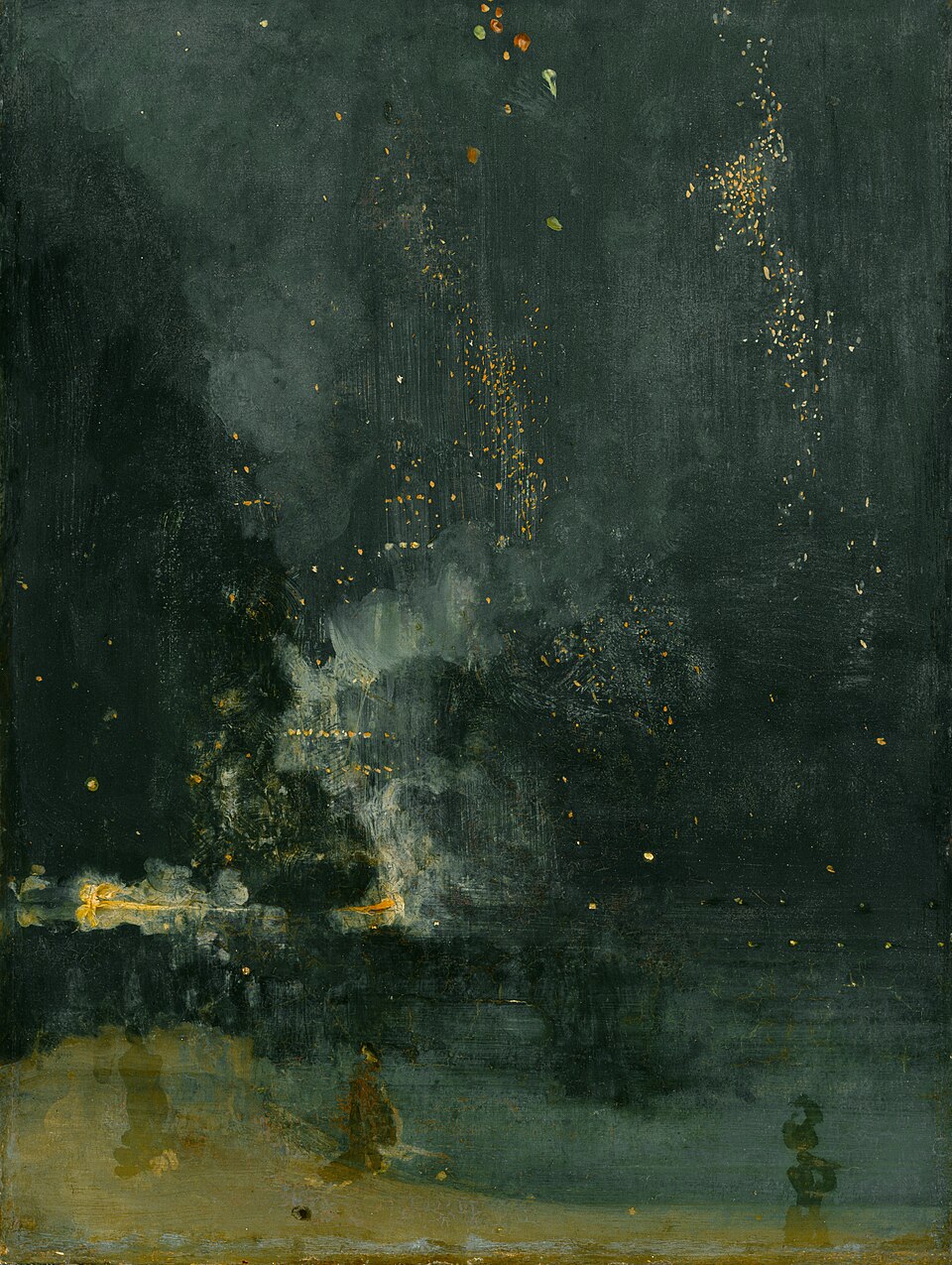
Fog, darkness and a few sparks of gold: a firework falling over a London pleasure garden. This small canvas provoked John Ruskin's famous insult and led Whistler into a trial that left him bankrupt.
The story behind the painting
Whistler painted The Falling Rocket around 1875, and first showed it at the Grosvenor Gallery in London in 1877. It is one of two works, with Nocturne in Black and Gold: The Firewheel, inspired by Cremorne Gardens, a celebrated pleasure resort in London. It is the last of the London Nocturnes and is widely acknowledged as the high point of Whistler's middle period. The painting stands for the idea of art for art's sake, a concept formulated by Theophile Gautier and Charles Baudelaire.
What to look for
The canvas, about 60 by 46 cm, uses bleak tones built on blue, green and yellow. Billowing smoke separates water from sky until the two blur into one somber space, and this avalanche of fog stands for the rocket of the title. Dabs of yellow burst as fireworks in the misty air. The watching figures are almost transparent. On the right Whistler signed in a way influenced by Japanese prints. Critics called his splatter technique reckless, yet he worked meticulously, even checking his paintings in mirrors to catch any fault.
Meaning and intent
Whistler insisted that his nocturnes were not pictures but scenes or moments. Against the taste for storytelling, he let colour and tone outweigh any narrative or moral, seeking the particular sense of void that seems to arise only at night. He said that if the man who paints only what he sees were an artist, the photographer would be the king of artists. The Falling Rocket is a synthesis of a fireworks scene, not a view of it, an arrangement meant to stir feeling.
Legacy
Ruskin wrote that Whistler was flinging a pot of paint in the public's face. Whistler sued for libel; at the trial on 25 and 26 November 1878 the painting was accidentally shown upside down, and he won only a farthing. Court costs drove him into bankruptcy, and he published a transcript in The Gentle Art of Making Enemies in 1890. The source notes theories about Ruskin's motives, including envy and a possible illness affecting his vision. The painting is now in the Detroit Institute of Arts.
¿Sabías que…?
- Painted around 1875, inspired by Cremorne Gardens.
- First shown at the Grosvenor Gallery in 1877.
- Central to the 1878 Whistler v. Ruskin libel trial.
- Now in the Detroit Institute of Arts.
Sobre el artista
James McNeill Whistler (1834-1903)
marinas · noche · Detroit Institute of Arts
Más obras de James McNeill Whistler
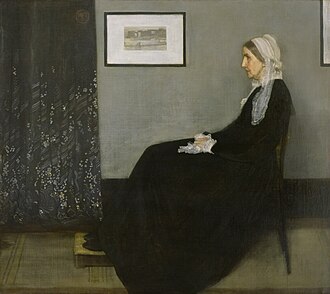 Retrato de la madre del artista - James McNeill Whistler (1871)
%201862.jpg) Sinfonía en blanco, n.º 1: La dama blanca - James McNeill Whistler (1860s)
Sinfonía en blanco, n.º 1: La dama blanca - James McNeill Whistler (1860s)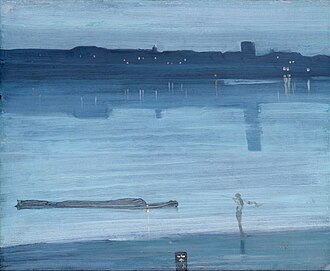 Nocturno: Azul y plata – Chelsea - James McNeill Whistler (1871)
%201864.jpg) Symphony in White, No. 2: The Little White Girl - James McNeill Whistler (1864)
Symphony in White, No. 2: The Little White Girl - James McNeill Whistler (1864)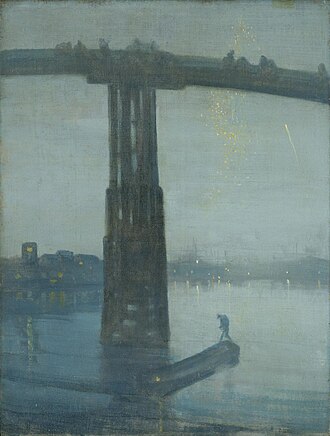 Nocturne: Blue and Gold – Old Battersea Bridge - James McNeill Whistler (1872)
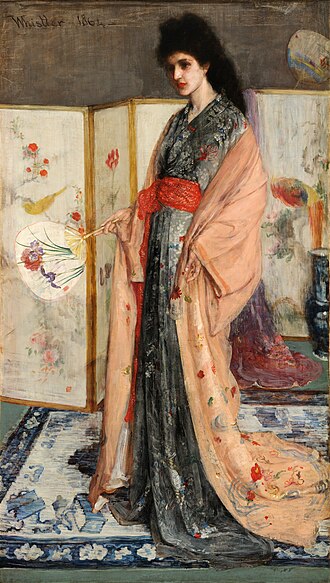 La princesa del país de la porcelana - James McNeill Whistler (1860s)
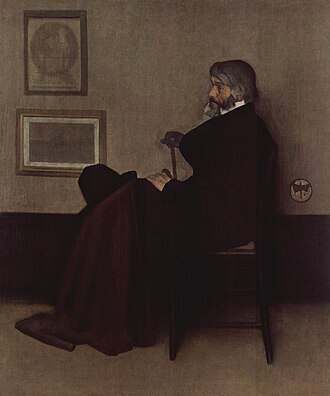 Arrangement in Grey and Black, No. 2: Portrait of Thomas Carlyle - James McNeill Whistler (1870s)
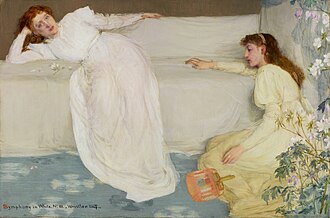 Symphony in White, No. 3 - James McNeill Whistler (1860s)