Nocturno: Azul y plata – Chelsea
James McNeill Whistler · 1871
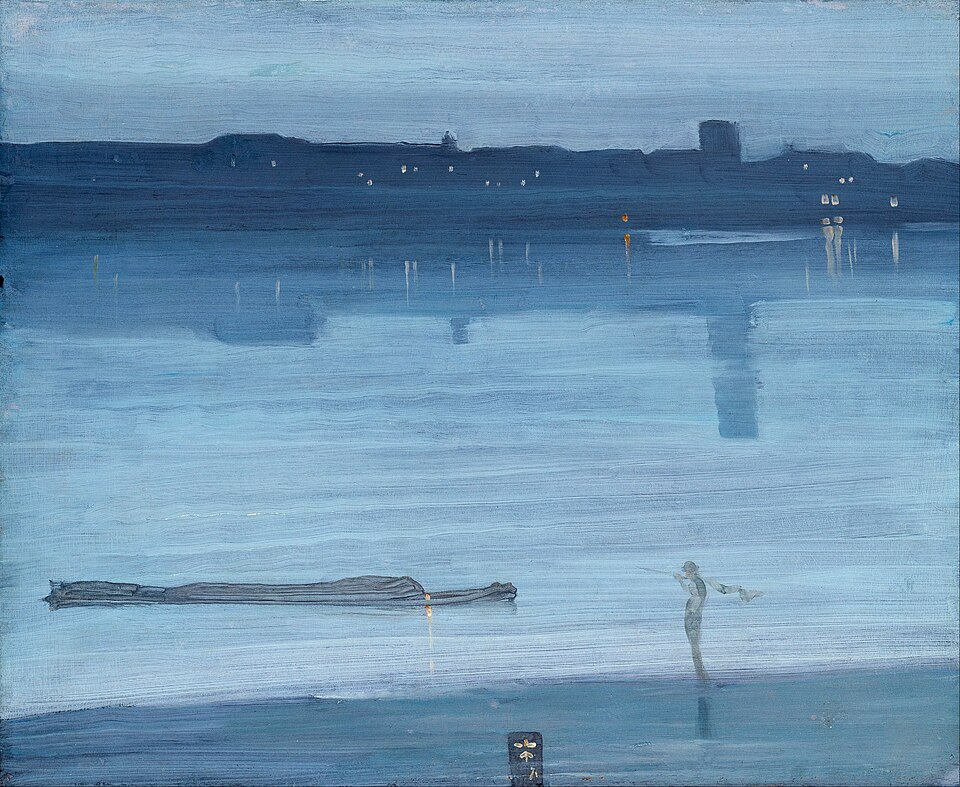
The first of Whistler's London nocturnes: a quiet stretch of the Thames at Chelsea, almost dissolved in blue. It was born on a single August evening in 1871, and his butterfly signature sits at the bottom like a seal.
The story behind the painting
Completed in 1871, this is the earliest of the London Nocturnes. It was conceived on the same August evening as Variations in Violet and Green, and the two paintings were exhibited together at the Dudley Gallery. It is the first of 52 night landscapes that Whistler began calling nocturnes after a suggestion from his patron Frederick Richards Leyland. His biographers the Pennells described his method: he went out at night, looked at the subject, turned his back and recited the arrangement and colours to a companion who corrected him.
What to look for
Look at how little is there: flattened, silhouetted shapes, monochrome washes of colour and visible brushstrokes in a subdued composition. The canvas, about 50 by 61 cm, was painted with an extremely fluid sauce that let Whistler build thin, luminous layers, sometimes over still-wet paint. The recipe is unverified, but the mixture was reportedly so thin that the canvas sometimes had to lie flat on the ground so the image would not slide off. At the centre of the bottom edge is his butterfly signature, imitating a seal.
Meaning and intent
After looking long enough at his subject, Whistler went to bed with nothing in his head but the scene; the next morning, if he could see the picture on the untouched canvas, he painted it, and if not he spent another night looking. The painting is an example of Japonisme: the flat silhouettes recall ukiyo-e prints, Whistler often drew on Hiroshige's One Hundred Famous Views of Edo, and the monochrome washes echo sumi-e ink painting. The point is mood and memory, not topographic record.
Legacy
William Cleverly Alexander, a banker and one of Whistler's earliest patrons, bought this first nocturne in 1872. His daughters Rachel and Jean Alexander gave it to the Tate in 1972, from their father's collection, where it remains. As the opening of the series, it marks the start of the way of painting night that would bring Whistler both admirers and, a few years later, a bitter fight with the critic John Ruskin.
¿Sabías que…?
- Completed in 1871, the earliest London Nocturne.
- Conceived the same August evening as Variations in Violet and Green.
- Bought in 1872 by patron W. C. Alexander.
- Given to the Tate in 1972.
Sobre el artista
James McNeill Whistler (1834-1903)
Más obras de James McNeill Whistler
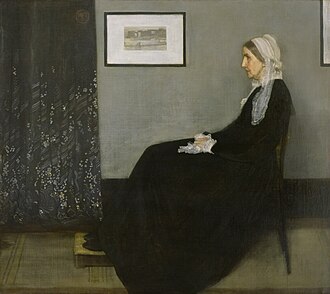 Retrato de la madre del artista - James McNeill Whistler (1871)
%201862.jpg) Sinfonía en blanco, n.º 1: La dama blanca - James McNeill Whistler (1860s)
Sinfonía en blanco, n.º 1: La dama blanca - James McNeill Whistler (1860s)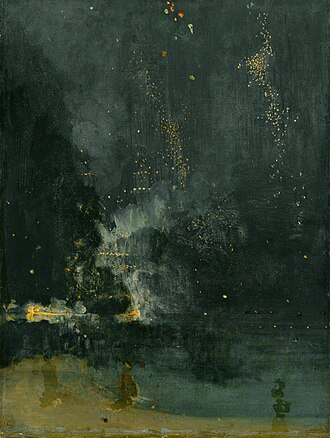 Nocturne in Black and Gold – The Falling Rocket - James McNeill Whistler (1875)
%201864.jpg) Symphony in White, No. 2: The Little White Girl - James McNeill Whistler (1864)
Symphony in White, No. 2: The Little White Girl - James McNeill Whistler (1864)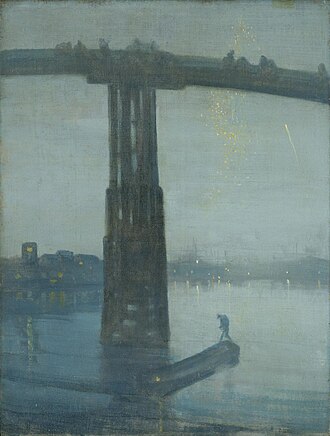 Nocturne: Blue and Gold – Old Battersea Bridge - James McNeill Whistler (1872)
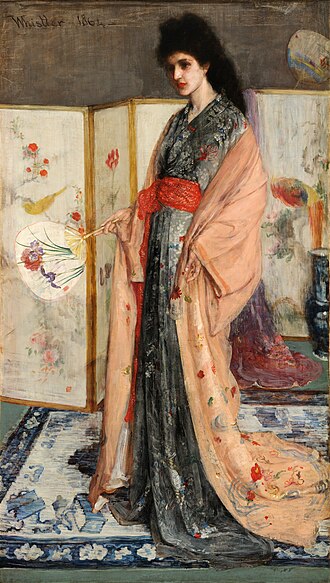 La princesa del país de la porcelana - James McNeill Whistler (1860s)
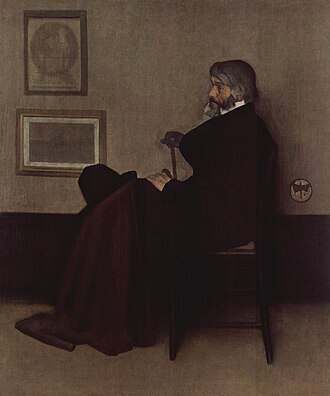 Arrangement in Grey and Black, No. 2: Portrait of Thomas Carlyle - James McNeill Whistler (1870s)
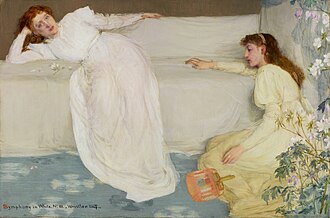 Symphony in White, No. 3 - James McNeill Whistler (1860s)