Merahi metua no Tehamana
Paul Gauguin · 1893
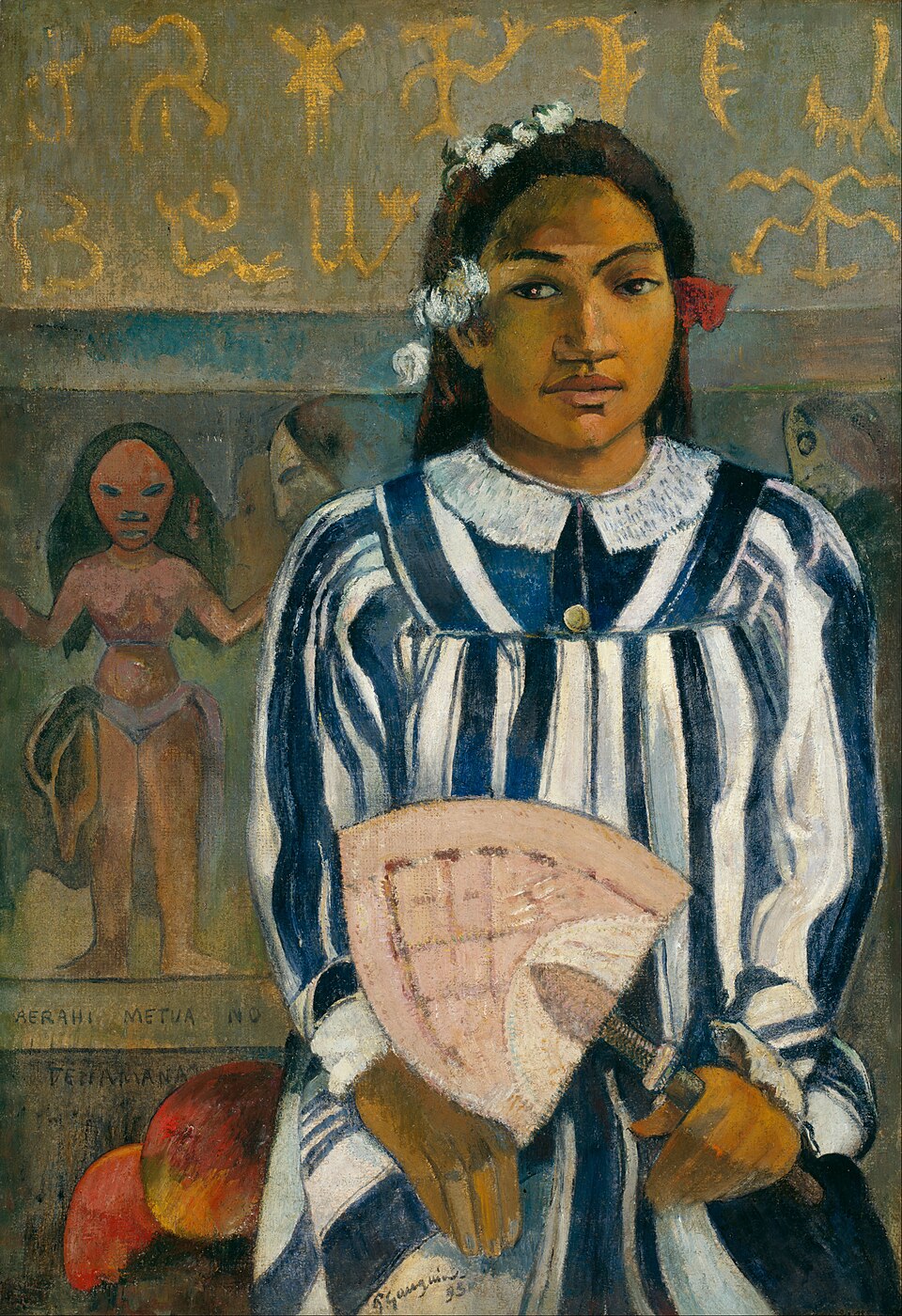
A young Tahitian woman in a high-necked missionary dress holds a palm fan and gazes out, unreadable. Behind her float an idol, two spirit heads and invented glyphs. Gauguin painted her in 1893, and the portrait still raises hard questions.
The story behind the painting
Teha'amana was Gauguin's vahine, his native wife, during his first stay in Tahiti from 1891 to 1893. The marriage was arranged and completed in a single afternoon, and Gauguin claimed she was just thirteen; no birth certificate survives, but she was likely in her early teens. Her family came from Rarotonga, and she was born on Huahine. Gauguin called her Tehura in his book Noa Noa. She was at the quay on 14 June 1893 to see him off. When he returned in 1895 she had remarried, and she died in Mataiea in 1918 during the Spanish flu epidemic.
What to look for
The inscription below the idol reads MERAHI METUA NO TEHAMANA, Teha'amana has many parents, a nod to her foster parents as well as her natural ones under Tahitian custom. She wears her best churchgoing clothes, holds a plaited palm fan, a symbol of beauty, and a red tiare flower at her left ear signals she is married. Two ripe mangoes rest on a low table at her right. The glyphs behind her head imitate Rongorongo script from Easter Island, though Gauguin's examples are imaginary. A local man who knew her even recognised the scar above her right eye.
Meaning and intent
The idol is taken to be the goddess Hina, while the heads above her shoulders are evil spirits, suggesting a dialogue between good and evil, or life and death. The undeciphered glyphs probably stress how impenetrable Gauguin found Tahitian culture, and in Noa Noa he called Teha'amana herself impenetrable, perhaps the reason for her Mona Lisa expression. The anthropologist Bengt Danielsson saw it as a farewell portrait. He also showed that Gauguin's tale of her telling him ancient myths was fiction: she was a Christian, and such myths had been withheld from women.
Legacy
After the 1895 sale of Gauguin's works at the Hotel Drouot, the portrait went to Daniel de Monfreid, his great champion, which suggests it held sentimental value. Today it hangs in the Art Institute of Chicago. Teha'amana is also thought to have posed for Spirit of the Dead Watching, and a sculpted head is known to be her portrait. Danielsson found that she later refused to return to Gauguin, repelled by his illness. Her grave in Mataiea makes no mention of him, a quiet reminder that her own life went on beyond his story.
¿Sabías que…?
- Painted in 1893 at the end of Gauguin's first Tahitian stay.
- The title means Teha'amana Has Many Parents.
- The glyphs imitate Easter Island Rongorongo script but are invented.
- Now in the Art Institute of Chicago.
Sobre el artista
Paul Gauguin (1848-1903)
retrato · flor · Instituto de Arte de Chicago · abanico
Más obras de Paul Gauguin
 ¿De dónde venimos? ¿Qué somos? ¿Adónde vamos? - Paul Gauguin (1897-1898)
 El Cristo amarillo - Paul Gauguin (1889)
 ¿Cuando te casas? - Paul Gauguin (1892)
 Mujeres de Tahití - Paul Gauguin (1890)
 La visión tras el sermón - Paul Gauguin (1888)
El espíritu de los muertos vela - Paul Gauguin (1892)
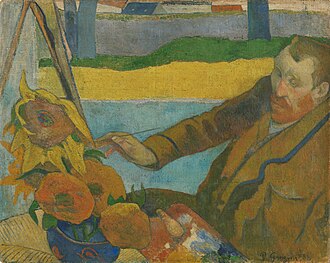 Van Gogh pintando girasoles - Paul Gauguin (1888)
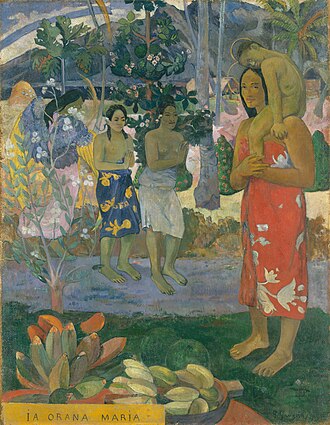 Ia Orana Maria - Paul Gauguin (1891)
Obras de artistas relacionados
 La noche estrellada - Vincent van Gogh (1889)
 Terraza de café por la noche - Vincent van Gogh (1888)
 Paseo a orillas del mar - Joaquín Sorolla (1909)
 Triste herencia - Joaquín Sorolla (1898)
 Las grandes bañistas - Paul Cézanne (1900s)
 The Boy in the Red Vest - Paul Cézanne
 Baile en el Moulin de la Galette - Pierre-Auguste Renoir (1876)
 El almuerzo de los remeros - Pierre-Auguste Renoir (1881)
 En el Moulin Rouge - Henri de Toulouse-Lautrec (1892)
 La toilette - Henri de Toulouse-Lautrec (1896)