La Virgen, el Niño y las santas Inés y Martina
El Greco · 1590s
.jpg)
The Virgin and Child sit enthroned among angels while two young martyrs stand below, one holding a lamb, the other resting her hand on a lion's head. El Greco signed it with tiny Greek letters hidden on that lion.
The story behind the painting
El Greco painted this canvas between 1597 and 1599 for a side altar of the Chapel of San José in Toledo, part of the set of altarpieces he made there. It was meant as a pendant to Saint Martin and the Beggar on the other side altar, together showing the patron's faith in the intercession of the saints. In 1906 the painting was sold and replaced in the chapel by a copy. The original is now in the National Gallery of Art in Washington, and Harold Wethey lists it as number 17 in his catalogue.
What to look for
The canvas is about 193.5 by 103 cm. At right, Saint Agnes wears a red mantle and holds a lamb in her left hand, her right hand on her breast. At left, Saint Martina raises her eyes to heaven, in a blue tunic and yellow mantle; her left hand reaches toward Agnes, while her right rests on the head of a lion and holds the palm of martyrdom, her usual attributes. Look closely at the lion's head: El Greco placed his initials there, in Greek cursive letters, as a signature.
Meaning and intent
Showing the enthroned Virgin with saints comes from Italian Christian art, where it is called a sacra conversazione, and it was rarely painted in Spain at the time. Agnes is easy to identify: the Greek word for lamb echoes her name, and she was martyred in Rome for defending her chastity. The left figure has been read as Saint Thecla, but the inventories drawn up by El Greco's son Jorge Manuel name Agnes and Martina. The patron Martín Ramírez's mother was called Inés Álvarez, and Martina may honour the men named Martín in that family.
Legacy
The composition seems to derive from El Greco's Holy Family with Mary Magdalene: the physical types, poses and gestures of the Virgin and Child are almost identical, and the angel at left recalls the position of Saint Joseph in that picture. Jorge Manuel's inventories after his father's death list two versions of this work. Studies by Wethey, Cossío, Álvarez Lopera, Palma Martínez Burgos and Félix Monguilot Benzal discuss it within the Chapel of San José ensemble. Wikidata places it in the 1590s, matching the dates 1597 to 1599 given by the Wikipedia article.
¿Sabías que…?
- Painted 1597-1599 for the Chapel of San José, Toledo.
- Sold in 1906 and replaced in the chapel by a copy.
- Signed with Greek initials on the lion's head.
- Now in the National Gallery of Art, Washington.
Sobre el artista
El Greco (1541-1614)
arte religioso · Virgen María · Niño Jesús · manierismo · Galería Nacional de Arte
Más obras de El Greco
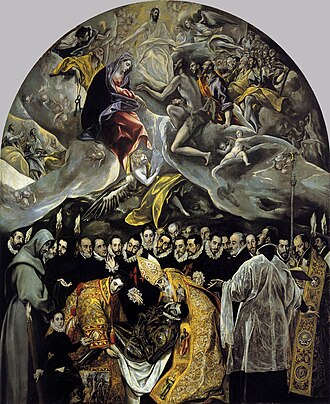 El entierro del Conde de Orgaz - El Greco (1586)
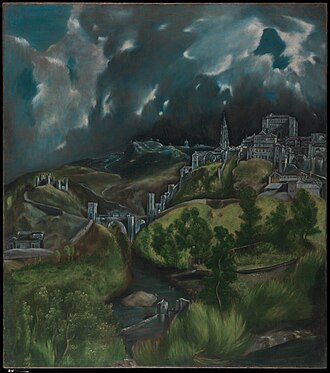 Vista de Toledo - El Greco (1596)
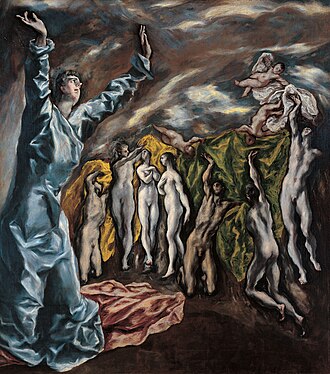 Visión del Apocalipsis - El Greco (1610)
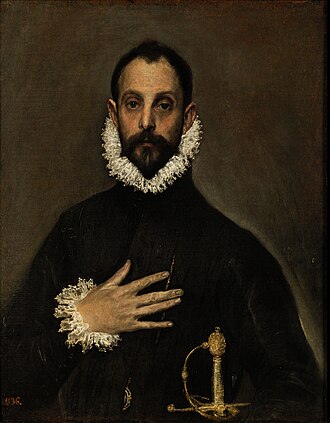 El caballero de la mano en el pecho - El Greco (1580)
%20-%20Laoco%C3%B6n%20-%20Google%20Art%20Project.jpg) Laocoonte - El Greco (1610s)
Laocoonte - El Greco (1610s)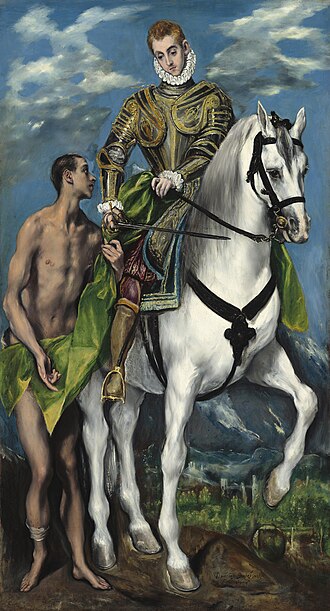 San Martín y el mendigo - El Greco (1597)
.jpg) Adoración de los pastores - El Greco (1612)
Adoración de los pastores - El Greco (1612)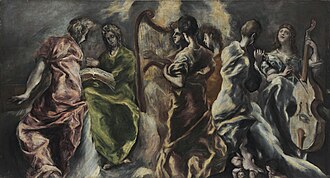 Concierto de ángeles - El Greco (1600s)
Obras de artistas relacionados
.jpg) Venus de Urbino - Titian (1538)
Venus de Urbino - Titian (1538)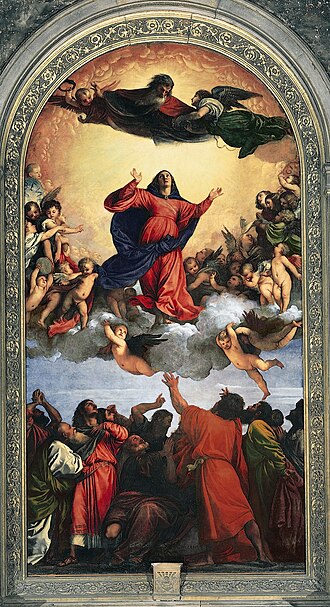 La Asunción de la Virgen - Titian (1510s)
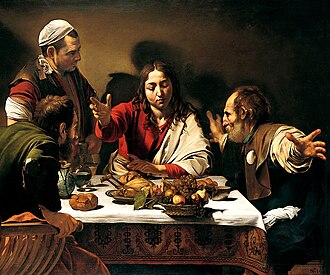 La cena de Emaús - Caravaggio (1601)
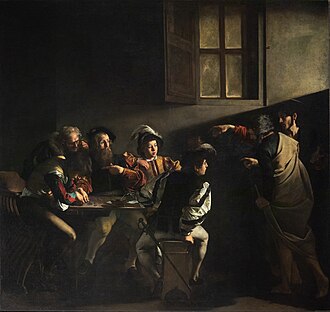 La vocación de San Mateo - Caravaggio (1609)
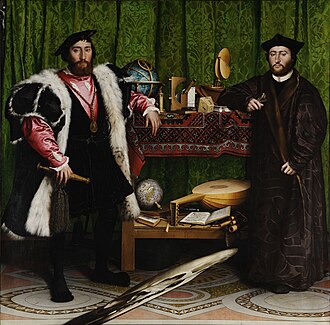 Los embajadores - Hans Holbein the Younger (1533)
 El cuerpo de Cristo en la tumba - Hans Holbein the Younger (1520s)