Vida de san Cenobio
Sandro Botticelli · 1500
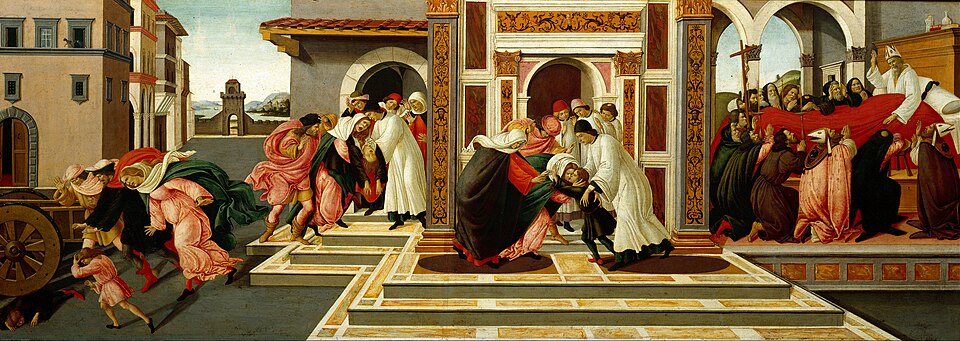
A boy crushed under a cart, a widow carrying him to church, a mother and son reunited, and then an old bishop on his deathbed. Botticelli tells it all along one long panel, late in his life.
The story behind the painting
This panel in Dresden belongs to a series, Scenes from the Life of Saint Zenobius, an early Bishop of Florence who perhaps died in 417. Four panels survive, now split between London, New York and Dresden. All are tempera on wood, about 66 cm high, and this one is the longest at about 182 cm. Scholars generally place the series in the last phase of Botticelli's career, perhaps around 1500 to 1505, and some think these may be among his latest surviving works. Wikidata gives the year 1500. The scenes follow closely the written Life of Zenobius by Fra Clemente Mazza from 1475.
What to look for
Read the panel from left to right, like a strip of film. A young man is run over by a cart and killed. His mother, a widow, carries him in her arms to the church. Raised by the prayer of Zenobius, which is not shown, he is given back to her. At the far right the saint lies on his deathbed. The figures are stark and contorted with anguish, typical of Botticelli's last years, and the painter pays close attention to the architecture behind them, with contemporary Florentine buildings and grotesque ornament on the richer ones.
Meaning and intent
The series may have been made for a home rather than a church. Ellen Callmann proposed in 1984 that the panels were spalliere, painted panels set into wood paneling, given by Francesco di Zanobi Girolami for a son's wedding, probably that of Zanobi Girolami in 1500. The Girolami family claimed descent from the saint's father, kept what was said to be his episcopal ring, and had founded two chapels in his honour. Miracles and a deathbed are not usual wedding subjects, but family pride in Zenobius may explain the choice. An older claim, that they came from a confraternity at Florence Cathedral, is thought unlikely.
Legacy
The Dresden panel reached the art market in the 1820s and entered the museum in 1868, while its companions came from the Rondinelli collection in Florence and later went to New York and London. The four panels now look rather different, which once led some scholars to suggest different painters. The differences come instead from cleaning and restoration. The London panels are the best preserved, the New York one was cleaned too hard in the past, and the Dresden panel is simply covered by a thick yellowish varnish, so its colours wait under that layer.
¿Sabías que…?
- Part of a series of four surviving panels on the life of Saint Zenobius.
- Shows a resurrection miracle in three scenes and the saint's death.
- Probably among Botticelli's last works, around 1500 to 1505.
- In Dresden since 1868, under thick yellowish varnish.
Sobre el artista
Sandro Botticelli (1445-1510)
arte religioso · Primer Renacimiento · Staatliche Kunstsammlungen Dresden
Más obras de Sandro Botticelli
 El nacimiento de Venus - Sandro Botticelli (c. 1485)
 La primavera - Sandro Botticelli (1480s)
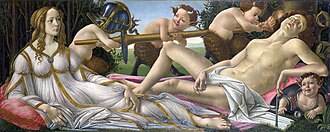 Venus y Marte - Sandro Botticelli (1485)
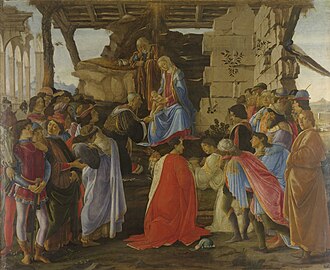 Adoración de los Magos - Sandro Botticelli (1470s)
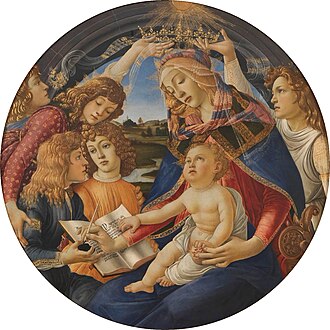 Virgen del Magnificat - Sandro Botticelli (1481)
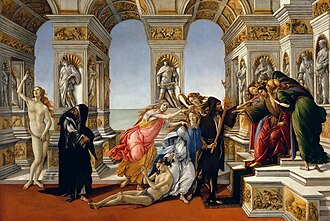 La Calumnia de Apeles - Sandro Botticelli (1490s)
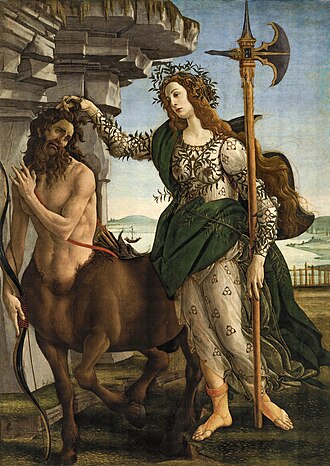 Palas y el Centauro - Sandro Botticelli (1482)
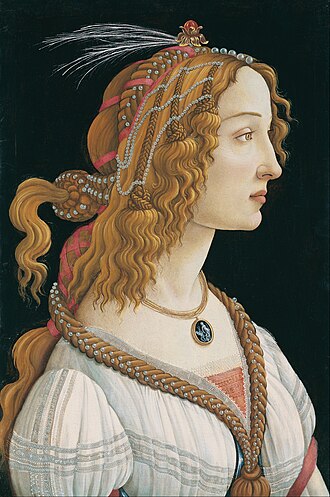 Retrato de una joven - Sandro Botticelli (1480)
Obras de artistas relacionados
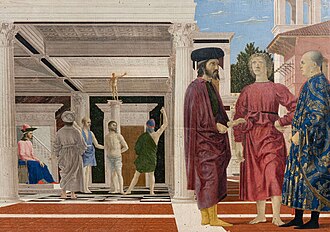 La flagelación - Piero della Francesca (1450s)
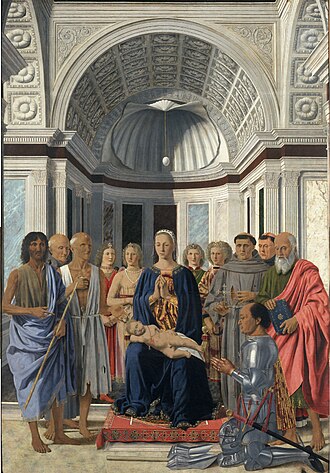 Sacra Conversación - Piero della Francesca (1472)
 La Gioconda - Leonardo da Vinci (1503-1519)
 La dama del armiño - Leonardo da Vinci (1490)
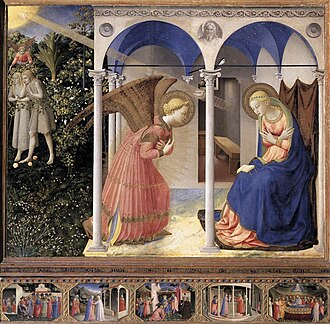 La Anunciación - Fra Angelico (1425)
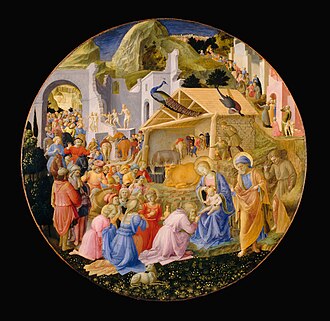 Adoración de los Reyes Magos - Fra Angelico (1430)
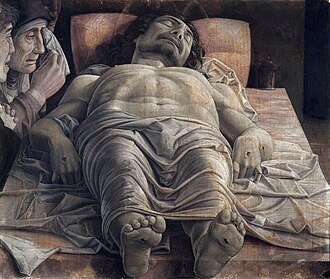 Lamentación sobre Cristo muerto - Andrea Mantegna (1483)
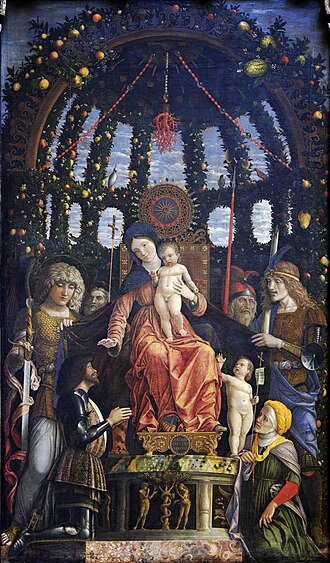 Madonna de la Victoria - Andrea Mantegna