San Juan Evangelista
El Greco · 1577
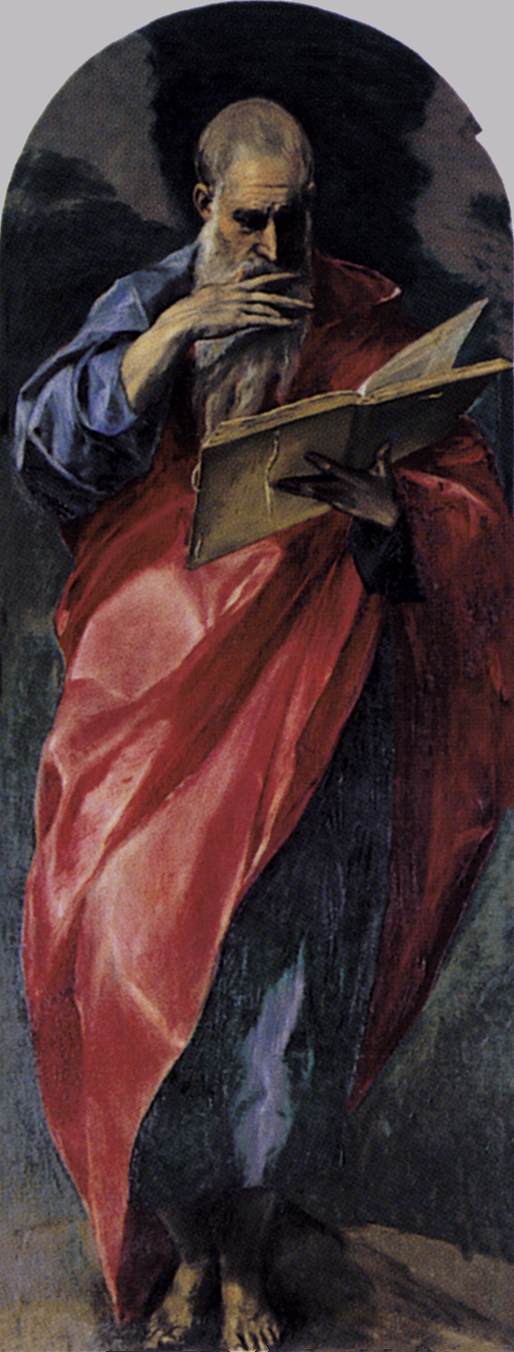
An old man in blue and rose lifts his hand to his lips, lost in thought over a book. Painted soon after El Greco reached Toledo, this Saint John has been compared to Michelangelo's Moses.
The story behind the painting
El Greco painted this Saint John the Evangelist between 1577 and 1579, shortly after arriving in Toledo, for the main altarpiece of the Monastery of Santo Domingo el Antiguo. It stands in the first tier, on the right-hand side, and Harold Wethey lists it as number 6 in his catalogue. Some writers, following Antonio Ponz, called the figure Saint Paul, but Paul is always shown with a sword, which is missing here. A preparatory drawing shows an eagle, the evangelist's emblem, and pairing the two Saints John was traditional in an altarpiece.
What to look for
The canvas is tall and narrow, about 212 by 78 cm. Saint John wears a blue tunic and a rose garment against a blue sky with clouds, and El Greco centres the composition on his face. His right hand rises to his mouth, a sign of mental and spiritual concentration, and his hands show delicacy. Drawing is more visible here than in many El Greco works: see the right hand, the visible forearm, the admirable feet, and the head leaning forward, which casts deep shadows under the brow. The eagle is at upper left, above his shoulder, now almost invisible.
Meaning and intent
Unlike his later Apostle series, where John is young with a chalice and an eagle, El Greco shows him here as an old man reading. The work is strongly marked by Italian art, and its terribilità has been compared with Michelangelo's Moses in San Pietro in Vincoli. In the Assumption of the Virgin, the main painting of the same altarpiece, John appears again, very differently. Manuel Bartolomé Cossío contrasted the realistic, youthful head in that canvas with this grand evangelist of Patmos, filled with biblical spirit. The cloudy background dramatises the upper part of the canvas.
Legacy
The robe, beyond its painterly qualities, expresses a grandeur that echoes the expression of the face. The painting has darkened and is in poor condition, which is why the eagle has nearly disappeared from view. It remains in the monastery of Santo Domingo el Antiguo in Toledo, within the ensemble for which it was made, one of the first commissions El Greco received in the city. Wikidata gives 1577 as its date. Writers from Cossío to Wethey, Gudiol and Álvarez Lopera have studied it, and it is still one of the founding works of El Greco's Spanish career.
¿Sabías que…?
- Painted 1577-1579 for Santo Domingo el Antiguo, Toledo.
- About 212 x 78 cm, on the main altarpiece, first tier, right side.
- Compared for its terribilità with Michelangelo's Moses.
- Number 6 in Harold Wethey's catalogue.
Sobre el artista
El Greco (1541-1614)
arte religioso · manierismo · Juan el Evangelista
Más obras de El Greco
 El entierro del Conde de Orgaz - El Greco (1586)
 Vista de Toledo - El Greco (1596)
 Visión del Apocalipsis - El Greco (1610)
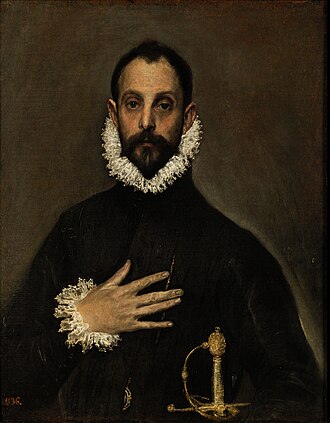 El caballero de la mano en el pecho - El Greco (1580)
%20-%20Laoco%C3%B6n%20-%20Google%20Art%20Project.jpg) Laocoonte - El Greco (1610s)
Laocoonte - El Greco (1610s)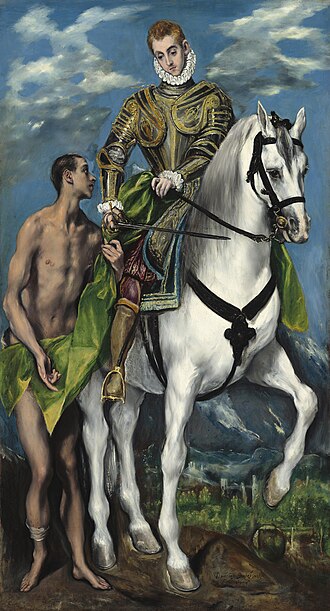 San Martín y el mendigo - El Greco (1597)
.jpg) Adoración de los pastores - El Greco (1612)
Adoración de los pastores - El Greco (1612) Concierto de ángeles - El Greco (1600s)
Obras de artistas relacionados
.jpg) Venus de Urbino - Titian (1538)
Venus de Urbino - Titian (1538)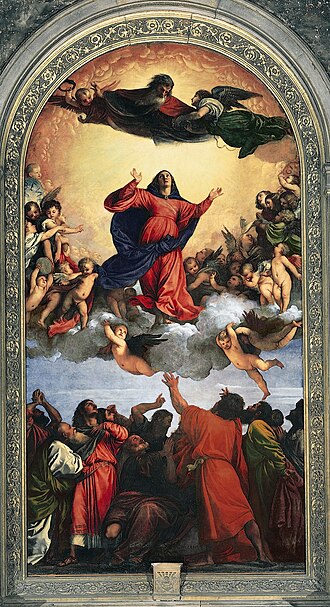 La Asunción de la Virgen - Titian (1510s)
 La cena de Emaús - Caravaggio (1601)
 La vocación de San Mateo - Caravaggio (1609)
 Los embajadores - Hans Holbein the Younger (1533)
 El cuerpo de Cristo en la tumba - Hans Holbein the Younger (1520s)