Peces dorados
Gustav Klimt · 1902
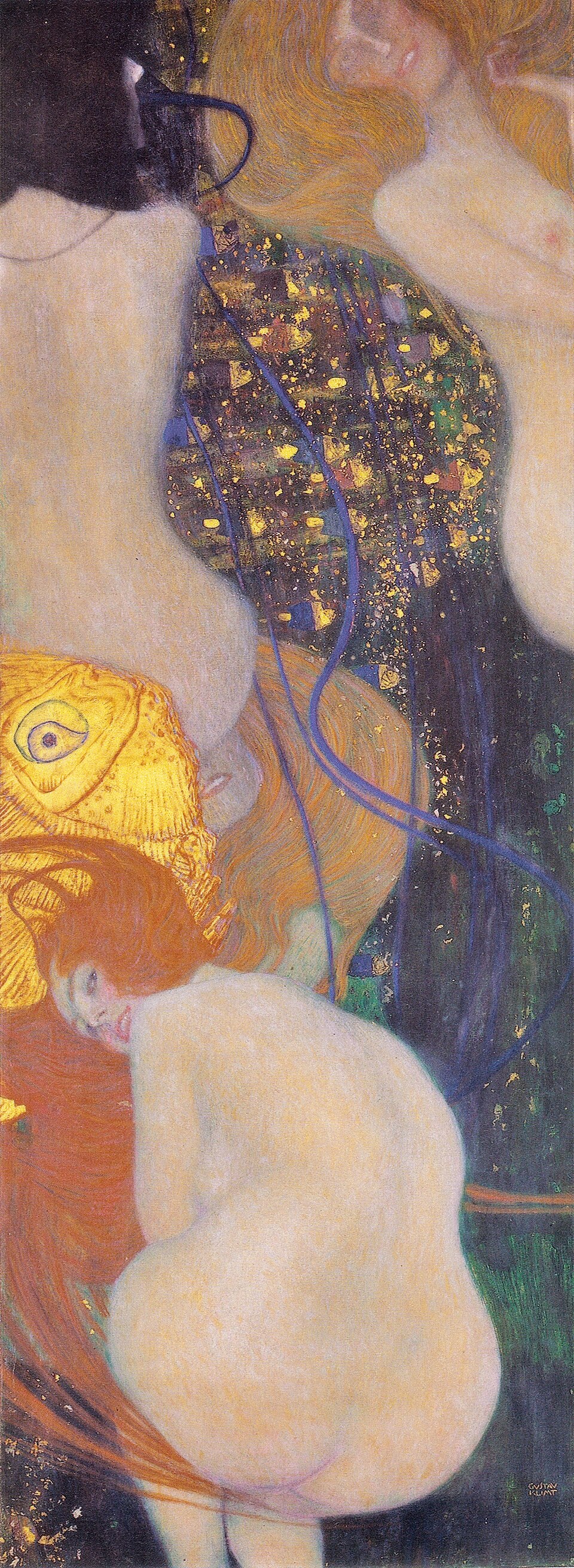
Water nymphs drift beside a huge golden fish, and one turns to look back at us over her bare behind. Klimt wanted to call it To My Critics. His friends talked him out of it, but Vienna understood anyway.
The story behind the painting
While painting Goldfish, Klimt was caught in a scandal over his Faculty Paintings, a state commission for the hall of the University of Vienna. His Philosophy and Jurisprudence were radically new for Viennese art; the public did not understand them and critics attacked them harshly. Klimt, barely recovered from the depression that followed the death of his brother Ernst, was deeply hurt, and the quiet painter who avoided publicity was even forced to make a statement to the press. He found it much easier to answer with a painting. The Spanish Wikipedia dates it 1901 to 1902; Wikidata gives 1902.
What to look for
The canvas is tall and narrow, about 181 by 67 cm, a format that recalls the column of human figures in Philosophy. Four smiling nude women with long, floating, wavy hair play in dark water beside an enormous golden fish. Two blondes face us, one peering in from the upper left edge and one lower right behind the fish's head; a dark-haired woman is seen from behind at the top, and a red-haired one crouches below. The main figure, crouching in the foreground, turns and looks provocatively at the viewer, her ample backside fully exposed.
Meaning and intent
The painting belongs to Klimt's cycle of water nymphs, with Moving Water, Medicine, Silver Fish and two versions of Water Serpents. Following the Belgian Symbolists Xavier Mellery and Jan Toorop, he set his allegorical women in a distant, weightless realm, and chose water and undines, river nymphs of Germanic myth who are seductive and dangerous like sirens. The critic Ludwig Hevesi called these pictures an erotic by-product of the Faculty Paintings and the Beethoven Frieze. But here the meaning was also personal. Klimt wanted to title the work To My Critics, and the woman's pose was his reply.
Legacy
His friends wisely dissuaded him from that title, yet the message of the innocent-sounding Goldfish was clearly understood. The writer Felix Salten recalled that when the university paintings caused a stir, Klimt wrote a laconic reply to his critics: a work that turned a rounded back toward the viewer. He might as well have called it by a famously rude German saying, Salten added, but everyone understood anyway. The painting was first shown at the thirteenth exhibition of the Vienna Secession in 1902. Wikidata lists it today in the Kunstmuseum Solothurn in Switzerland.
¿Sabías que…?
- Painted in 1901-1902 according to Wikipedia; Wikidata gives 1902.
- Klimt wanted to title it To My Critics.
- Part of his cycle of water nymph paintings.
- First shown at the Vienna Secession in 1902; now in the Kunstmuseum Solothurn.
Sobre el artista
Gustav Klimt (1862-1918)
Más obras de Gustav Klimt
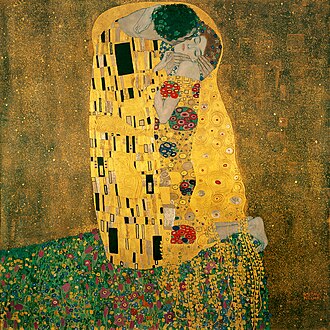 El beso - Gustav Klimt (1907-1908)
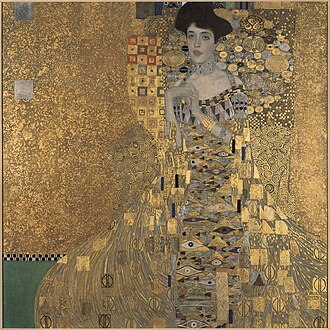 Retrato de Adele Bloch-Bauer I - Gustav Klimt (1907)
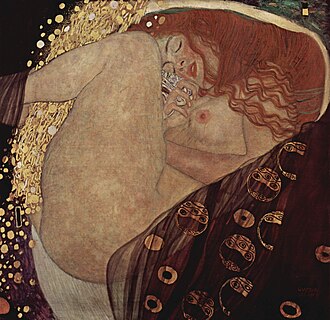 Dánae - Gustav Klimt (1907)
.jpg) Judit I - Gustav Klimt (1901)
Judit I - Gustav Klimt (1901)%20Google%20Art%20Project.jpg) Las tres edades de la mujer - Gustav Klimt (1905)
Las tres edades de la mujer - Gustav Klimt (1905)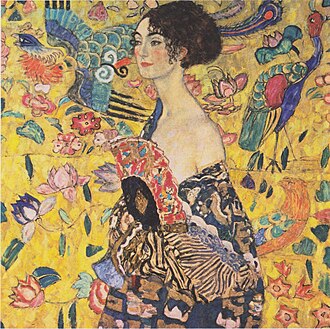 Dama con abanico - Gustav Klimt (1917)
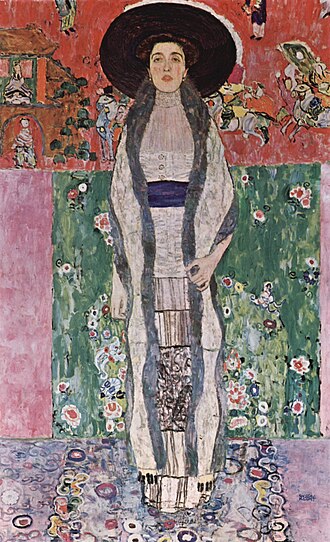 Retrato de Adele Bloch-Bauer II - Gustav Klimt (1912)
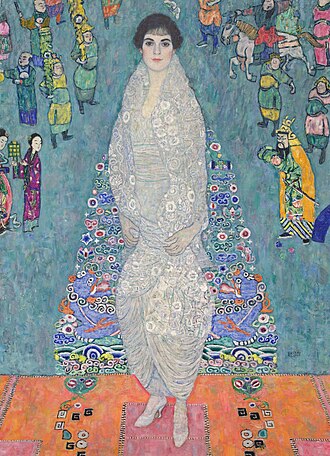 Retrato de Elisabeth Lederer - Gustav Klimt (1910s)