Eu haere ia oe
Paul Gauguin · 1893
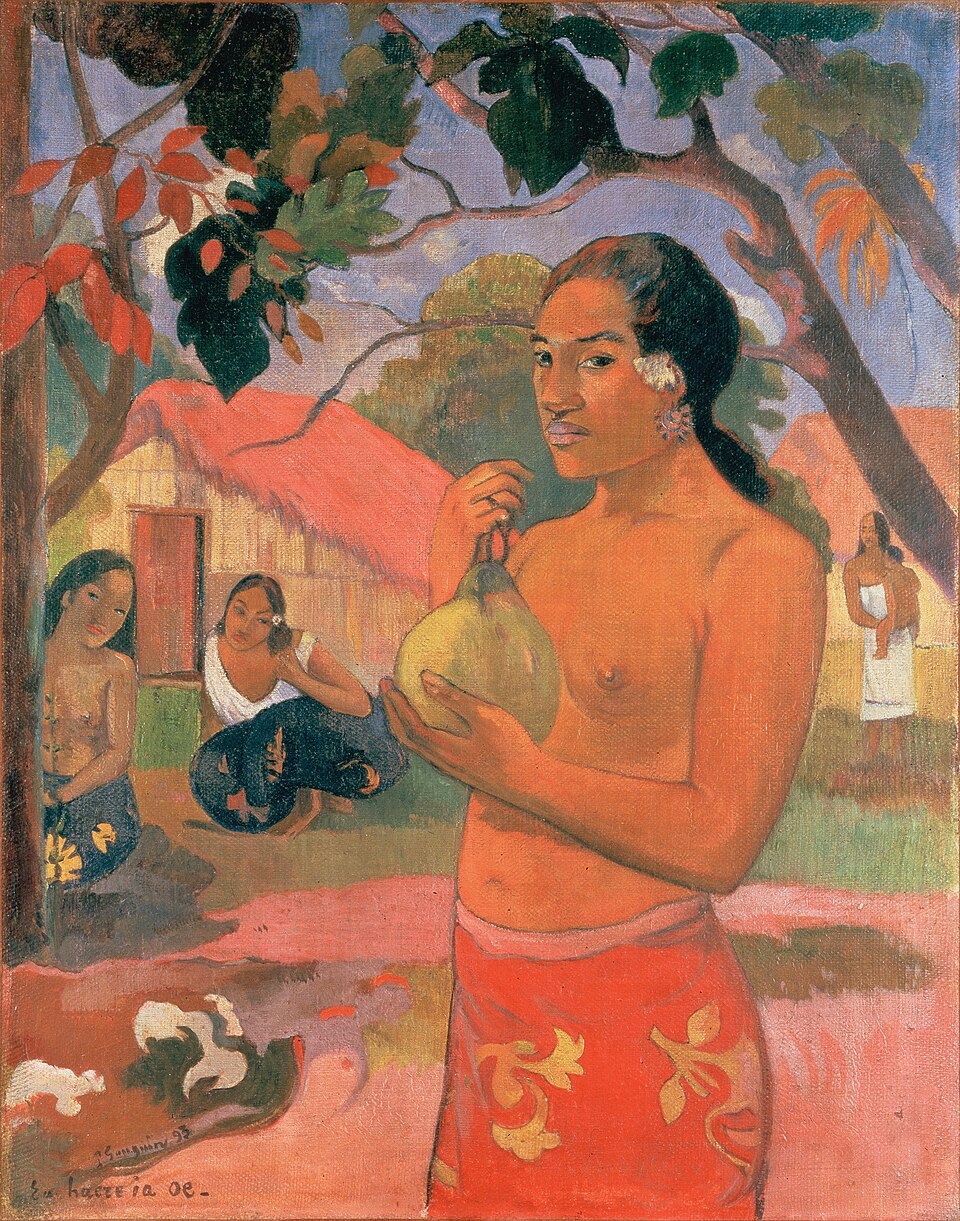
Where are you going? On Tahiti that was an everyday greeting, and Gauguin made it the title of this painting of a young woman holding a hollowed gourd, stopped by women calling from behind her.
The story behind the painting
Between 1891 and 1893 Gauguin made his first stay on Tahiti, hoping to find an unspoiled paradise. European rule had already changed the island a great deal, but the tropical vegetation and the daily life of its people still gave him an almost endless source of inspiration, and he gave many of his canvases titles in the local language. He painted Eu haere ia oe there in 1893. It is also known as Woman with a Fruit. According to the Swedish anthropologist and Gauguin specialist Bengt Danielsson, the question Where are you going? was simply the usual greeting on the island.
What to look for
The subject is a chance meeting. In the background, women call the greeting to a young woman in front, who wears a finely decorated pareo and holds a hollowed gourd, probably filled with water. Compare her with the related painting Te Nave Nave Fenua, where a full length Tahitian Eve fills the canvas: here the woman is less monumental, but the picture as a whole gains in harmony. Look also at the pose of the front woman in the background, which echoes many figures in Gauguin's work, most famously in Nafea faa ipoipo?, When Will You Marry?
Meaning and intent
The young woman is probably a portrait of Tehamana, Gauguin's companion on the island, whom he met when she was thirteen and with whom he lived; she appears in many pictures of this period, such as Vahine no te vi of 1892. During his stay Gauguin often painted the same subject several times with small differences. An almost identical second version is in the Staatsgalerie Stuttgart. There the woman is Titi, his first companion on the island, whom he later left because, being of mixed descent, she was considered too European. In that version she holds a dog instead of a gourd and stands far more stiffly.
Legacy
The painting belonged to the dealer Ambroise Vollard. On 29 April 1908 the Moscow collector Ivan Morozov bought it. In 1918 it went to the Museum of New Western Painting in Moscow, which in 1923 became part of the State Museum of New Western Art. In 1948 it was transferred to the Hermitage in Saint Petersburg, where it remains. Together with its Stuttgart twin, it shows how Gauguin returned again and again to the same quiet Tahitian scenes, changing a figure or a gesture to find a different balance.
¿Sabías que…?
- Painted on Tahiti in 1893 during Gauguin's first stay.
- The title, Where are you going?, was a common island greeting.
- A near identical version is in the Staatsgalerie Stuttgart.
- At the Hermitage since 1948.
Sobre el artista
Paul Gauguin (1848-1903)
Más obras de Paul Gauguin
 ¿De dónde venimos? ¿Qué somos? ¿Adónde vamos? - Paul Gauguin (1897-1898)
 El Cristo amarillo - Paul Gauguin (1889)
 ¿Cuando te casas? - Paul Gauguin (1892)
 Mujeres de Tahití - Paul Gauguin (1890)
 La visión tras el sermón - Paul Gauguin (1888)
El espíritu de los muertos vela - Paul Gauguin (1892)
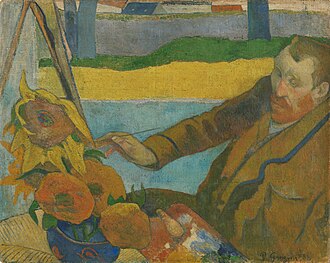 Van Gogh pintando girasoles - Paul Gauguin (1888)
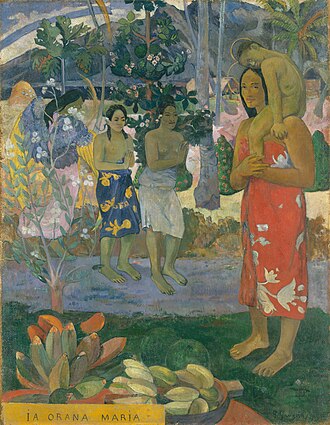 Ia Orana Maria - Paul Gauguin (1891)
Obras de artistas relacionados
 La noche estrellada - Vincent van Gogh (1889)
 Terraza de café por la noche - Vincent van Gogh (1888)
 Paseo a orillas del mar - Joaquín Sorolla (1909)
 Triste herencia - Joaquín Sorolla (1898)
 Las grandes bañistas - Paul Cézanne (1900s)
 The Boy in the Red Vest - Paul Cézanne
 Baile en el Moulin de la Galette - Pierre-Auguste Renoir (1876)
 El almuerzo de los remeros - Pierre-Auguste Renoir (1881)
 En el Moulin Rouge - Henri de Toulouse-Lautrec (1892)
 La toilette - Henri de Toulouse-Lautrec (1896)