Eliezer and Rebecca
Nicolas Poussin · 1648
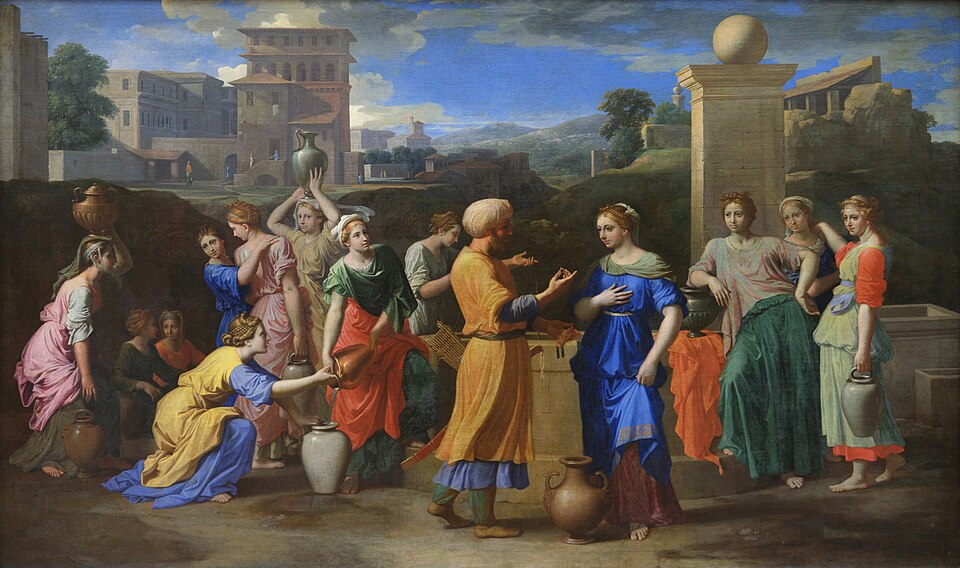
At a well, a servant offers a ring to a young woman who lays her hand on her heart, while her twelve companions watch with envy, wonder or indifference. Poussin was asked for a painting of several women with different beauties, and gave far more.
The story behind the painting
The banker and silk merchant Jean Pointel commissioned the work, asking for a painting like Guido Reni's Virgin Sewing with Companions, with several women in whom one can note different beauties. Poussin's biographer André Félibien dates it 1647 to 1649; Wikidata gives 1648. The scene is from Genesis 24: Eliezer of Damascus gives Abraham's ring and gifts to Rebecca, chosen to marry Isaac. When it reached Paris, Félibien says a woman was so charmed she asked to buy it, but Pointel loved his friend's work too much to part with it even for a day.
What to look for
Count the twelve companions: each reacts differently, from indifference to envy and jealousy, from wonder to surprise, and only one turns to look at you. Rebecca wears blue and rests her right hand on her heart as Eliezer offers the ring. Behind, a column topped with a large ball rises above the group, beside the well. The canvas, about 118 by 197 cm, was probably cut at the sides around 1695 to fit the panelling of a room at Versailles.
Meaning and intent
The Old Testament scene is also shaped as an Annunciation: blue is the Virgin's colour, the hand on the heart her gesture of acceptance, the well a symbol of Mary, an inexhaustible well of grace in the words of Jean-Pierre Camus, and the twelve women the twelve stars of her crown. It also echoes marriage, with Rebecca seen as the ideal wife. The ball on the column joins Providence to Virtue, marking a moment when God's will was revealed.
Legacy
Louis XIV acquired it in 1665 with The Seasons and eleven other works by Poussin, and on 7 January 1668 Philippe de Champaigne lectured on it at the Royal Academy. At Versailles it hung as a pendant to The Finding of Moses. In 1793 it moved to Paris for good and hung in the Louvre's opening display as a public gallery. Ingres made two partial copies, and it inspired Picasso's Three Women at a Fountain.
¿Sabías que…?
- Commissioned by Jean Pointel, dated 1647-1649 by Félibien.
- Acquired by Louis XIV in 1665.
- Probably cut down at the sides at Versailles.
- Inspired Picasso's Three Women at a Fountain.
Sobre el artista
Nicolas Poussin (1594-1665)
arte religioso · mujer · Departamento de Pinturas del Museo del Louvre · paisaje · indumentaria
Más obras de Nicolas Poussin
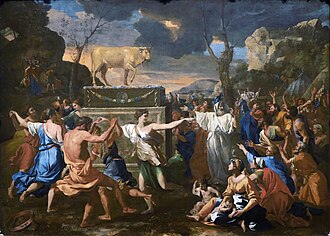 La adoración del becerro de oro - Nicolas Poussin (1634)
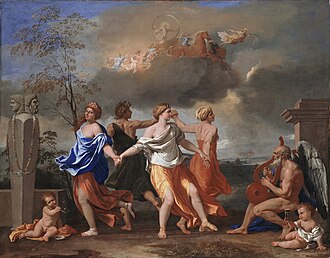 La danza de la vida humana - Nicolas Poussin (1630s)
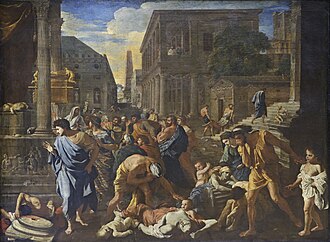 The Plague at Ashdod - Nicolas Poussin (1630)
.jpg) El juicio de Salomón - Nicolas Poussin (1649)
El juicio de Salomón - Nicolas Poussin (1649)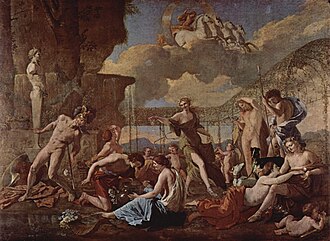 The Empire of Flora - Nicolas Poussin (1631)
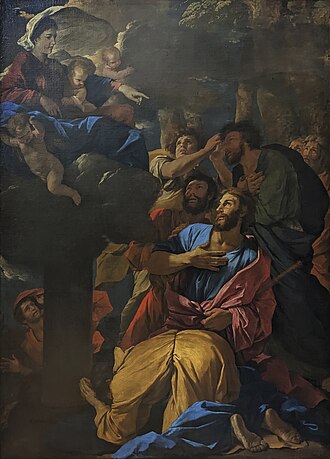 Aparición de la Virgen María a Santiago el Mayor - Nicolas Poussin (1620s)
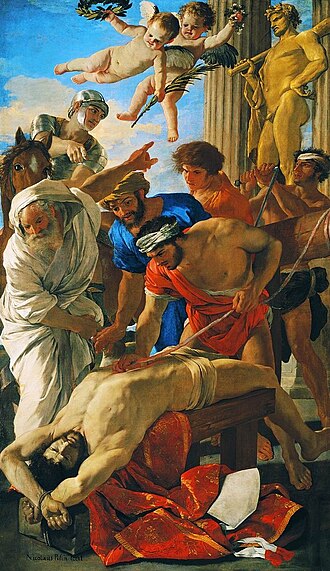 The Martyrdom of Saint Erasmus - Nicolas Poussin (1628)
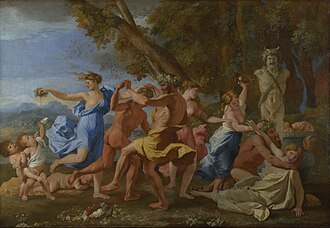 A Bacchanalian Revel Before a Term - Nicolas Poussin (1630s)