Eco y Narciso
John William Waterhouse · 1903
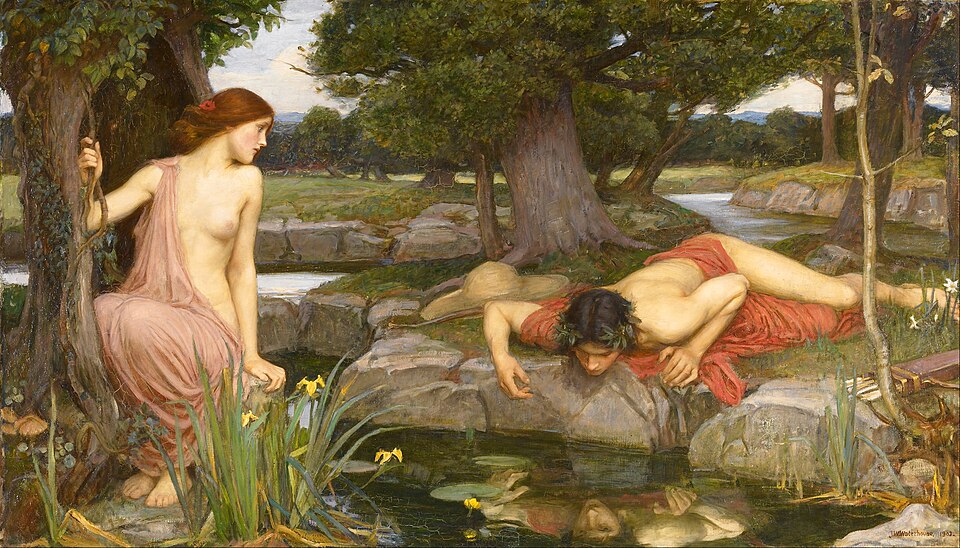
A youth leans over a stream, lost in his own reflection, while across the water a nymph clings to a tree and watches him in despair. Waterhouse painted this story of unanswered love in 1903.
The story behind the painting
Echo and Narcissus is an oil painting by John William Waterhouse from 1903, illustrating the myth told in Ovid's Metamorphoses. Waterhouse, an English painter who lived from 1847 to 1917, is usually grouped with the Pre-Raphaelites because of his style and themes. He painted more than 200 works, mostly from classical mythology, history and literature, and often returned to the femme fatale, the woman who ensnares a man. Here the roles are turned around: it is the young man who cannot be reached, and the woman who wastes away for him.
What to look for
The scene is an idyllic wood beside a stream with rocky banks. Narcissus lies prone, his head over the water, fascinated by his reflection. He is half-clad in a red robe. Across the stream Echo sits clasping a tree with her right hand, gazing at him in despair, her posture cramped. Her pink robe has slipped from her left shoulder. Look at the flowers: yellow flag irises grow near her, a red poppy sits in her auburn hair, white narcissi rise from the grass by the youth's foot, and a yellow water lily floats in the stream.
Meaning and intent
In Ovid, Narcissus is the beautiful son of the river god Cephissus and the nymph Liriope, told he would live long if he never looked at himself. He rejected everyone who loved him, including Echo, who could only repeat others' words. She withdrew and wasted away until only a whisper was left. The goddess Nemesis made Narcissus fall in love with his reflection, which he watched until he died, and a narcissus grew where he lay. Waterhouse uses colour as meaning: the red robe for his flaming self-desire, her milder pink for a quieter, smouldering love, and the stream to keep them apart.
Legacy
The painting measures about 109 by 189 cm. It was shown at the Royal Academy's Summer Exhibition in 1903, and the Walker Art Gallery in Liverpool bought it that same year. It still belongs to the gallery's Victorian collection, in Merseyside, England, where visitors can stand where Echo sits and look at a young man who will never look back. The flowers already blooming at his foot quietly announce how the story ends.
¿Sabías que…?
- Painted by John William Waterhouse in 1903.
- Illustrates the myth from Ovid's Metamorphoses.
- Shown at the Royal Academy Summer Exhibition of 1903.
- Bought by the Walker Art Gallery, Liverpool, in 1903.
Sobre el artista
John William Waterhouse (1849-1917)
mujer · varón · pintura mitológica · Hermandad Prerrafaelita · pareja · cabello negro · pelirrojo · Walker Art Gallery · mirada
Más obras de John William Waterhouse
 hilas y las ninfas - John William Waterhouse (1896)
.jpg) La señora de Shalott - John William Waterhouse (1888)
La señora de Shalott - John William Waterhouse (1888) Circe Invidiosa - John William Waterhouse (1892)
 Santa Eulalia - John William Waterhouse (1885)
.jpg) Ulises y las sirenas - John William Waterhouse (1891)
Ulises y las sirenas - John William Waterhouse (1891)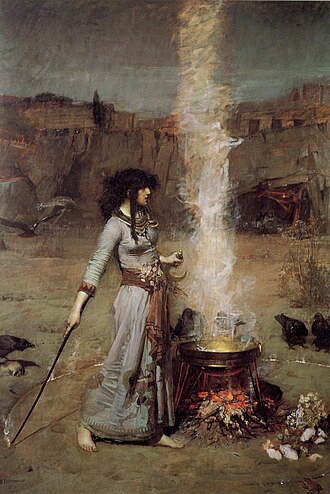 El círculo mágico - John William Waterhouse (1886)
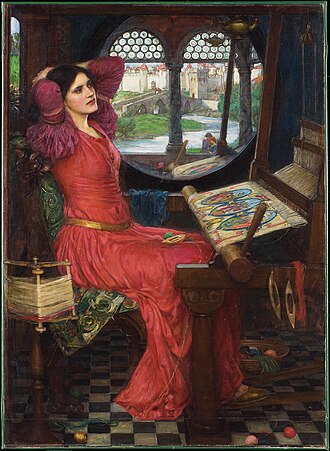 Cansada estoy de las Sombras, dijo la Dama de Shalott - John William Waterhouse (1916)
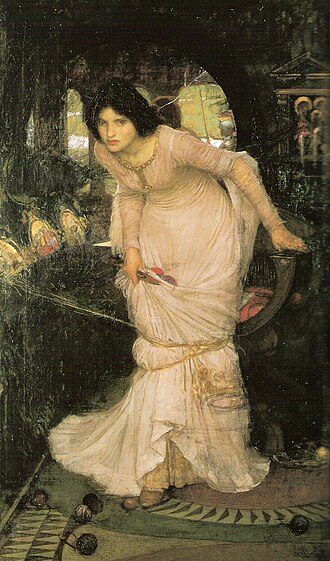 The Lady of Shalott looking at Lancelot - John William Waterhouse (1894)
Obras de artistas relacionados
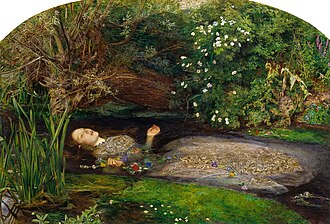 Ofelia - John Everett Millais (1851)
%20-%20Google%20Art%20Project.jpg) El Cristo en casa de sus padres - John Everett Millais (1849)
El Cristo en casa de sus padres - John Everett Millais (1849) Proserpina - Dante Gabriel Rossetti (1874)
 Bocca Baciata - Dante Gabriel Rossetti (1859)