Cupid Disarmed
Antoine Watteau · 1715
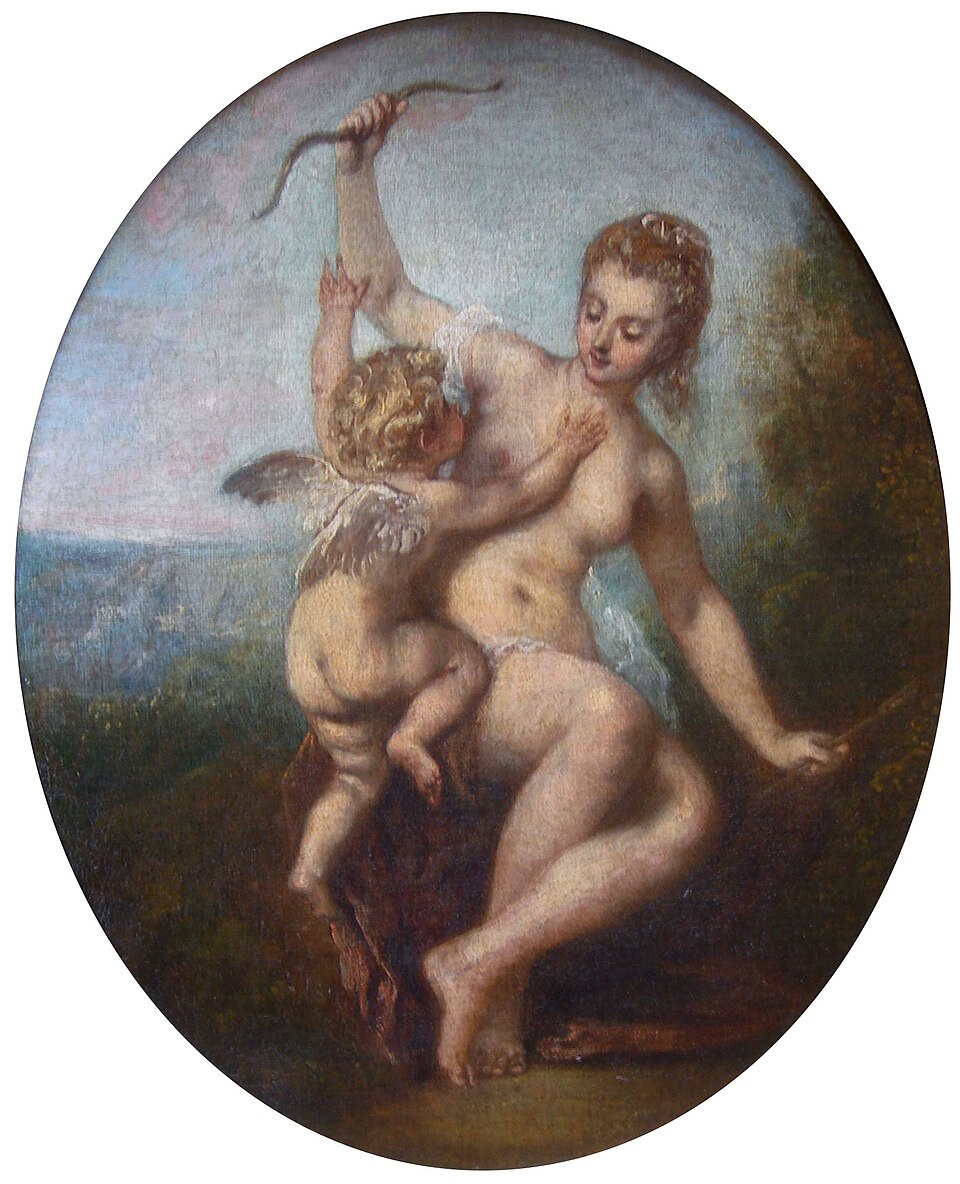
Venus takes Cupid's bow away, and love is suddenly harmless. A rare mythological picture by the painter of fêtes galantes, kept for decades by his closest friend.
The story behind the painting
Cupid Disarmed was painted around 1715 and is usually, though not definitively, attributed to Watteau. One hypothesis links it to the time of his reception into the Académie royale de peinture et de sculpture. According to the collector Pierre-Jean Mariette, Watteau was inspired by a drawing by Paolo Veronese, which had belonged to Pierre Crozat and then to Mariette himself, and is now in the Louvre. Its link to Veronese shows a painter of modern scenes looking back to a Venetian master.
What to look for
This small canvas, about 47 by 38 cm, is one of the rare mythological subjects Watteau painted. Venus grasps Cupid's bow, taking his weapon away. Watch the soft play between the goddess and the winged child, and compare it in format and figures with Watteau's Autumn in the Louvre, to which it has been likened. The picture was engraved by Benoît Audran in 1727, so its composition circulated widely in print.
Meaning and intent
A Cupid without his bow cannot wound anyone, which gives the scene its gentle humour. The theme became relatively common in academic painting, and François Boucher took it up in 1751. There are many replicas of Watteau's picture. For a painter best known for scenes of lovers in parks, it is a playful turn: instead of showing love's arrows at work, he shows the goddess of love taking them out of play. The subject later suited academic painters, and the existence of many copies of this little canvas shows how much it appealed.
Legacy
It was one of eight paintings kept by Watteau's friend and protector Jean de Jullienne until his death in 1766. Benoît Audran engraved it in 1727, and it was reproduced in the 1756 inventory of Jullienne's collection. It was later bought for Jean-Baptiste de Montullé, sold again in 1783, went to a British collector after the Terror, and returned to France shortly before 1848. In 1868 the Duke of Aumale bought it with the Maison collection and hung it in the Tribune of the château de Chantilly. It is still in the Musée Condé.
¿Sabías que…?
- Painted around 1715, usually attributed to Watteau.
- Kept by Jean de Jullienne until 1766.
- Engraved by Benoît Audran in 1727.
- In the Musée Condé, Chantilly.
Sobre el artista
Antoine Watteau (1684-1721)
pintura mitológica · desnudo · Rococó · Cupido · rubio · Museo Condé · putto · Afrodita · nalga · Eros · intergluteal cleft
Más obras de Antoine Watteau
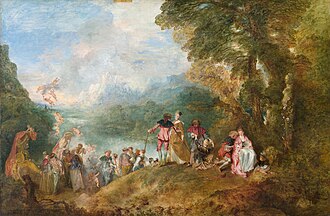 Peregrinación a la isla de Citera - Jean-Antoine Watteau (1717)
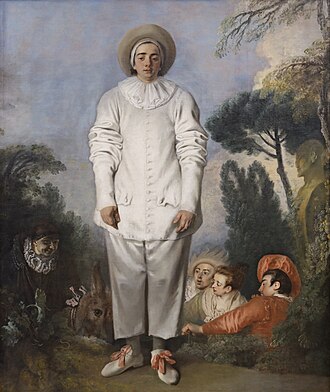 Gilles - Jean-Antoine Watteau (1718)
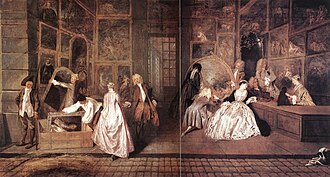 La muestra de Gersaint - Jean-Antoine Watteau (1720)
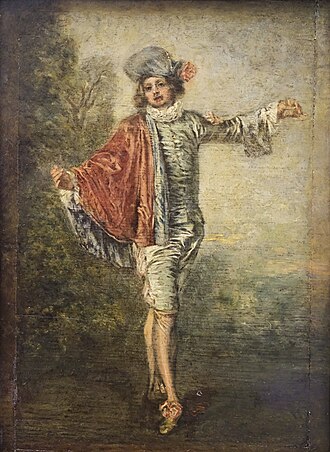 El indiferente - Jean-Antoine Watteau (1710s)
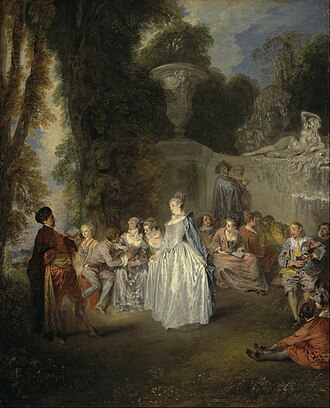 Fiesta veneciana - Jean-Antoine Watteau (1719)
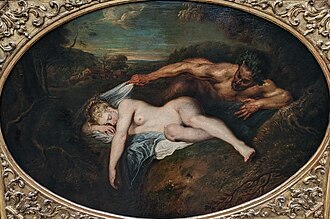 Nymph and Satyr - Jean-Antoine Watteau (1716)
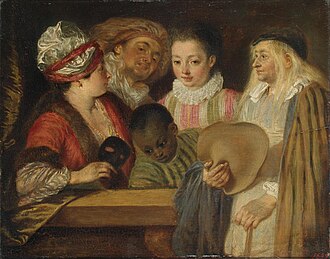 Actors of the Comedie-Francaise - Jean-Antoine Watteau (1710s)
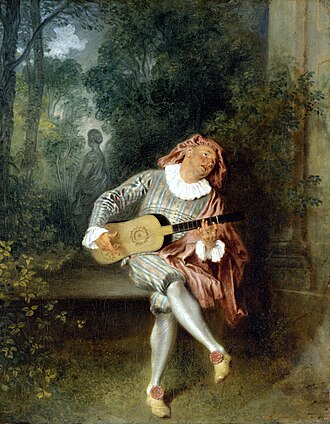 Mezzetin - Jean-Antoine Watteau (1717)
Obras de artistas relacionados
 El columpio - Jean-Honoré Fragonard (1760s)
 La lectora - Jean-Honoré Fragonard (1770)
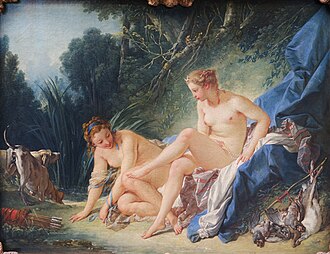 Diana después del baño - François Boucher (1742)
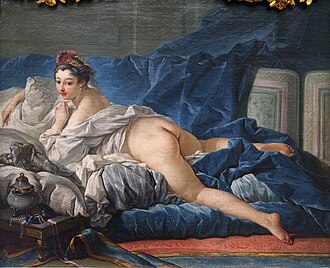 La odalisca morena - François Boucher (1740s)
 El tres de mayo de 1808 - Francisco Goya (1814)
 La Maja desnuda - Francisco Goya (1800)