Cristo abrazado a la cruz
El Greco · 1602
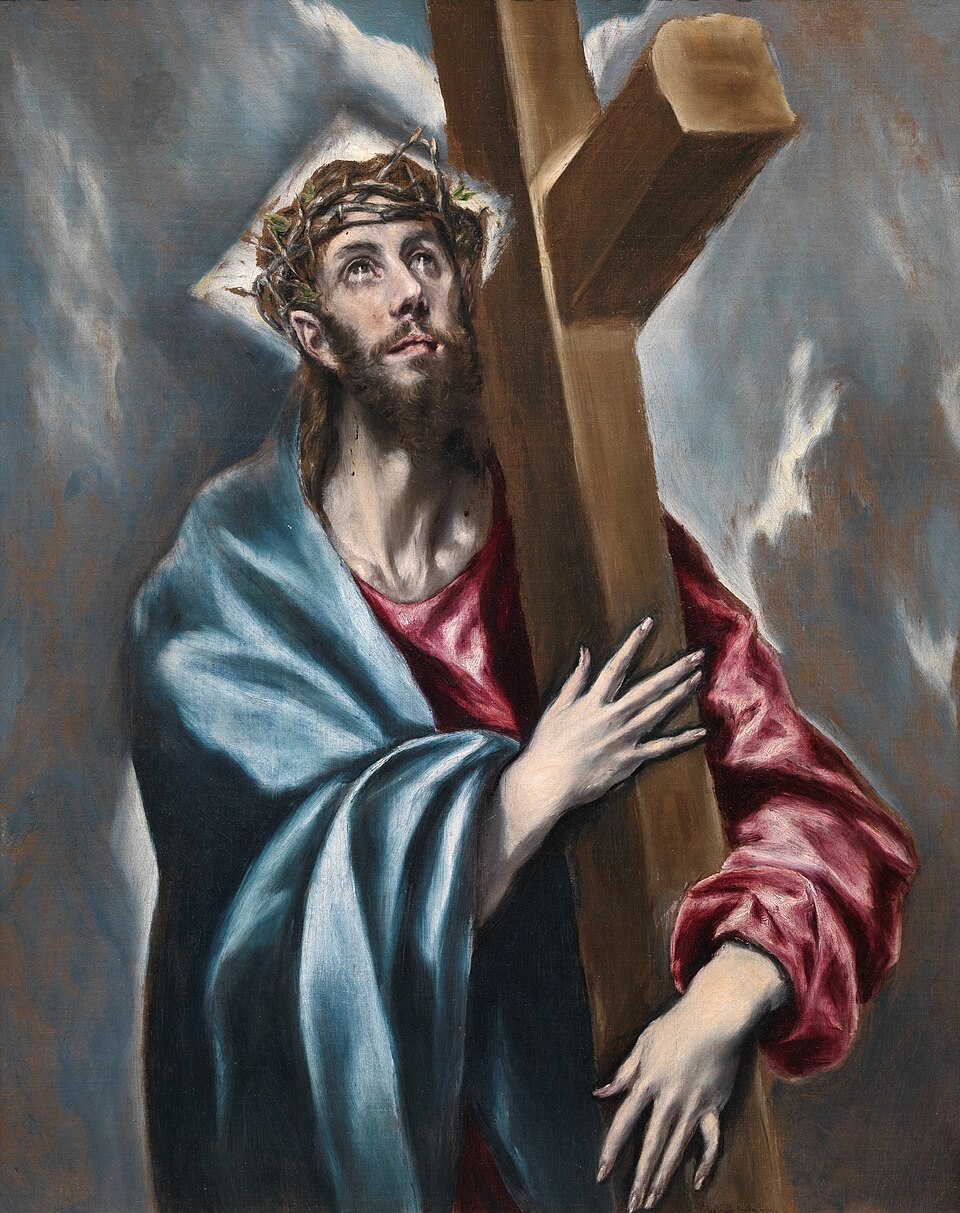
Christ walks towards us, embracing a great cross with both hands, eyes raised to a stormy sky. There is no strain and no anguish, only a calm that seems to rise above pain.
The story behind the painting
El Greco painted Christ embracing the cross many times. Harold Wethey, who catalogued his work, sorted these pictures into types, and this canvas in the Museo del Prado is the main work of his second type, together with two others in Olot and El Bonillo that show some help from the workshop. Wethey dates it around 1600 to 1605, while the Prado gives around 1602, the date Wikidata follows. The canvas came from the convent of San Hermenegildo in Madrid, passed through the Museo de la Trinidad and was at the University of Zaragoza between 1884 and 1892.
What to look for
Christ advances towards the viewer, holding with both hands a large cross in steep foreshortening. Behind him a stormy sky gives off flashes of light that seem to ripple around the figure. A square, whitish yellow halo contrasts with the dark blue cloak folded at his left and the pink tunic at his neck and left arm. The hands, with pearly nails, are modelled with great sensitivity, each finger clearly defined. The crown of thorns is painted with great realism, and small drops of blood run from his forehead down his neck.
Meaning and intent
The image can be read as a pause on the Via Dolorosa on the way to Calvary. Yet Christ shows no physical effort in carrying the cross, and no suffering or anguish in his face, even though the thorns have wounded him. His gaze goes to heaven, as if he had passed beyond bodily pain. The source suggests the cross may here stand for each person's own task in overcoming the difficulties of daily life, especially spiritual ones, echoing Matthew 16:24: whoever would come after me, let him deny himself, take up his cross and follow me.
Legacy
Wethey separates this second type from the first, seen in versions in Barcelona and New York, by the different foreshortening of the head and angle of the nose, the different tilt of the cross, the different shape of the halo, and a physical and emotional change typical of El Greco's late works. At the foot of the cross he signed in Greek cursive letters, Doménikos Theotokópoulos made it, though the second word is damaged, perhaps by a faulty restoration. The canvas, 108 by 78 cm, is admired for its technical mastery and beautiful colour.
¿Sabías que…?
- Main version of Wethey's type II, in the Prado.
- Dated about 1600-1605 by Wethey, about 1602 by the Prado.
- Signed in Greek at the foot of the cross.
- Oil on canvas, 108 x 78 cm.
Sobre el artista
El Greco (1541-1614)
arte religioso · Museo del Prado · Jesús de Nazaret
Más obras de El Greco
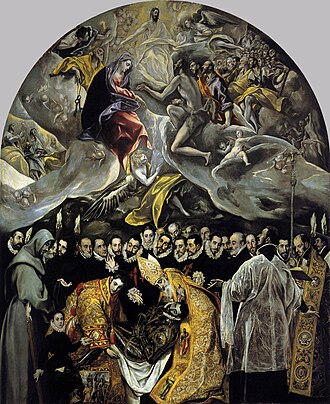 El entierro del Conde de Orgaz - El Greco (1586)
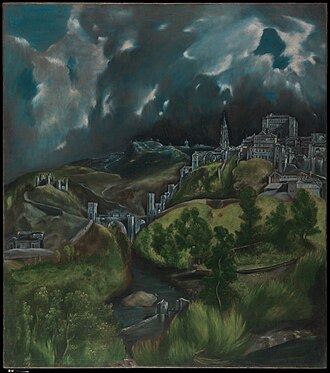 Vista de Toledo - El Greco (1596)
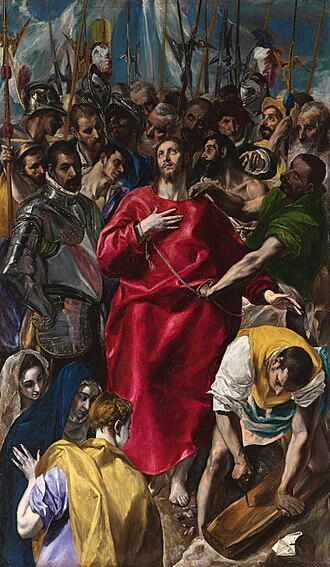 El expolio - El Greco (1570s)
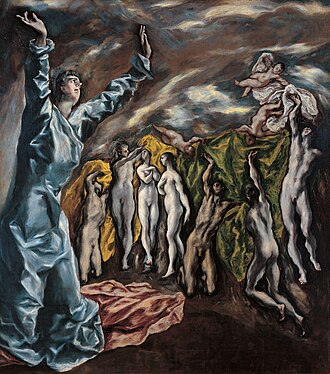 Visión del Apocalipsis - El Greco (1610)
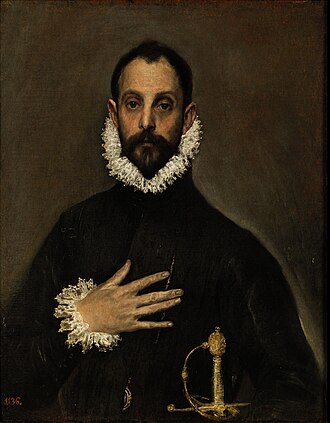 El caballero de la mano en el pecho - El Greco (1580)
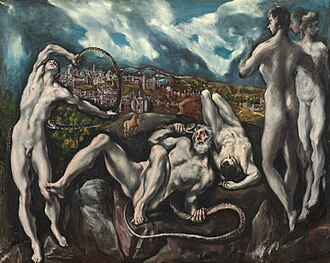 Laocoonte - El Greco (1610s)
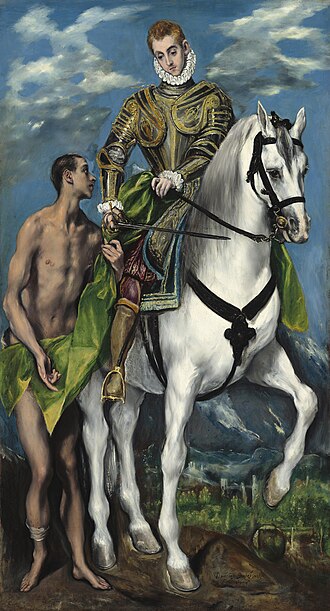 San Martín y el mendigo - El Greco (1597)
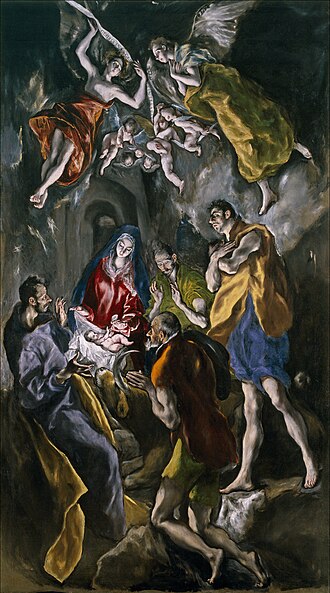 Adoración de los pastores - El Greco (1612)
Obras de artistas relacionados
 Las bodas de Caná - Paolo Veronese (1560s)
 Cena en casa de Leví - Paolo Veronese (1573)
 La Última Cena - Jacopo Tintoretto (1563)
 San Marcos liberando al esclavo - Jacopo Tintoretto (1540s)
 Venus de Urbino - Titian (1538)
 La Asunción de la Virgen - Titian (1510s)
 La cena de Emaús - Caravaggio (1601)
 La vocación de San Mateo - Caravaggio (1609)
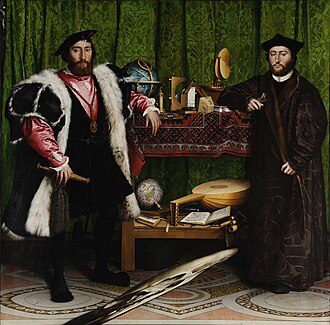 Los embajadores - Hans Holbein the Younger (1533)
 El cuerpo de Cristo en la tumba - Hans Holbein the Younger (1520s)