Camille Delivers the Schoolmaster of Falerii to His Pupils
Nicolas Poussin · 1637
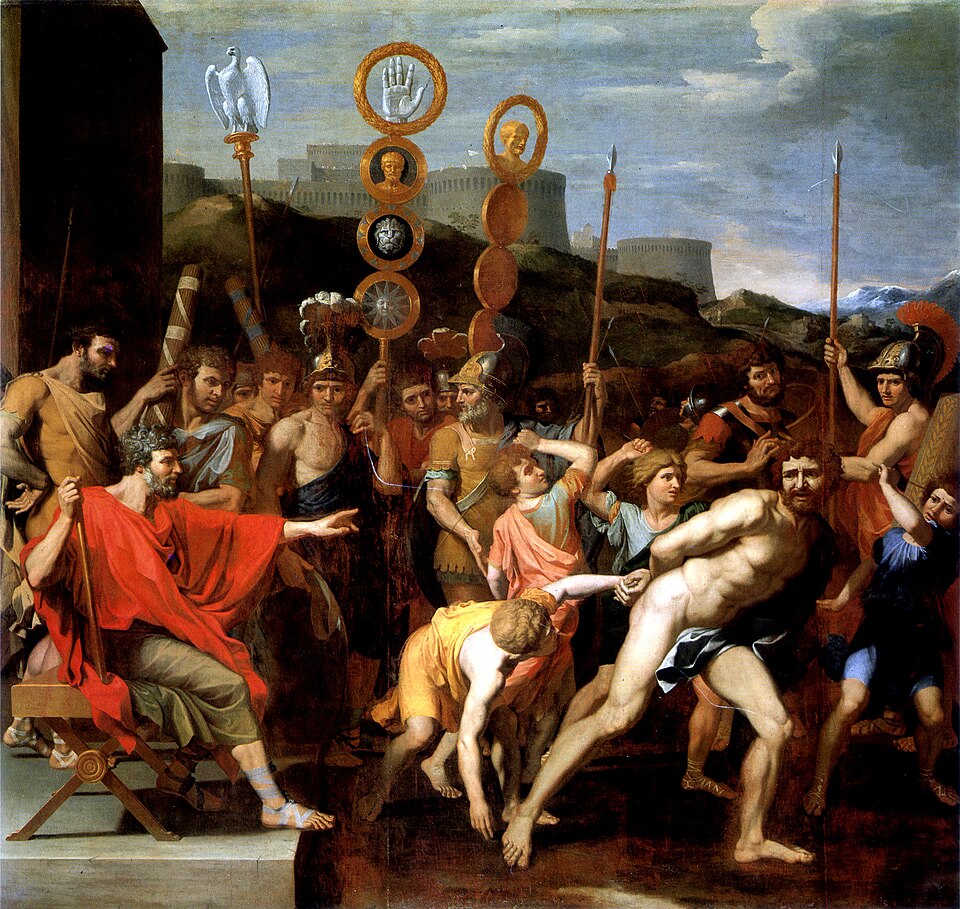
A traitor stands stripped of his power, and the very children he tried to betray are handed the rods to drive him home. Poussin told this Roman story of honour in what he called a severe manner.
The story behind the painting
The painting dates from 1637. It was one of nine works commissioned by Louis Phélypeaux, Seigneur of La Vrillière, for the gilded gallery of his new hôtel in Paris, and the writer Henri Sauval judged Camillus the finest of the set. The story comes from Plutarch's Life of Camillus: during the Roman siege of Falerii, a schoolmaster hoped to win favour by delivering his pupils to the Romans, and the general Marcus Furius Camillus punished him instead.
What to look for
Camillus sits in the foreground at left, in profile, with two lictors holding lances behind him. The children and the fallen schoolmaster fill the right foreground, the man brought low before the pupils he tried to sell. The preparatory drawings show that Poussin first worked on binding these foreground figures together: Camillus in his command post, the lictor standing behind him, the pupils and the master. The canvas is large, about 252 by 265 cm.
Meaning and intent
Poussin said he painted it in a severe manner, as is reasonable considering the subject which is heroic. The scene honours a general who refused a victory won by betraying children. The subject had been painted before, with the elements placed differently. Poussin's arrangement may have been inspired by an illustration in a 1516 Latin edition of Plutarch, though Otto Grautoff thought Domenichino's Timoclea brought before Alexander, of about 1615, was the stronger model.
Legacy
Henri Sauval's praise placed it first among the nine pictures of the La Vrillière gallery. The painting and the hôtel were sold in 1705 to Louis Raulin Rouillé, director of the postal service, then in 1713 by his widow to Louis-Alexandre de Bourbon. Both passed to his son Louis de Bourbon, Duke of Penthièvre, from whom they were seized for the state in 1794. It has been in the Louvre in Paris ever since.
¿Sabías que…?
- Painted in 1637.
- One of nine works for the hôtel de La Vrillière.
- Based on Plutarch's Life of Camillus.
- In the Louvre since its seizure in 1794.
Sobre el artista
Nicolas Poussin (1594-1665)
Departamento de Pinturas del Museo del Louvre · niño · soldado · ciudad · profesor
Más obras de Nicolas Poussin
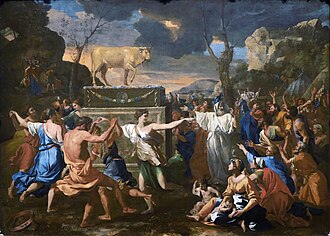 La adoración del becerro de oro - Nicolas Poussin (1634)
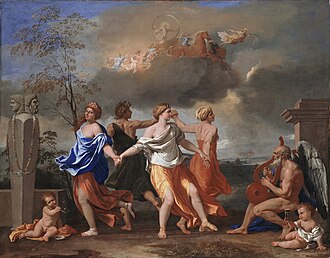 La danza de la vida humana - Nicolas Poussin (1630s)
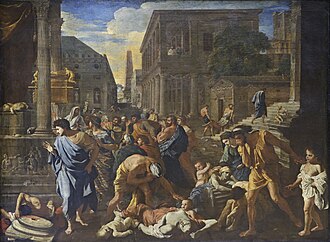 The Plague at Ashdod - Nicolas Poussin (1630)
.jpg) El juicio de Salomón - Nicolas Poussin (1649)
El juicio de Salomón - Nicolas Poussin (1649)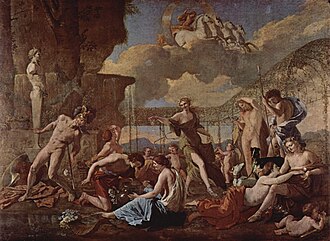 The Empire of Flora - Nicolas Poussin (1631)
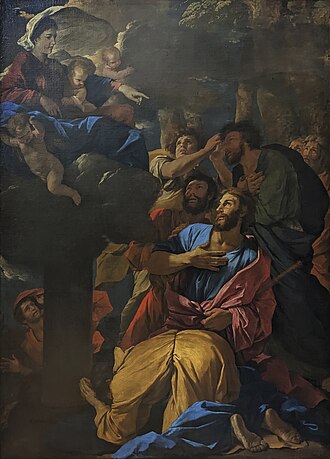 Aparición de la Virgen María a Santiago el Mayor - Nicolas Poussin (1620s)
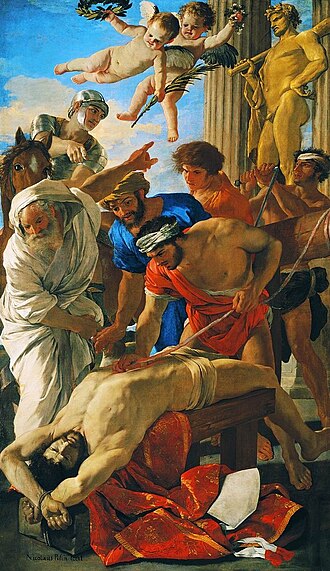 The Martyrdom of Saint Erasmus - Nicolas Poussin (1628)
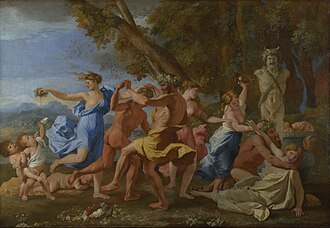 A Bacchanalian Revel Before a Term - Nicolas Poussin (1630s)