Cain and Abel
Tintoretto · 1550s
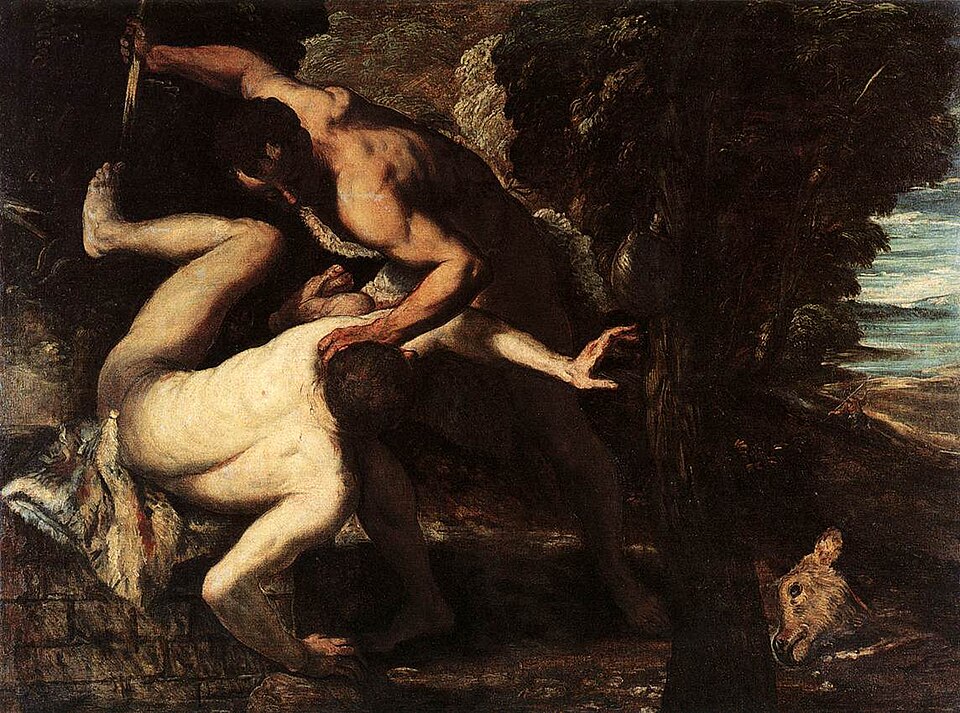
Abel is falling, one hand grasping at nothing, while Cain looms over him under black cypresses and a lurid sky. Ruskin called Tintoretto's picture darkness visible, with flashes of lightning through it.
The story behind the painting
Tintoretto painted Cain and Abel, also called The Murder of Abel or The Death of Abel, around 1550 to 1553; Wikidata places it in the 1550s. It was one of four or five Genesis subjects he made for the Scuola della Trinità in Venice, on the creation of the world. Two survive untouched, this one and Adam and Eve. The story is the first murder in Genesis: God accepted the shepherd Abel's offering rather than the farmer Cain's, and Cain, full of jealousy, killed his brother in the fields.
What to look for
Look at the contrast Evelyn March Phillipps described: the young, supple Abel has lost his balance, leg and arm thrown out to recover it, while the powerful, muscular Cain vibrates with hate and purpose. Abel's hand grasps and finds nothing, which she likened to a cry for help. Gloomy cypresses and lurid night clouds fill the setting, and the brushwork is sure and impetuous. The canvas is about 149 by 196 cm.
Meaning and intent
For Phillipps subject and technique are inseparable here, making it the most vehement and terrible work Tintoretto ever produced. William Roscoe Osler saw the influence of antique sculpture and a deep knowledge of the human body, and landscapes heralding a new poetic departure that may have affected Rubens, Rembrandt and Turner, with traces of Schiavone. The wild landscape, he and Phillipps both suggest, is not a backdrop but part of the violence.
Legacy
The painting is in the Gallerie dell'Accademia in Venice, where Adam and Eve and this canvas once hung on either side of Titian's Assumption. John Ruskin praised the two dark pictures as the finest possible Tintorettos and, as far as he knew, the supreme work in absolute power of painting in all the world. His description, a thunder-cloud rent with fire, still fits what you see. The two canvases remain together in the same museum today.
¿Sabías que…?
- Painted around 1550 to 1553.
- Made for the Scuola della Trinità in Venice.
- Praised by John Ruskin as among the finest Tintorettos.
- Held in the Gallerie dell'Accademia, Venice.
Sobre el artista
Tintoretto (1518-1594)
arte religioso · Galería de la Academia de Venecia · homicidio doloso
Más obras de Tintoretto
 La Última Cena - Jacopo Tintoretto (1563)
 San Marcos liberando al esclavo - Jacopo Tintoretto (1540s)
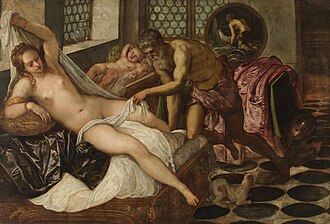 Venus, Vulcano y Marte - Jacopo Tintoretto (1555)
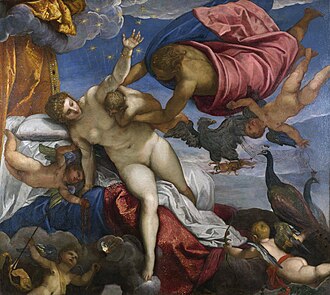 El origen de la Vía Láctea - Jacopo Tintoretto (1575)
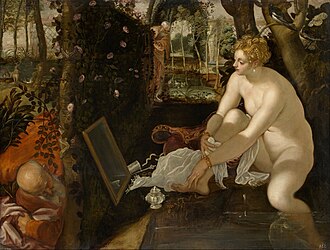 Susana y los viejos - Jacopo Tintoretto (1550s)
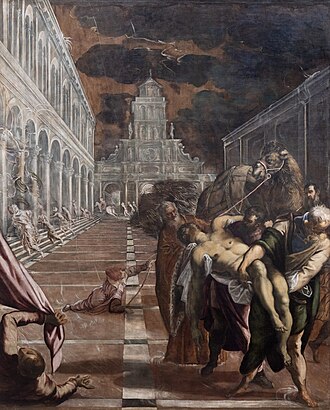 Traslación del cuerpo de San Marcos - Jacopo Tintoretto (1560s)
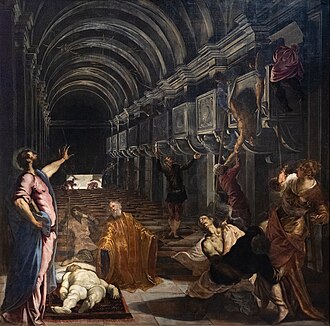 Finding of the body of St Mark - Jacopo Tintoretto (1562)
 Paradise - Jacopo Tintoretto
Obras de artistas relacionados
 Venus de Urbino - Titian (1538)
 La Asunción de la Virgen - Titian (1510s)
 Las bodas de Caná - Paolo Veronese (1560s)
 Cena en casa de Leví - Paolo Veronese (1573)