Bathers
Paul Cézanne · 1890s
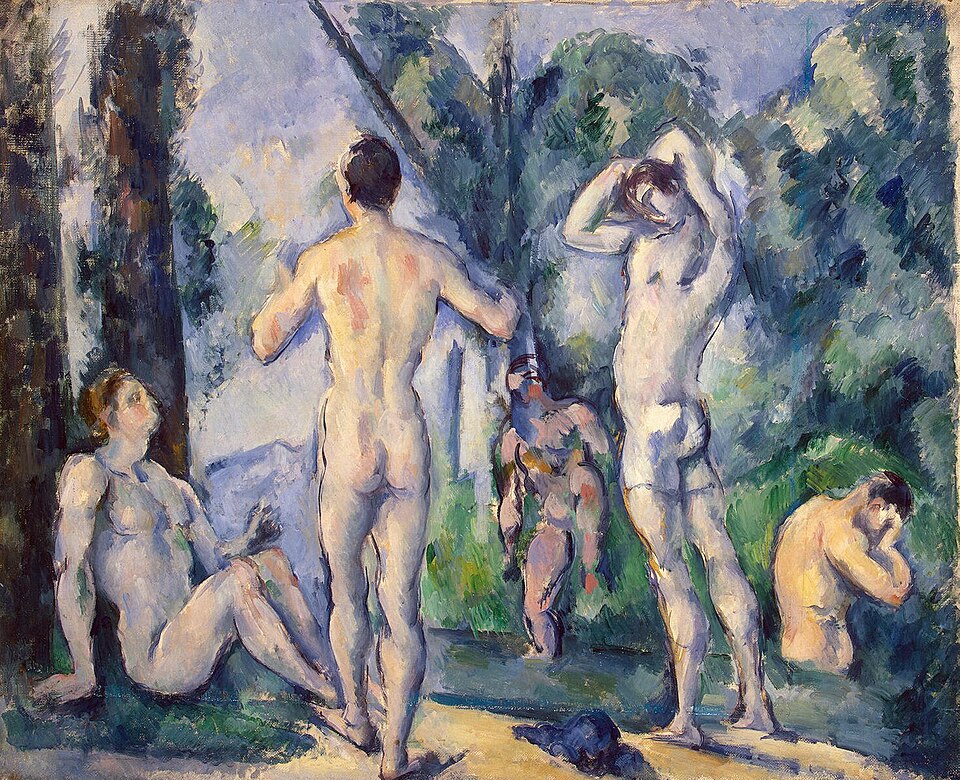
Four young men by a river on a summer day. Cézanne returned to bathers again and again, and this cool-toned version spent half a century hidden from view before the Hermitage showed it in 1995.
The story behind the painting
Cézanne made about two hundred paintings, sketches and drawings of bathers, men or women, and the French Wikipedia article calls this one without doubt the best of them. It belongs to a cycle he began around 1870, with many variants in idealised poses recalling Greek mythology, a theme already glimpsed in his Judgement of Paris of 1862 to 1865. He renewed an old subject by remembering his own youth, when he swam with his friends in the river Arc. Wikidata dates this canvas to the 1890s.
What to look for
The painting shows a group of four bathers on the bank of a river in summer. It measures about 54 by 66 cm. Compare the colour with Cézanne's other versions: this Hermitage canvas is built in cooler tones, while the versions in the Musée d'Orsay and the Saint Louis Art Museum are painted in warm ones. Look at how the figures are set among the trees and water rather than posed as in a studio, and how the old classical theme feels fresh and outdoor.
Meaning and intent
The bather is a traditional theme going back to Titian and Poussin. Cézanne continued it, but in a completely different way from what could be seen in the academic Salons of the 19th century. Instead of polished mythological nudes, he gave the genre new life through memory and structure: the pleasure of boys swimming in a southern river, turned into a carefully built composition. The idealised poses still recall Greek myth, but the feeling is of a real summer afternoon.
Legacy
The canvas passed from Ambroise Vollard's gallery to Marczell de Nemes in Budapest in 1911, then to Baron Maurice de Herzog in 1913, and through the Paul Cassirer gallery in Berlin to Otto Krebs in 1929. It was shown at the 1904 Salon d'Automne, in Budapest, Düsseldorf, Berlin and Vienna. In 1945 it was confiscated by the USSR as war reparations, transferred to the Hermitage, according to the article in 1947, and shown to the public for the first time only in 1995.
¿Sabías que…?
- Part of a bathers cycle Cézanne began around 1870.
- Cooler in tone than the Orsay and Saint Louis versions.
- Formerly in the Otto Krebs collection.
- Shown publicly at the Hermitage for the first time in 1995.
Sobre el artista
Paul Cézanne (1839-1906)
escena de género · desnudo · Museo del Hermitage · baño · Otto Krebs collection
Más obras de Paul Cézanne
 Las grandes bañistas - Paul Cézanne (1900s)
 The Boy in the Red Vest - Paul Cézanne
 Cesto de manzanas - Paul Cézanne (1893)
 Rideau, Cruchon et Compotier - Paul Cézanne (1890s)
 Maison devant la Sainte-Victoire près de Gardanne - Paul Cézanne (1880s)
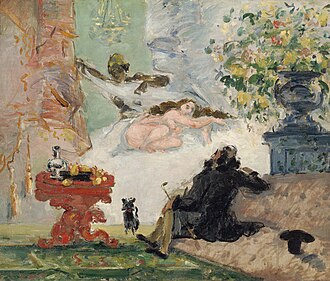 Una Olympia moderna - Paul Cézanne (1873)
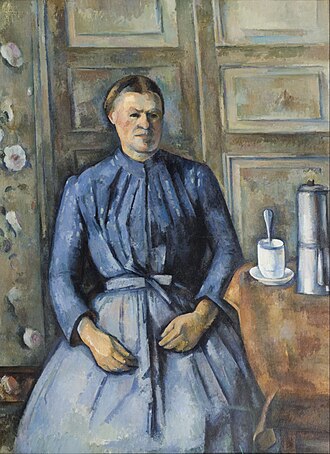 Mujer con cafetera - Paul Cézanne (1895)
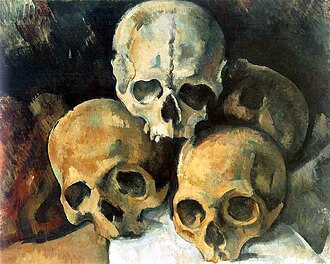 Pyramid of Skulls - Paul Cézanne (1899)
Obras de artistas relacionados
 La noche estrellada - Vincent van Gogh (1889)
 Terraza de café por la noche - Vincent van Gogh (1888)
 ¿De dónde venimos? ¿Qué somos? ¿Adónde vamos? - Paul Gauguin (1897-1898)
 El Cristo amarillo - Paul Gauguin (1889)
 Paseo a orillas del mar - Joaquín Sorolla (1909)
 Triste herencia - Joaquín Sorolla (1898)
 Baile en el Moulin de la Galette - Pierre-Auguste Renoir (1876)
 El almuerzo de los remeros - Pierre-Auguste Renoir (1881)
 En el Moulin Rouge - Henri de Toulouse-Lautrec (1892)
 La toilette - Henri de Toulouse-Lautrec (1896)