Woman With a Fan
Gustav Klimt · 1917
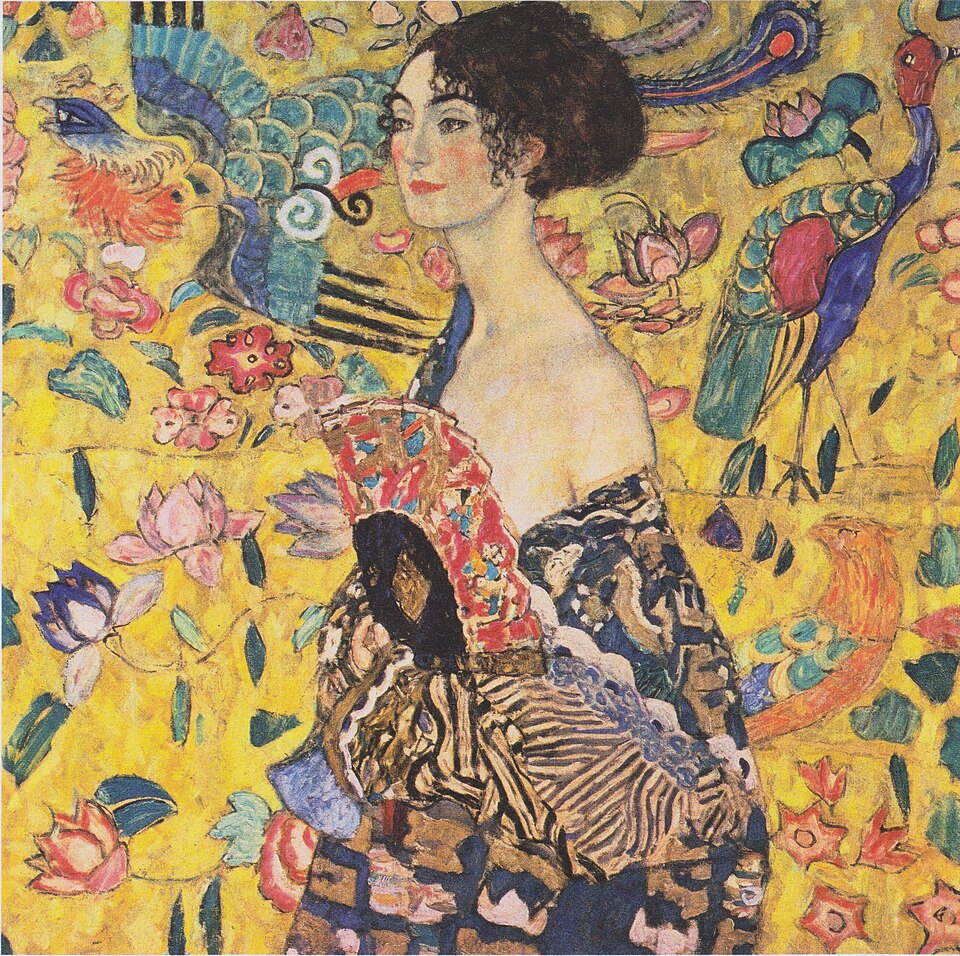
A woman with chestnut curls glances to the side, her silk robe slipping from her shoulder, a fan hiding her breast, against a blaze of yellow, phoenix and lotus. It was still on Klimt's easel when he died.
The story behind the painting
Painted in 1917, Lady with a Fan was Gustav Klimt's final portrait. It was not commissioned, and the sitter is unknown. When Klimt had a stroke and died in February 1918, the canvas was still on an easel in his studio, next to his unfinished painting The Bride. Shortly after it was made it was exhibited under the title Dancer, according to the Belvedere in Vienna, which suggests the model may have been a ballet or music hall dancer. Others have proposed Johanna Staude or Klimt's life companion Emilie Flöge. The square canvas measures about 100 by 100 cm.
What to look for
The background is a bright yellow field of motifs drawn from Chinese art: a large flying phoenix, symbol of immortality, rebirth and good fortune; pink lotus blossoms, linked with love and lasting beauty; a long-legged crane and a golden pheasant. The flat patterns recall Japanese ukiyo-e prints, while the colours echo the chrome yellow, cobalt blue and red ochre of enamelled Chinese porcelain. The woman gazes into the distance to the left. Look closely where her upper arm meets her robe: small patches of bare canvas show through, and the brushstrokes are freer and faster than in Klimt's earlier work.
Meaning and intent
Like many of Klimt's late works, the painting is full of Asian influence. It also echoes his portrait Wally of 1916, with its uncovered shoulder, and Girlfriends of 1916 to 1917, with its phoenix background; both of those were destroyed by fire at Immendorf Castle in 1945, which makes this picture a survivor of that late style. Some art historians call it unfinished. The critic Kelly Grovier argues that its flux and fragmentation give it power, concluding that its unfinishedness is what completes it. Painted in the last months of his life, it shows Klimt still changing his manner.
Legacy
After Klimt's death the painting passed through the gallery of Gustav Nebehay to the industrialist Erwin Böhler and his brother Heinrich, then by inheritance to Mabel Böhler in Lugano. Rudolf Leopold of Vienna owned it from about 1963 to 1981, later followed by Serge Sabarsky and Wendell Cherry. It has been publicly shown only four times, the last at the Belvedere in 2021 to 2022. The sources disagree about where it is now: Wikidata lists the Leopold Museum, while Wikipedia reports that it was sold at auction in London in June 2023 to a Hong Kong collector.
Did you know?
- Painted in 1917, Klimt's final portrait.
- Still on his easel when he died in February 1918.
- The sitter is unknown; it was once shown as Dancer.
- Publicly exhibited only four times.
About the artist
Gustav Klimt (1862-1918)
More by Gustav Klimt
 The Kiss - Gustav Klimt (1907-1908)
 Portrait of Adele Bloch-Bauer I - Gustav Klimt (1907)
 Danaë - Gustav Klimt (1907)
.jpg) Judith I - Gustav Klimt (1901)
Judith I - Gustav Klimt (1901)%20Google%20Art%20Project.jpg) The Three Ages of Woman - Gustav Klimt (1905)
The Three Ages of Woman - Gustav Klimt (1905)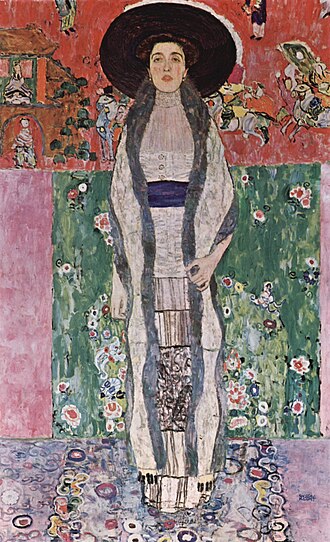 Adele Bloch-Bauer II - Gustav Klimt (1912)
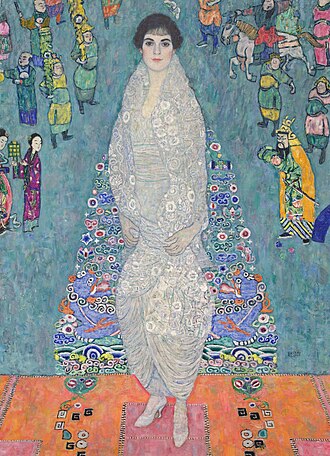 Portrait of Elisabeth Lederer - Gustav Klimt (1910s)
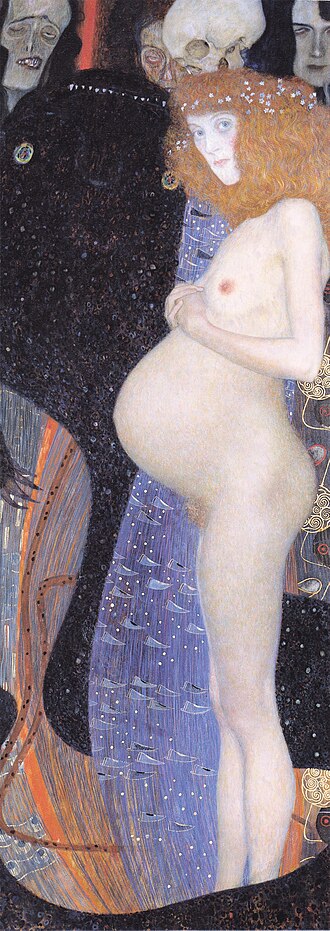 Hope I - Gustav Klimt (1903)