Venus and Mars Surprised by Vulcan
Jacopo Tintoretto · 1555
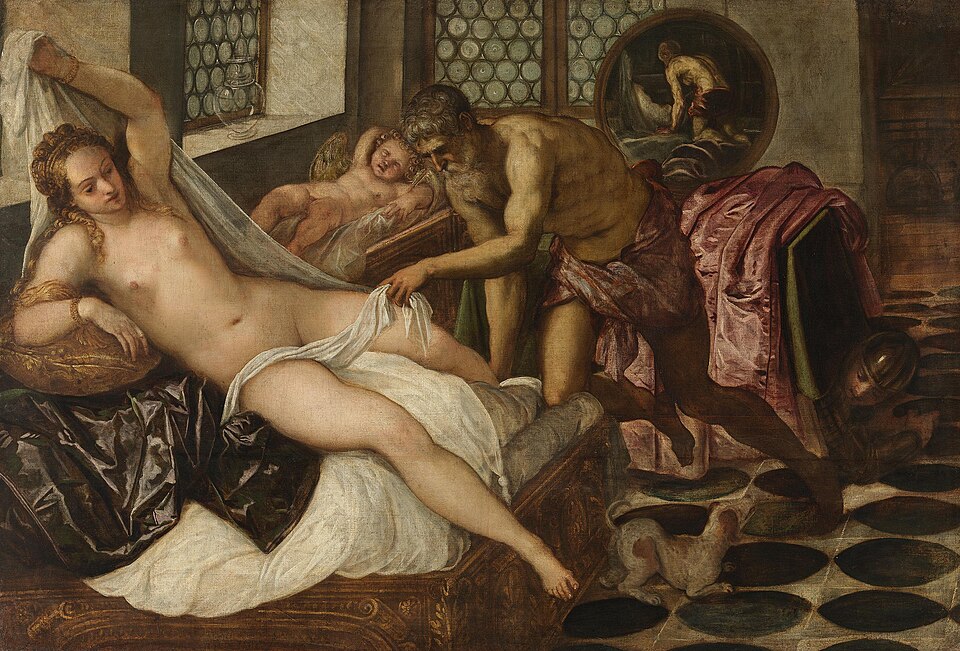
A husband bursts in, a lover hides under the bed, and only a little dog seems to notice. Tintoretto turns an old myth of betrayal into a scene of tension, irony and almost comic suspense.
The story behind the painting
Tintoretto painted this mythological scene in oil on canvas in Venice. Wikipedia dates it to 1551-1552, while Wikidata gives 1555, so the exact year is uncertain, but both place it in the 1550s, in the painter's early maturity. The story comes from classical myth. Venus, goddess of love, was married to Vulcan, but her lover was Mars, the god of war. In the version Tintoretto follows, Apollo has tipped off Vulcan about the affair, and the husband has just returned home without warning. The canvas, about 135 by 198 centimetres, now belongs to the Bavarian State Painting Collections and hangs in the Alte Pinakothek in Munich.
What to look for
The room is a bedchamber, and the eye moves across it like a stage. Venus lies nude on a couch. Vulcan has come in, his attention caught by his wife's body rather than by the search for the intruder. Now look under the bed: there, still wearing his helmet, Mars is crouching in hiding, almost in plain sight. A small dog barks toward him, trying to warn its master, but Vulcan ignores it. By the window, Cupid lies asleep in his cot, the god of love oblivious to the trouble he has caused. Follow the line from the dog to the helmet and the joke becomes clear.
Meaning and intent
At its core the painting shows an act of adultery and its discovery, a subject told many times in art. Tintoretto's interest seems to lie less in judgement than in human folly. The wronged husband is so distracted that he misses what is right in front of him, the god of war is reduced to hiding under furniture, and the only one with any sense is a dog. Cupid sleeping at the window suggests that love itself has stopped paying attention. The scene invites the viewer to enjoy being the one who sees everything, while the characters see only part of the truth.
Legacy
The painting is among the works that represent Tintoretto, a leading figure of the Venetian school and of Mannerism, in the Alte Pinakothek in Munich. Its staging of figures within a deep interior, with each character placed to tell part of the story, rewards slow looking, since the hidden Mars is easy to miss at first glance. The sources available here say little more about its later history, but its survival in a major public collection keeps alive Tintoretto's lively, theatrical way of retelling classical myth for Venetian viewers in the middle of the sixteenth century.
Did you know?
- Wikipedia dates the painting to 1551-1552; Wikidata gives 1555.
- It is in the Alte Pinakothek, part of the Bavarian State Painting Collections, Munich.
- Mars hides under the bed still wearing his helmet, while a dog barks a warning.
- Cupid sleeps in a cot by the window.
About the artist
Jacopo Tintoretto (1518-1594)
woman · man · mythological painting · nude · Venetian school · Mannerism · bed · Bavarian State Painting Collections · Venus · Cupid · Mars · bedroom
More by Jacopo Tintoretto
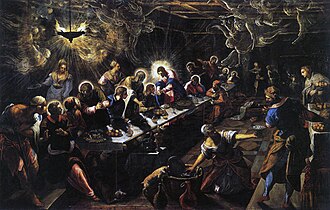 Last Supper - Jacopo Tintoretto (1563)
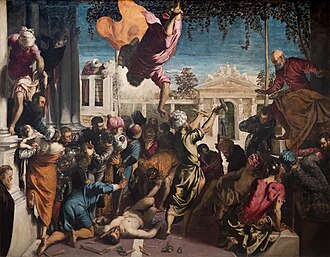 Miracle of the Slave - Jacopo Tintoretto (1540s)
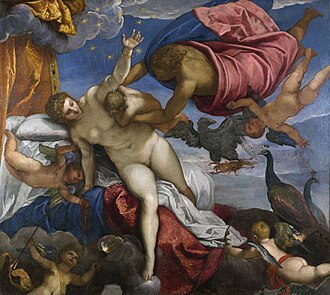 The Origin of the Milky Way - Jacopo Tintoretto (1575)
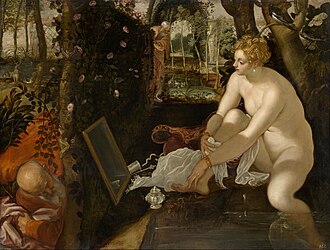 Susanna and the Elders - Jacopo Tintoretto (1550s)
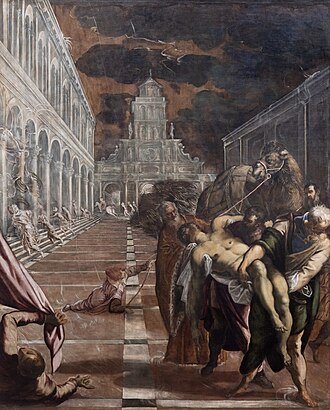 St Mark's Body Brought to Venice - Jacopo Tintoretto (1560s)
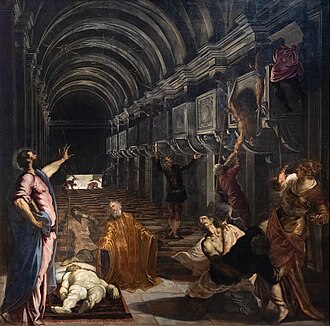 Finding of the body of St Mark - Jacopo Tintoretto (1562)
%20Jacopo%20Tintoretto%20-%20Gloria%20del%20Paradiso%20-%20Sala%20del%20Maggior%20Consiglio.jpg) Paradise - Jacopo Tintoretto
Paradise - Jacopo Tintoretto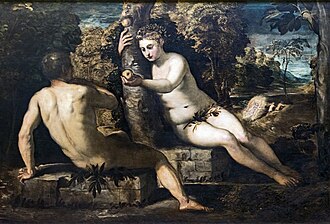 Temptation of Adam - Jacopo Tintoretto (1550s)
Paintings by related artists
.jpg) Venus of Urbino - Titian (1538)
Venus of Urbino - Titian (1538) Assumption of the Virgin - Titian (1510s)