The Battle of the Kearsarge and the Alabama
Édouard Manet · 1865
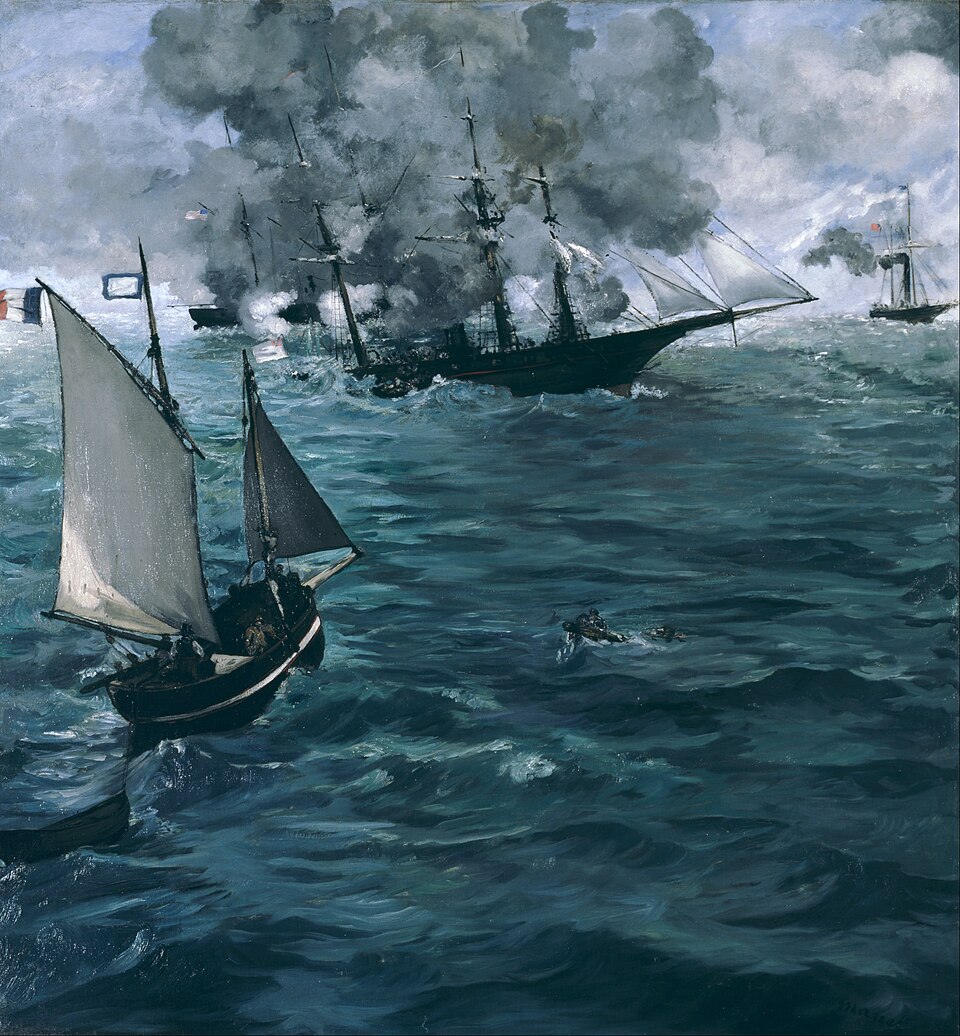
An American Civil War sea battle, fought off the coast of France and watched from the shore. Manet was not there, yet within weeks he had painted it, and one critic felt the sea was more frightening than the battle.
The story behind the painting
On 19 June 1864, off Cherbourg, the Union cruiser USS Kearsarge fought and sank the Confederate raider CSS Alabama. Many spectators watched from the French coast, and the French press covered the battle widely. Manet did not see it himself. He worked from newspaper descriptions, and only 26 days later the painting was on show in the print shop and gallery of Alfred Cadart on the Rue de Richelieu in Paris. Wikipedia dates the work 1864, the year of the battle, while Wikidata gives 1865.
What to look for
At the top of the picture the Alabama is about to sink, and beyond it, barely visible, is the Kearsarge. Masts and ropes, loosely painted, appear through thick clouds of smoke. On the right is probably the British civilian yacht Deerhound, whose crew rescued members of the Alabama's crew and saved them from capture. In the foreground a French boat hurries to help sailors clinging to a piece of wreckage. The horizon is set very high, and the foaming sea, in turquoise, blue and grey, fills about three quarters of the canvas.
Meaning and intent
Manet turned a distant war into a painting about the sea itself. The battle is pushed far back, small and veiled in smoke, while the water, the rescue and the survivors fill the space nearest to us. Manet painted many sea and harbour views, and for most of his life they were the only landscapes he made. A voyage to Brazil at sixteen and many holidays on the Channel coast probably shaped them, and the high horizon may have been inspired by Japanese prints. In 1872 Barbey d'Aurevilly wrote that the sea here was more frightening than the battle.
Legacy
Shown at Cadart's, the picture was praised by the critic Philippe Burty, and Barbey d'Aurevilly called it a magnificent marine painting. Although it is not among Manet's best known works, it records how quickly he could respond to an event that everyone in France was talking about. The collector Marguerite Charpentier acquired it in 1878, and it is now in the permanent collection of the Philadelphia Museum of Art, where it measures about 137.9 by 129 cm according to Wikidata.
Did you know?
- Depicts the Battle of Cherbourg of 19 June 1864.
- Manet painted it from press reports, not as a witness.
- Exhibited at Alfred Cadart's in Paris 26 days after the battle.
- Now in the Philadelphia Museum of Art.
About the artist
Édouard Manet (1832-1883)
marine art · Philadelphia Museum of Art · battle painting
More by Édouard Manet
 Luncheon on the Grass - Édouard Manet (1863)
 Olympia - Édouard Manet (1863)
 A Bar at the Folies-Bergère - Édouard Manet (1882)
 The Balcony - Édouard Manet (1868)
 Music in the Tuileries - Édouard Manet (1862)
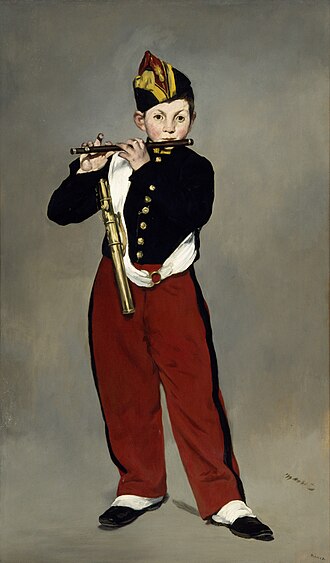 The Fif - Édouard Manet (1866)
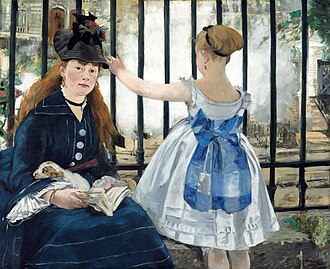 The Railway - Édouard Manet (1873)
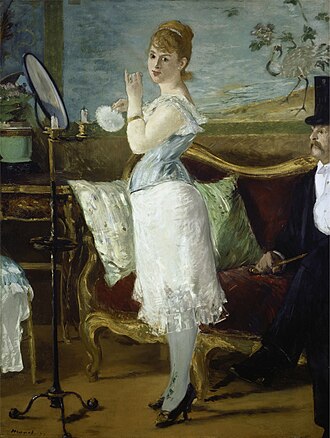 Nana - Édouard Manet (1877)
Paintings by related artists
 Impression, Sunrise - Claude Monet (1872)
 Water Lilies - Claude Monet (1906)
 Dance at Le Moulin de la Galette - Pierre-Auguste Renoir (1876)
 Luncheon of the Boating Party - Pierre-Auguste Renoir (1881)
 The Cradle - Berthe Morisot (1872)
 Summer's Day - Berthe Morisot (1879)
 L'Absinthe - Edgar Degas (1875)
 The Bellelli Family - Edgar Degas (1858)
 The Canal du Loing at Moret - Alfred Sisley (1892)
 The Watering Pond at Marly with Hoarfrost - Alfred Sisley (1876)
 Paris Street; Rainy Day - Gustave Caillebotte (1877)
 Les raboteurs de parquet - Gustave Caillebotte (1875)