Tarquin and Lucretia
Titian · 1570s
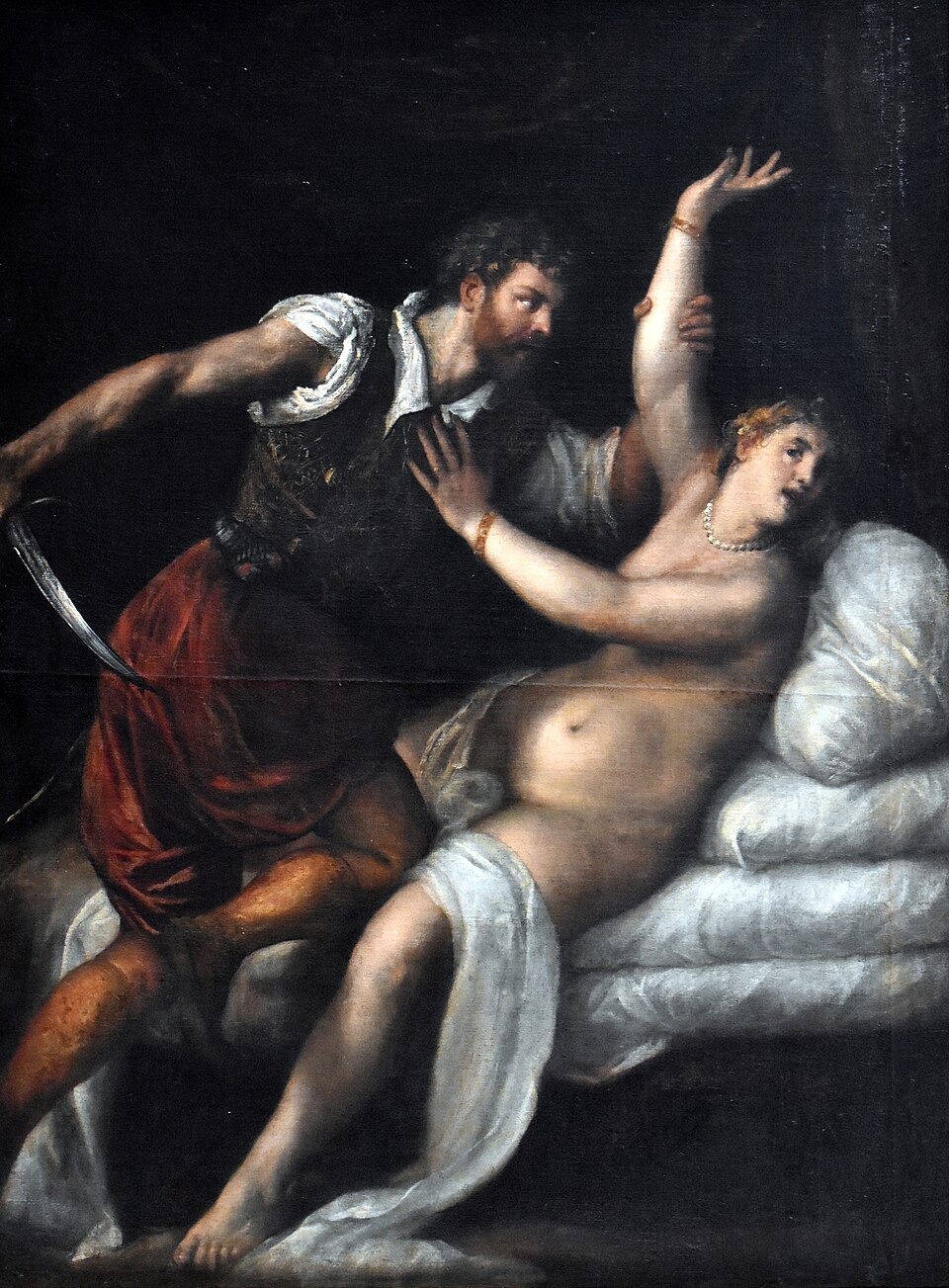
A man in red raises a dagger over a naked woman who stares back in terror. Late in his life Titian painted this moment from Roman history, and he lets the light fall without mercy on the victim.
The story behind the painting
Titian painted Tarquin and Lucretia, also called The Rape of Lucretia, around 1570 to 1571, near the end of his long career. The tall oil on canvas shows the assault on Lucretia by Sextus Tarquinius, a dramatic episode from the history of Rome. Here Tarquin threatens his naked victim with a dagger and has seized one of her forearms. Wikidata simply dates the work to the 1570s and gives its size as 193 by 143 cm. Another version of the subject by Titian is kept at the Fitzwilliam Museum in Cambridge.
What to look for
A diagonal divides the picture in two: Lucretia on the right, Tarquin on the left in a posture of domination, the dagger in his right hand. That diagonal between the bodies is what creates the tension. Horizontal lines of linen on the bed and the curtains behind add structure and suggest a scene that continues beyond the frame. Warm, rich tones dominate. Tarquin wears red, while Lucretia lies naked on white sheets. Light strikes her body and her face, frozen in horror, while the background sinks into darkness.
Meaning and intent
The French Wikipedia analysis reads the colours as symbols: Tarquin's red for passion and aggression, the white sheets for Lucretia's innocence. Her eyes are wide open and her mouth opens on a small cry of resistance; she seems both petrified and surprised, as if she already sees the tragedy coming, and she tries to push her attacker's hands away. Tarquin, by contrast, is shown with a fixed, rigid, determined expression, his gaze holding her. Titian builds the whole scene on this emotional contrast between the two figures, so that the viewer is drawn into its disturbing atmosphere.
Legacy
The painting belongs to the Musée des Beaux-Arts de Bordeaux in France and is featured in the museum's 2019 guide to its essential works. Its companion in Cambridge, at the Fitzwilliam Museum, shows a wider composition: besides Tarquin and Lucretia, a third figure on the left pulls back a curtain to watch the scene. Comparing the two lets us see how Titian returned to the same story more than once, and how the Bordeaux canvas strips it down to the two protagonists, the blade and the light, with no witness but us.
Did you know?
- Painted by Titian around 1570-1571.
- Oil on canvas, 193 x 143 cm, in the Musée des Beaux-Arts de Bordeaux.
- Another version, with a third watching figure, is at the Fitzwilliam Museum, Cambridge.
- Tarquin wears red; Lucretia lies on white sheets.
About the artist
Titian (1488-1576)
mythological painting · history painting · Lucretia · poignard · fear
More by Titian
 Venus of Urbino - Titian (1538)
 Assumption of the Virgin - Titian (1510s)
 Sacred and Profane Love - Titian (1510s)
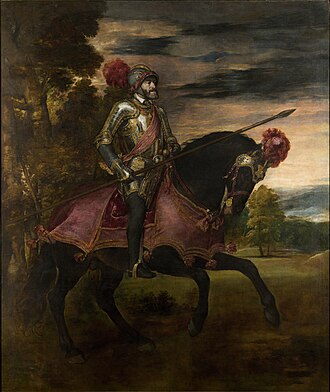 Equestrian Portrait of Charles V - Titian (1548)
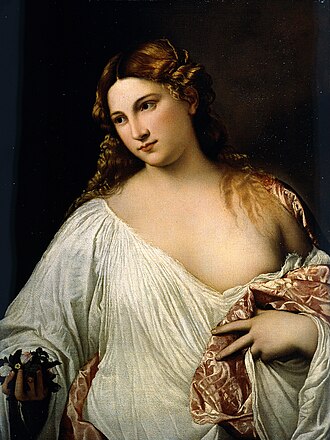 Flora - Titian (1517)
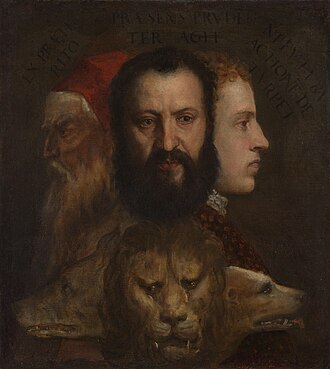 Allegory of Prudence - Titian (1550)
 Diana and Actaeon - Titian (1550s)
 Bacchus and Ariadne - Titian (1520s)
Paintings by related artists
 Last Supper - Jacopo Tintoretto (1563)
 Miracle of the Slave - Jacopo Tintoretto (1540s)
 The Wedding at Cana - Paolo Veronese (1560s)
 The Feast in the House of Levi - Paolo Veronese (1573)