Sacrifice of Isaac
Lucas Cranach the Elder · 1530
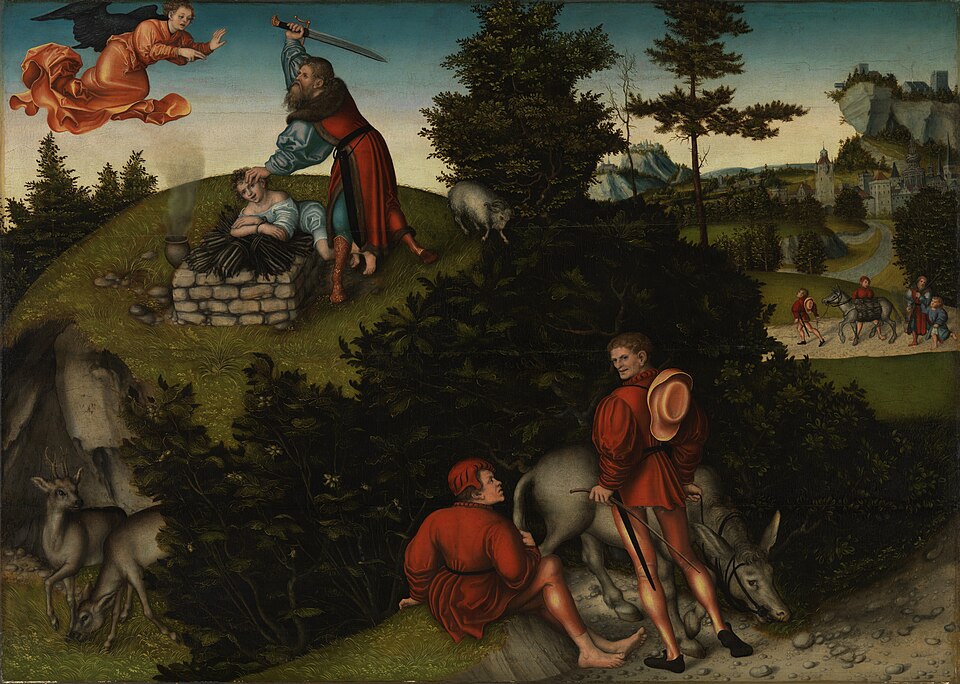
On a hilltop an old man raises his blade over a kneeling boy, while an angel in a shining orange robe raises a hand to stop him. Below, two servants chat beside a grazing donkey, unaware. Cranach told the whole journey in a single panel in 1530.
The story behind the painting
Lucas Cranach the Elder signed and dated this panel in 1530. It probably formed part of the predella of a winged altarpiece, together with a scene of the Israelites crossing the Red Sea. The church it was made for is unknown, as are the altar's other parts. From its size, the altar may have been similar to the Reformation Altarpiece in Wittenberg. The picture is recorded from 1637 in the Old Palace of Schleissheim near Munich, though how it reached Elector Maximilian I of Bavaria is unknown. Until 1692 it hung with its companion in the elector's winter bedroom.
What to look for
The panel shows several moments at once, divided into three zones by a large hedge. Read it from the back right to the front left. Far away, Abraham and Isaac walk from a walled town, probably meant as Beersheba, with two servants and a donkey loaded with firewood. In the middle, the two servants in red wait with the donkey, one looking out at you. Up on the hill, Isaac in white bends over a rough stone altar while Abraham holds his head and lifts the blade. A white ram is caught in a bush, and two deer graze below. Cranach's winged serpent signature and the date are on the rocks.
Meaning and intent
The story comes from Genesis 22, where God orders Abraham to sacrifice his son and an angel stops him at the last moment. In the altar's programme it served as a type pointing ahead to the Crucifixion, since in both a father offers his innocent son, while the companion Red Sea scene pointed to the baptism of Christ. The hedge cuts the servants off from the hill, showing that they know nothing of what is happening above. The key scene is painted largest, showing its importance, and Abraham appears as usual as an old man with a long grey beard.
Legacy
In 1761 the two panels hung as overdoors in the New Palace of Schleissheim. In the 19th century they were shown together again in Augsburg, and from 1912 to the early 1930s in the Alte Pinakothek. In 1968 the Sacrifice went to the State Gallery in Bamberg, in the New Residence, where it is still shown, while the Red Sea panel has hung in Aschaffenburg since 2009. Painted in oil on limewood, 83.5 by 116.7 cm, it was examined with infrared reflectography in 2010, revealing a free brush underdrawing and a change in the position of Isaac's head.
Did you know?
- Signed and dated 1530 by Lucas Cranach the Elder.
- Probably part of an altarpiece predella.
- Shows the journey and the sacrifice in one panel.
- Shown in the New Residence in Bamberg since 1968.
About the artist
Lucas Cranach the Elder (1472-1553)
religious art · Bavarian State Painting Collections
More by Lucas Cranach the Elder
 The fountain of youth - Lucas Cranach the Elder (1546)
 Cupid Complaining to Venus - Lucas Cranach the Elder (1520s)
 Caritas - Lucas Cranach the Elder (1540)
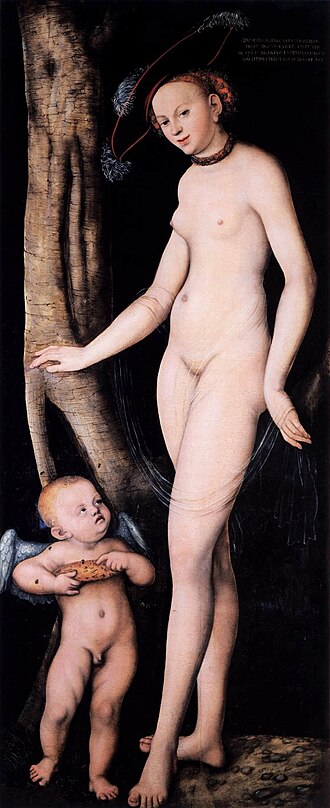 Venus and Cupid with a Honeycomb - Lucas Cranach the Elder (1531)
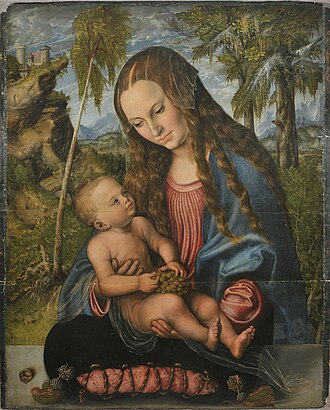 Madonna under the Fir Tree - Lucas Cranach the Elder
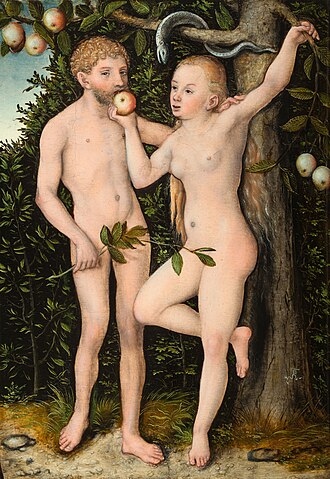 Adam and Eve - Lucas Cranach the Elder (1538)
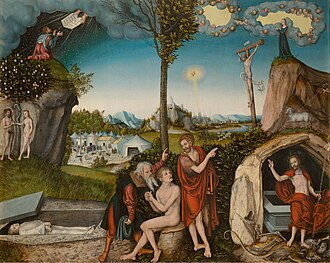 Law and Grace - Lucas Cranach the Elder (1529)
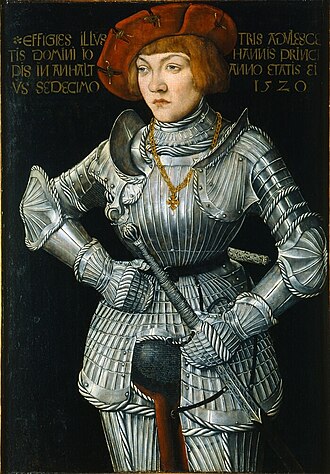 Prince Johann of Anhalt - Lucas Cranach the Elder (1520)
Paintings by related artists
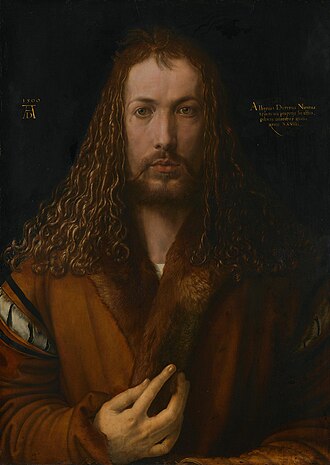 Self-Portrait with Fur-Trimmed Robe - Albrecht Dürer (1500)
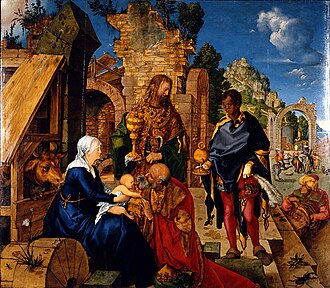 Adoration of the Magi - Albrecht Dürer (1504)