Phryne before the Areopagus
Jean-Léon Gérôme · 1861
%20-%2001.jpg)
Her robe pulled away, Phryne stands naked before her judges and hides her face with her hands. Gérôme's version of the ancient trial scandalised the Salon of 1861 and turned her into an international icon.
The story behind the painting
Phryne was an ancient Greek hetaira, a courtesan, tried for impiety. According to legend, she was acquitted after her defender Hypereides removed her robe so that the sight of her beauty would move the judges to pity. Gérôme's title places the trial in the court of the Areopagus, but the ancient sources do not: the comic playwright Posidippus, in his play The Ephesian Woman, says it took place in the Heliaia. French artists had painted the trial since the mid-18th century, and Gérôme's 1861 version was directly influenced by Charles Gleyre, in whose studio he had worked, and by Victor Mottez.
What to look for
The oil painting measures 80 by 128 cm. Phryne stands nude at the centre, her hands covering her face. Hypereides, on the left, holds up her robe, and the jurors sit on the right, leaning in to look. In the middle of the composition stands a golden statue of Athena, her name inscribed in Greek on the pedestal. Gérôme worked from photographs of his model, Marie-Christine Leroux, which he commissioned from Nadar. Watch the faces of the old men as much as the woman: the picture is about looking.
Meaning and intent
Like The Snake Charmer and Slave Market in Ancient Rome, this is one of several Gérôme paintings that show an audience watching a prurient spectacle. At the Salon of 1861 it was considered indecent and pornographic. It was especially controversial for showing Phryne covering her face in shame, the same pose Gérôme used for enslaved women in his Eastern slave market scenes. The gesture changes the legend: instead of a triumphant beauty, we see a woman exposed, and the judges' gaze, and ours, is put on trial too.
Legacy
It became the most famous 19th-century image of Phryne. The scandal made it widely reproduced and caricatured, with an engraving by Léopold Flameng, a sculpture by Alexandre Falguière and a drawing by Paul Cézanne all based on it. In the United States, Matt Morgan's Living Statues restaged it as a tableau vivant, and in 1884 Bernhard Gillam drew Phryne Before the Chicago Tribunal, with candidate James G. Blaine in her place. By the century's end, Phryne was an international cultural icon. The painting was given to the Hamburger Kunsthalle in 1910.
Did you know?
- Exhibited at the Paris Salon of 1861.
- The ancient sources place the trial in the Heliaia, not the Areopagus.
- Gérôme worked from Nadar's photographs of model Marie-Christine Leroux.
- In the Hamburger Kunsthalle since 1910.
About the artist
Jean-Léon Gérôme (1824-1904)
woman · man · nude · history painting · academic art · clothed male, naked female · necklace · Hamburger Kunsthalle · sandal
More by Jean-Léon Gérôme
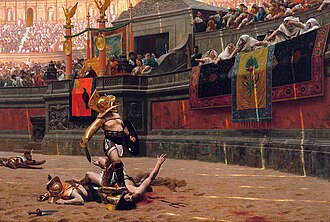 Pollice Verso - Jean-Léon Gérôme (1872)
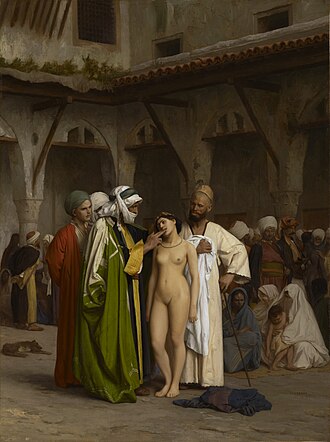 The Slave Market - Jean-Léon Gérôme (1866)
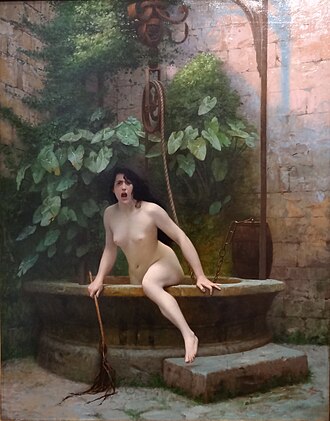 Truth Coming Out of Her Well - Jean-Léon Gérôme (1896)
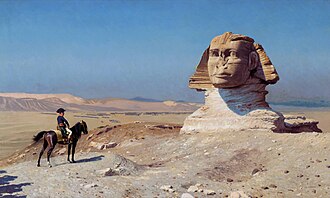 Bonaparte Before the Sphinx - Jean-Léon Gérôme (1867)
 Cleopatra and Caesar - Jean-Léon Gérôme (1866)
 The Duel After the Masquerade - Jean-Léon Gérôme (1857)
.jpg) The Execution of Marshal Ney - Jean-Léon Gérôme (1868)
The Execution of Marshal Ney - Jean-Léon Gérôme (1868) The Christian Martyrs' Last Prayer - Jean-Léon Gérôme (1883)
Paintings by related artists
 Luncheon on the Grass - Édouard Manet (1863)
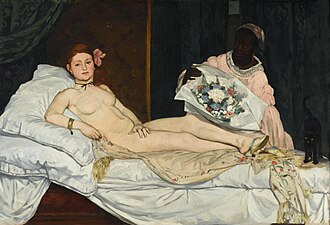 Olympia - Édouard Manet (1863)
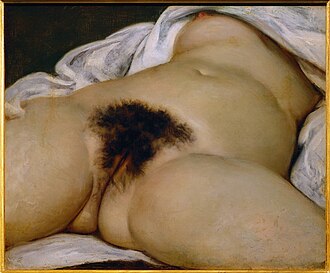 L'Origine du monde - Gustave Courbet (1866)
 A Burial at Ornans - Gustave Courbet (2020)
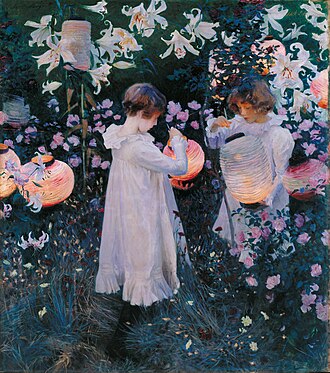 Carnation, Lily, Lily, Rose - John Singer Sargent (1885-1886)
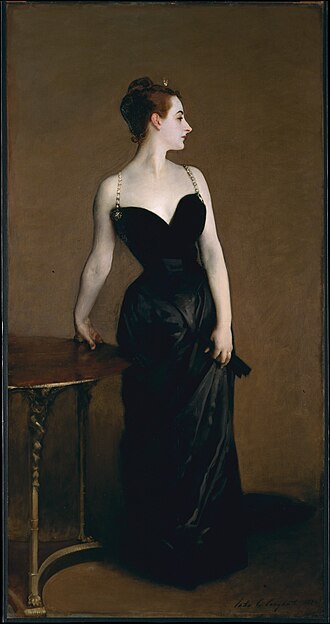 Madame X - John Singer Sargent (1884)
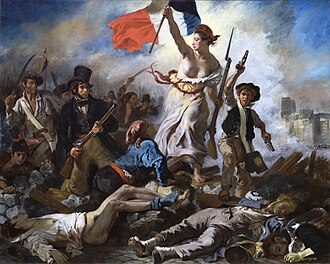 Liberty Leading the People - Eugène Delacroix (1830)
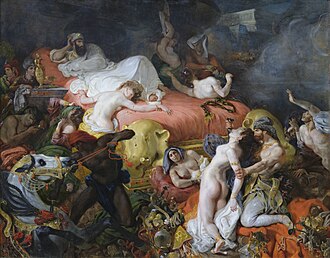 Death of Sardanapalus - Eugène Delacroix (1827)
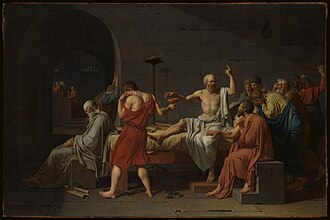 The Death of Socrates - Jacques-Louis David (1787)
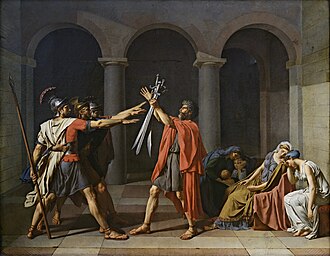 The Oath of the Horatii - Jacques-Louis David (1784)
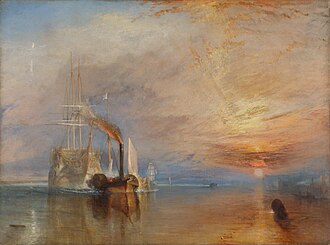 The Fighting Temeraire - J. M. W. Turner (1839)
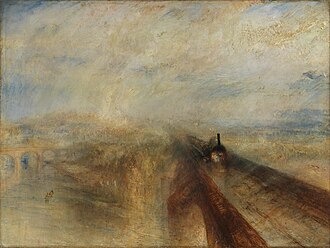 Rain, Steam and Speed - The Great Western Railway - J. M. W. Turner (1844)