Madonna with the laughing Child
Giotto · 1291
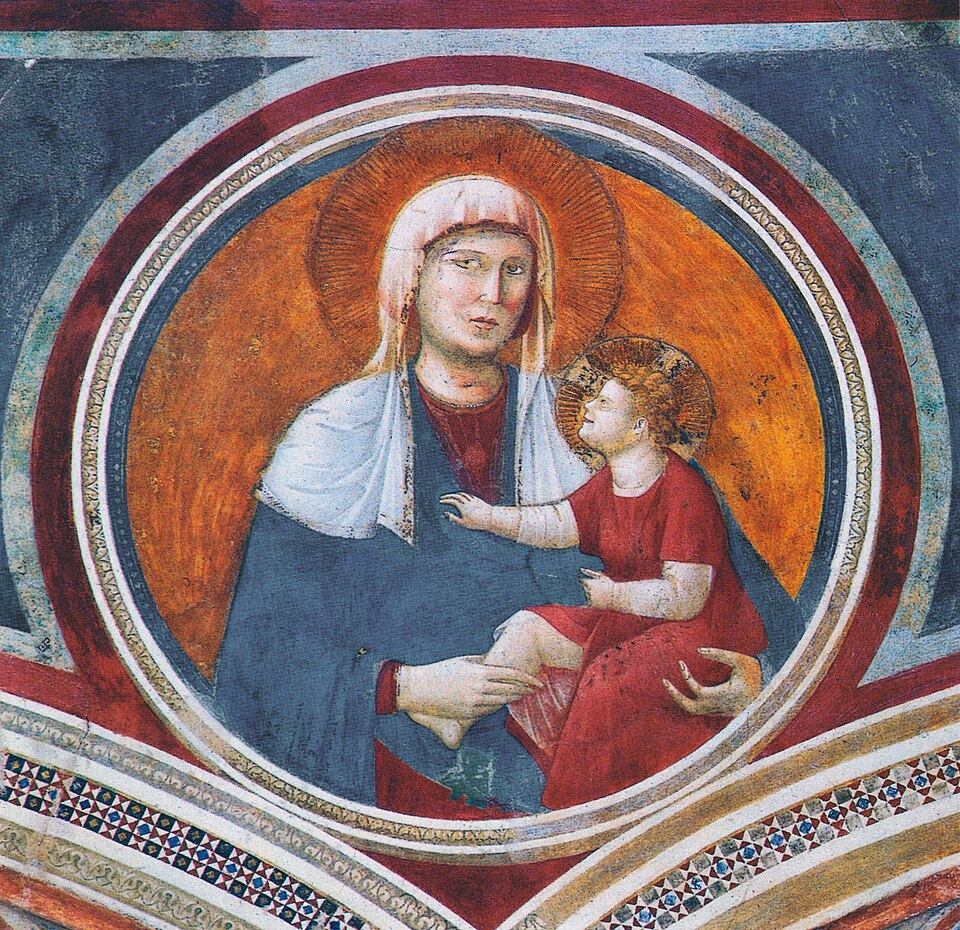
High above the main door of the Upper Church in Assisi, a mother looks away into the distance while the child in her arms wriggles, turns toward her and begins to smile.
The story behind the painting
This fresco is attributed to Giotto di Bondone, or perhaps to his workshop, and is dated to around 1291-1295; Wikidata gives the year 1291. It sits on the inside of the entrance wall of the Upper Church of the Basilica of San Francesco in Assisi, above the portal. Almost all the scenes on this wall are credited to the young Giotto and his collaborators, painted just before the famous Stories of Saint Francis. Some critics, such as Luciano Bellosi, place the lower figures, especially this Madonna, at the same moment as the Francis frescoes, because their colour is more compact and their light more intense than in the register above.
What to look for
Mary appears inside a round medallion, a clipeus, flanked by two smaller medallions with half-length angels, each about 60 cm across, who turn toward her. Her body has a solid, powerful volume; the curve of her shoulders swells almost into a three-dimensional dome. A pale, semi-transparent veil frames her face elegantly. She wears red and blue, the traditional colours of the Church, and holds the Child firmly. He seems to fidget happily and, turning to look at his mother, sketches a faint smile. Both wear haloes. The fresco is in good condition, so these quiet details can still be read from below.
Meaning and intent
The source sees a meaningful contrast at the heart of the image. The Child is lively and playful, yet Mary's gaze is absent, as if she already senses the tragic destiny of Christ. Joy and foreboding share one small circle. Higher on the same wall, beyond a lunette with Pentecost and the Ascension, two large medallions show Saint Peter and Saint Paul, symbols of direct papal protection over the basilica. Seen together, the medallions turn the entrance wall into a statement of faith and of the church's place under Rome, with the tender mother and child at its centre, greeting visitors as they leave.
Legacy
Who painted this Madonna is still debated. Cesare Gnudi, in 1959, noted Roman and Tuscan influences. Decio Gioseffi and Roberto Salvini spoke of an anonymous master inspired by Giotto, working after the Franciscan stories. Current views lean toward a work carried out from a design by the master of the Francis cycle, probably executed by leading members of Giotto's workshop. Stylistic commentators praise its fully sculptural forms and its solemn, ordered firmness. Whatever hand held the brush, the fresco remains a precious witness to the moment in Assisi when painted figures began to gain real weight and feeling.
Did you know?
- Fresco of about 1291-1295 on the entrance wall of the Upper Church, Assisi
- Attributed to Giotto or his workshop; attribution debated
- Flanked by two angel medallions about 60 cm in diameter
- Wikidata lists the size as 110 x 110 cm
About the artist
Giotto (1267-1337)
woman · religious art · Mary · boy · Christ Child · mother
More by Giotto
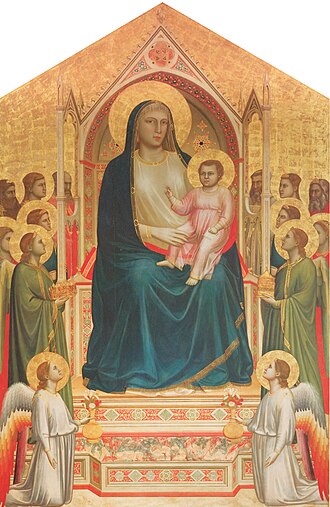 Madonna Enthroned - Giotto (1300s)
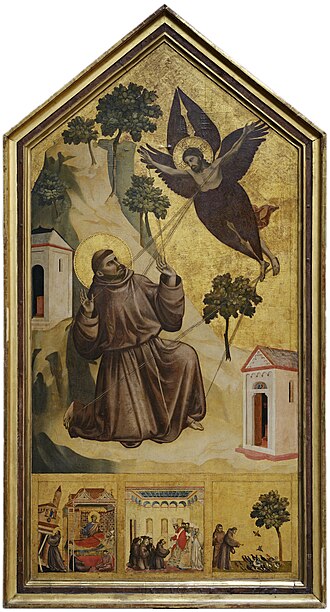 St. Francis of Assisi Receiving the Stigmata - Giotto (1290s)
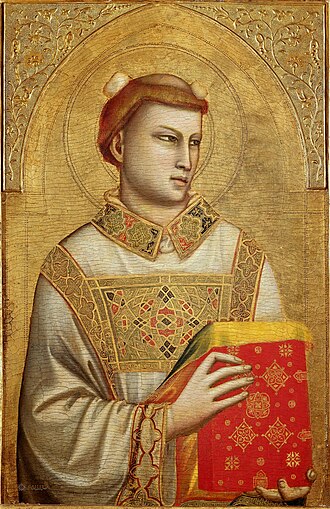 Saint Stephen - Giotto (1320)
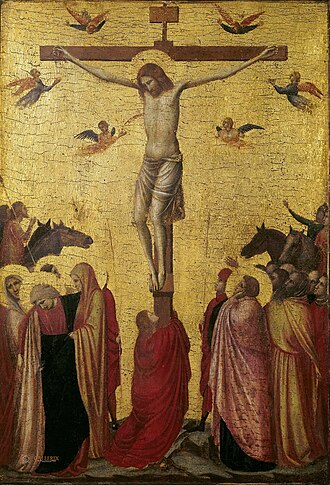 Crucifixion of Strasbourg - Giotto (1315)
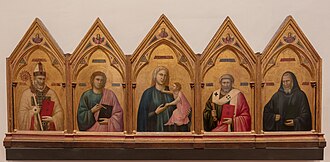 Badia Polyptych - Giotto (1300s)
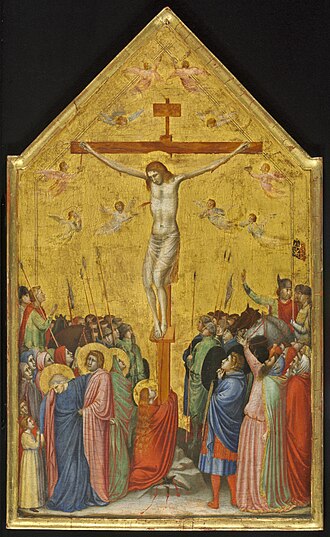 The Crucifixion of Christ - Giotto (1310s)
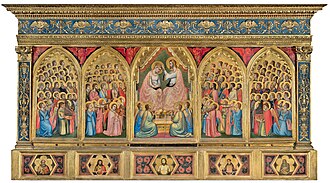 Coronation of Mary with Angels and Saints - Giotto (1328)
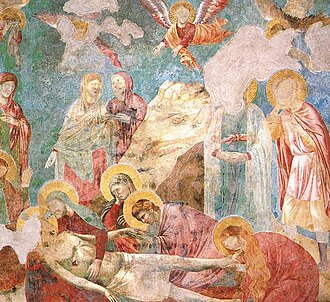 Scenes from the New Testament: Lamentation - Giotto (1291)