Saint Stephen
Giotto · 1320
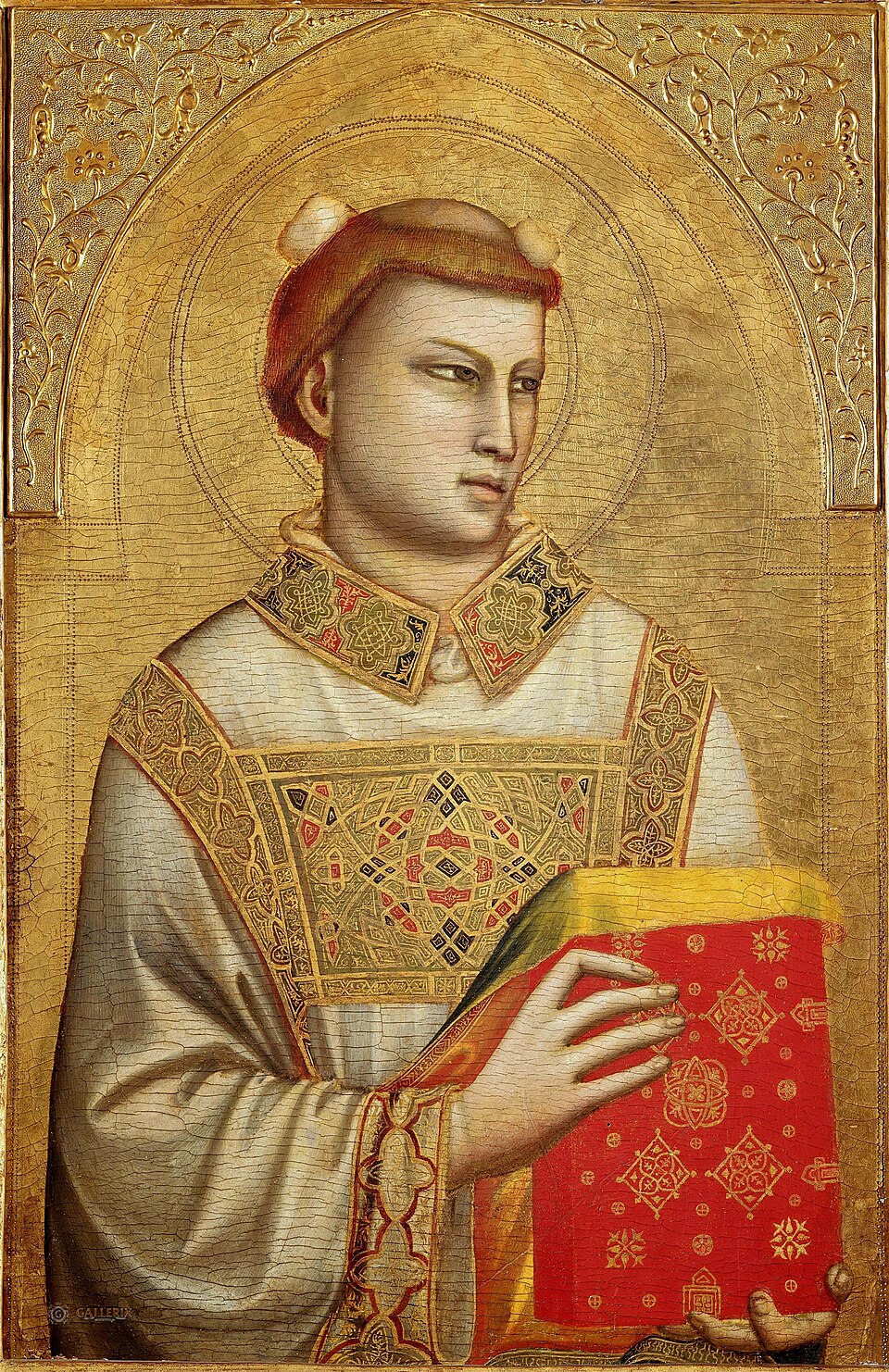
Two small stones rest on the shaved head of a young deacon, set there as neatly as jewels. They are the stones of his martyrdom, and Giotto paints them with the same calm care as the silk of his robe.
The story behind the painting
This panel by Giotto di Bondone shows Saint Stephen, the young Hellenistic Jew who became a Christian and was stoned to death for his faith. It is painted in tempera on a gold ground on wood, and it is the emblem of the Museo Horne in Florence, where it is kept. Its history is partly a puzzle. The arched top and the style link it to other works by Giotto, including a Madonna and Child in the National Gallery of Art in Washington and two saints, John the Evangelist and Lawrence, in the Musée Jacquemart-André at Chaalis. For this reason the panels seem to have belonged to a polyptych that was taken apart and scattered.
What to look for
The saint is shown half-length, in three-quarter view, his face turned to the right. His almond-shaped eyes, the source says, suggest his Eastern origin. As a deacon he wears a dalmatic of richly worked brocade, painted in great detail with silky folds, and the same soft fabric falls from the book he holds. Look at his hands: the fingers are slender and exaggeratedly long, a trace of the Byzantine tradition still present in Giotto's art. And on top of his shaved head the stones of his martyrdom are placed symmetrically, like small ornaments. The gold ground surrounds him with light.
Meaning and intent
Saints in this period were recognised by their attributes, the objects that told their story. Stephen carries two: the book, and the stones with which he was killed. Giotto does not show the violence of the stoning. Instead he places the stones quietly on the saint's head, turning them into a sign of holiness rather than a scene of suffering. The fine brocade of his deacon's robe speaks of his role in the early Church. The effect is serene. We are invited to remember the martyr's courage through the beauty of his presence, not through the horror of his death.
Legacy
There is a disagreement about the date. Wikidata gives 1320, while the French Wikipedia article dates the panel to around 1330-1335. Either way, the panel has become the emblem of the Museo Horne, a small Florentine museum. Its likely companions are now far apart, in Washington and in France, so this saint is a surviving voice from a larger choir. Visitors who see him can imagine the original polyptych, with Madonna and saints side by side under arched tops, gathered again for a moment around this quiet young deacon.
Did you know?
- Tempera on gold ground on wood panel, 84 × 54 cm
- Date: Wikidata gives 1320; French Wikipedia gives about 1330-1335
- Emblem of the Museo Horne, Florence
- Probably part of a dismembered polyptych with panels in Washington and Chaalis
About the artist
Giotto (1267-1337)
More by Giotto
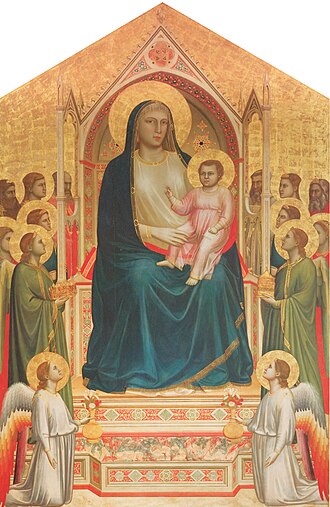 Madonna Enthroned - Giotto (1300s)
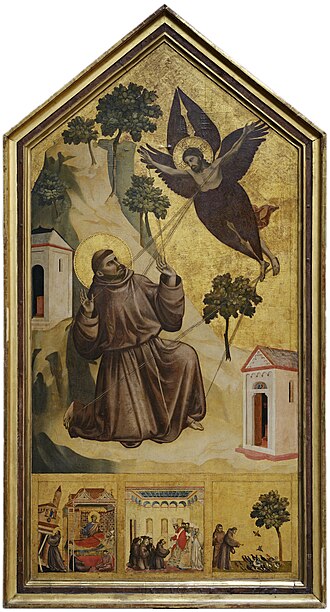 St. Francis of Assisi Receiving the Stigmata - Giotto (1290s)
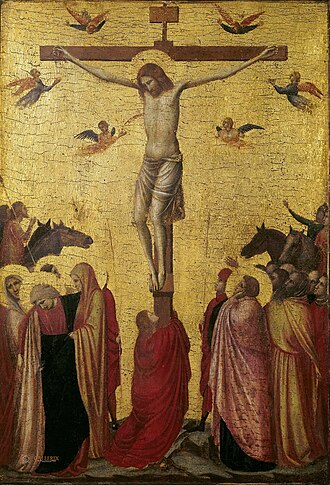 Crucifixion of Strasbourg - Giotto (1315)
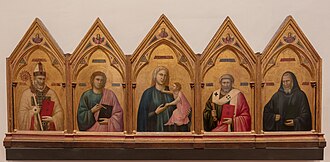 Badia Polyptych - Giotto (1300s)
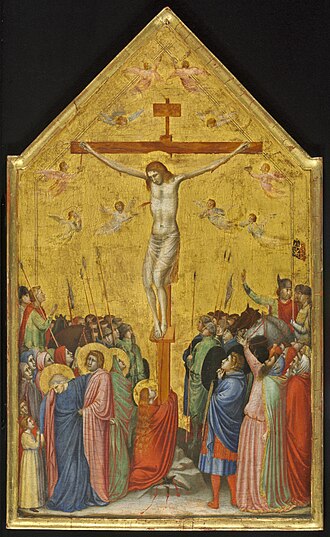 The Crucifixion of Christ - Giotto (1310s)
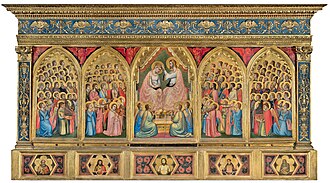 Coronation of Mary with Angels and Saints - Giotto (1328)
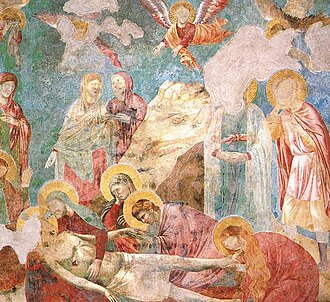 Scenes from the New Testament: Lamentation - Giotto (1291)
 Madonna and Child of San Giorgio alla Costa - Giotto (1295)