Ellen Terry as Lady Macbeth
John Singer Sargent · 1889
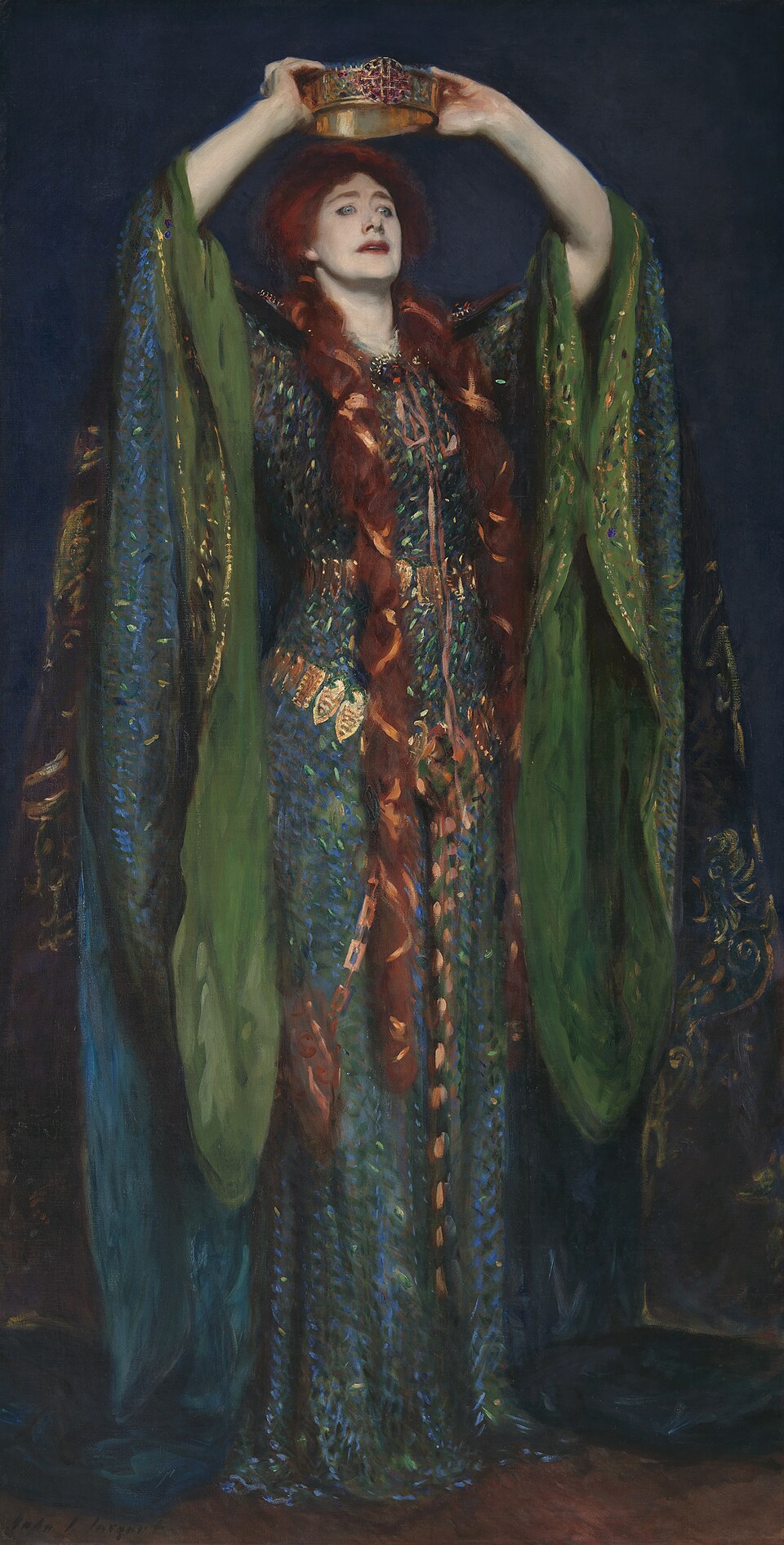
A white-faced queen lifts a crown above her head, red plaits falling to her knees, her green gown glittering with real beetle wings. Sargent saw Ellen Terry on opening night and set to work almost at once.
The story behind the painting
Henry Irving staged Macbeth at the Lyceum Theatre in London, playing Macbeth himself opposite Ellen Terry. Sargent attended the opening night on 29 December 1888 and was inspired to paint her portrait almost immediately. He finished it in 1889. The production was a great success, running for more than six months to packed houses. Terry wrote to her daughter Edith Craig about her costumes: green beetles on the first dress, and such a cloak, adding that photographs gave no idea of it, because it was the colour that made it splendid.
What to look for
Terry stands erect and white-faced, holding King Duncan's crown above her head, a pose that never appeared in Irving's production. Long plaits of red hair bound with gold hang to her knees over a heather-coloured velvet cloak embroidered with red animals, possibly griffins or Scottish lions. The gown, designed by Alice Comyns Carr and crocheted by Ada Nettleship in soft green wool and blue tinsel yarn, was meant to look like soft chain armour with something of a serpent's scales, and was decorated with about 1,000 iridescent wing cases of the green jewel beetle.
Meaning and intent
Sargent turned a stage moment into an invented scene of ambition, the crown raised as if Lady Macbeth were crowning herself. Terry herself saw the whole costume as like Rossetti, with rich stained-glass effects, and the painting keeps that jewelled, glowing quality. Oscar Wilde joked that Lady Macbeth patronised local industries for her husband's clothes but did all her own shopping in Byzantium. The canvas, 221 by about 114 cm, sits in a heavy gold frame with Celtic motifs, probably designed by Sargent himself.
Legacy
First shown at the New Gallery in 1889, it was, in Terry's memoirs, the sensation of the year. It travelled to Paris in 1890, Chicago in 1893 and Liverpool in 1896. Irving bought it to hang in the Beefsteak Room at the Lyceum. After his death it was sold at Christie's in December 1905 and bought for Sir Joseph Duveen, who gave it to the Tate Gallery in 1906. The dress itself survives; after a long conservation finished in 2011 it is displayed at Smallhythe Place, Terry's former home in Kent.
Did you know?
- Inspired by the opening night on 29 December 1888.
- The green gown carried about 1,000 beetle wing cases.
- Called by Terry the sensation of 1889.
- Given to the Tate Gallery in 1906.
About the artist
John Singer Sargent (1856-1925)
National Gallery · Tate · historiated portrait
More by John Singer Sargent
 Carnation, Lily, Lily, Rose - John Singer Sargent (1885-1886)
 Madame X - John Singer Sargent (1884)
 The Daughters of Edward Darley Boit - John Singer Sargent (1882)
.jpg) Gassed - John Singer Sargent (1919)
Gassed - John Singer Sargent (1919).jpeg) Lady Agnew of Lochnaw - John Singer Sargent (1892)
Lady Agnew of Lochnaw - John Singer Sargent (1892)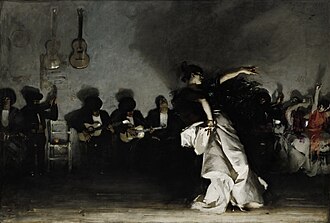 El Jaleo - John Singer Sargent (1882)
.jpg) Street in Venice - John Singer Sargent (1882)
Street in Venice - John Singer Sargent (1882)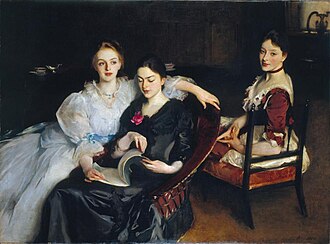 The Misses Vickers - John Singer Sargent (1884)
Paintings by related artists
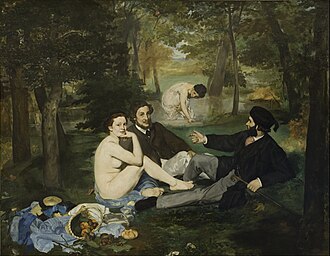 Luncheon on the Grass - Édouard Manet (1863)
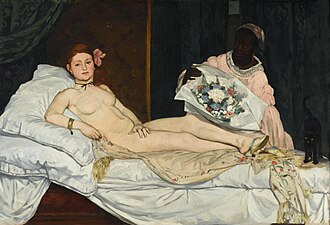 Olympia - Édouard Manet (1863)
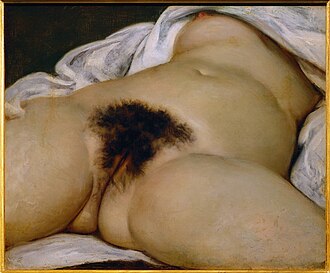 L'Origine du monde - Gustave Courbet (1866)
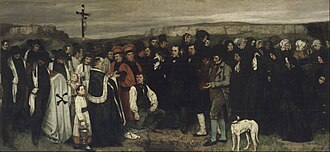 A Burial at Ornans - Gustave Courbet (2020)
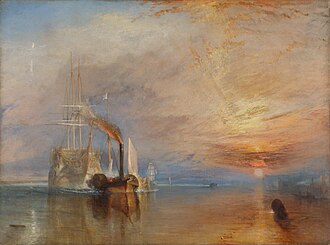 The Fighting Temeraire - J. M. W. Turner (1839)
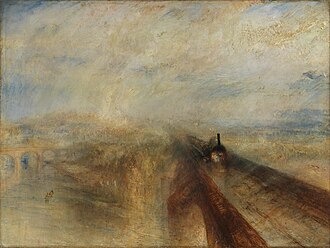 Rain, Steam and Speed - The Great Western Railway - J. M. W. Turner (1844)
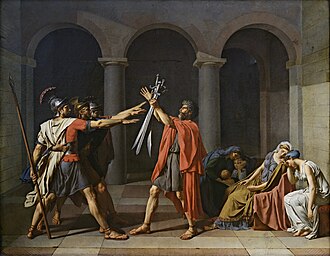 The Oath of the Horatii - Jacques-Louis David (1784)
.jpg) The Intervention of the Sabine Women - Jacques-Louis David (1799)
The Intervention of the Sabine Women - Jacques-Louis David (1799)