Boating
Édouard Manet · 1874
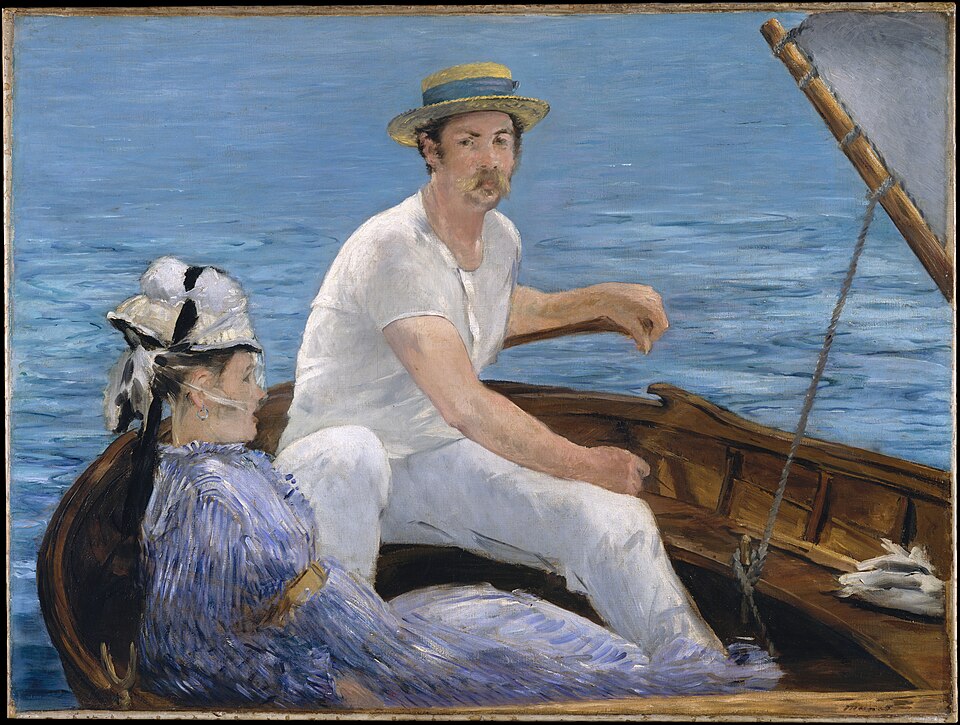
A man in summer whites grips the tiller, a woman in a veiled hat sits beside him, and the blue water rises almost to the top of the frame. In Boating, Manet came closer to Impressionism than ever.
The story behind the painting
Édouard Manet painted Boating in the summer of 1874, while staying at his family's property in Gennevilliers, near Argenteuil on the Seine. That summer he was also working on its sister painting, Argenteuil, and turning more and more to everyday subjects. He had hoped to paint his friend Claude Monet on Monet's floating studio together with Monet's wife Camille, but the plan proved hard to carry out, and he painted both pictures with other models. The man at the tiller is Manet's brother-in-law Rodolphe Leenhoff, a sculptor who often posed for him, first in Luncheon on the Grass. Radiographs show the canvas was reworked many times, with the man's pose changed repeatedly, suggesting Manet painted both outdoors on the boat and in the studio.
What to look for
Notice first how the boat is abruptly cut off by the edges of the canvas, so the couple seem caught in a passing glance. The water fills almost the whole background in a strong blue, with no horizon to rest the eye. The colours are high-keyed and the brushstrokes freer than in Manet's earlier work, with intense colours set against darker areas. Look at the woman's hat and veil. Because the hat appears on Manet's wife in other paintings, she was once thought to be Madame Manet, but her black hair and brown eyes do not match; art historians such as Mary Mathews Gedo now believe she is Camille Monet.
Meaning and intent
Boating is often cited as Manet's foray into Impressionism, for its brushwork and its subject of leisure in everyday life. Manet never called himself an Impressionist, though he exhibited alongside them and counted many among his friends, and the new techniques here are linked to the time he spent with younger painters. Japanese art shaped the picture too: the flattened composition, lighter colouring, the deliberate cropping of the boat and the harsh blue of the water. Stéphane Mallarmé saw the framing as defining the whole scene. Yet as John Leighton cautions, the apparent spontaneity of water painting can mask long revision.
Legacy
Manet showed Boating at the Salon of 1879. Mary Cassatt saw it there and called it the last word in painting. After the Salon it was sold to the banker and collector Victor Desfosses, director of Gil Blas. It was later acquired by Cassatt's close friends Louisine and Henry Osborne Havemeyer, who left it to the Metropolitan Museum of Art in New York, where it hangs today. It is considered one of the most important of Manet's Impressionist paintings, and Gedo has described it as quintessentially Monet-like, a fitting tribute to the friend Manet had first hoped to paint.
Did you know?
- Painted in summer 1874 near Argenteuil.
- Shown at the Salon of 1879.
- Size: 97.2 x 130.2 cm.
- Metropolitan Museum of Art, New York, Havemeyer bequest.
About the artist
Édouard Manet (1832-1883)
woman · genre art · man · Impressionism · Metropolitan Museum of Art · boat · sailboat · Argenteuil · Seine
More by Édouard Manet
 Luncheon on the Grass - Édouard Manet (1863)
 Olympia - Édouard Manet (1863)
%20(33539037428).jpg) A Bar at the Folies-Bergère - Édouard Manet (1882)
A Bar at the Folies-Bergère - Édouard Manet (1882) The Balcony - Édouard Manet (1868)
.jpg) Music in the Tuileries - Édouard Manet (1862)
Music in the Tuileries - Édouard Manet (1862).jpg) The Fif - Édouard Manet (1866)
The Fif - Édouard Manet (1866)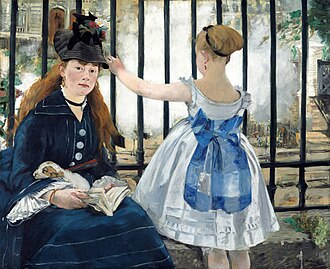 The Railway - Édouard Manet (1873)
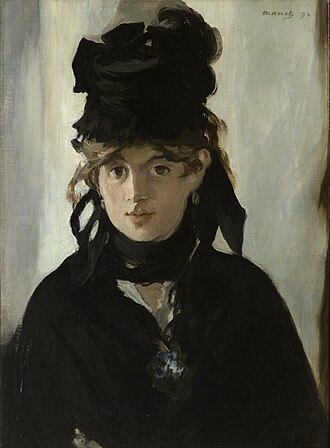 Berthe Morisot with a Bouquet of Violets - Édouard Manet (1872)
Paintings by related artists
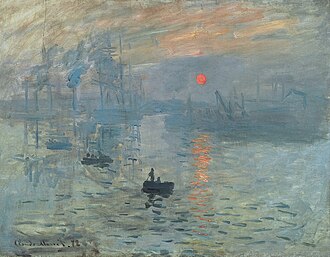 Impression, Sunrise - Claude Monet (1872)
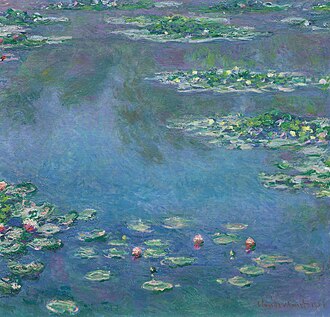 Water Lilies - Claude Monet (1906)
 Dance at Le Moulin de la Galette - Pierre-Auguste Renoir (1876)
 Luncheon of the Boating Party - Pierre-Auguste Renoir (1881)
 The Fighting Temeraire - J. M. W. Turner (1839)
 Rain, Steam and Speed - The Great Western Railway - J. M. W. Turner (1844)
 The Starry Night - Vincent van Gogh (1889)
.jpg) Café Terrace at Night - Vincent van Gogh (1888)
Café Terrace at Night - Vincent van Gogh (1888)